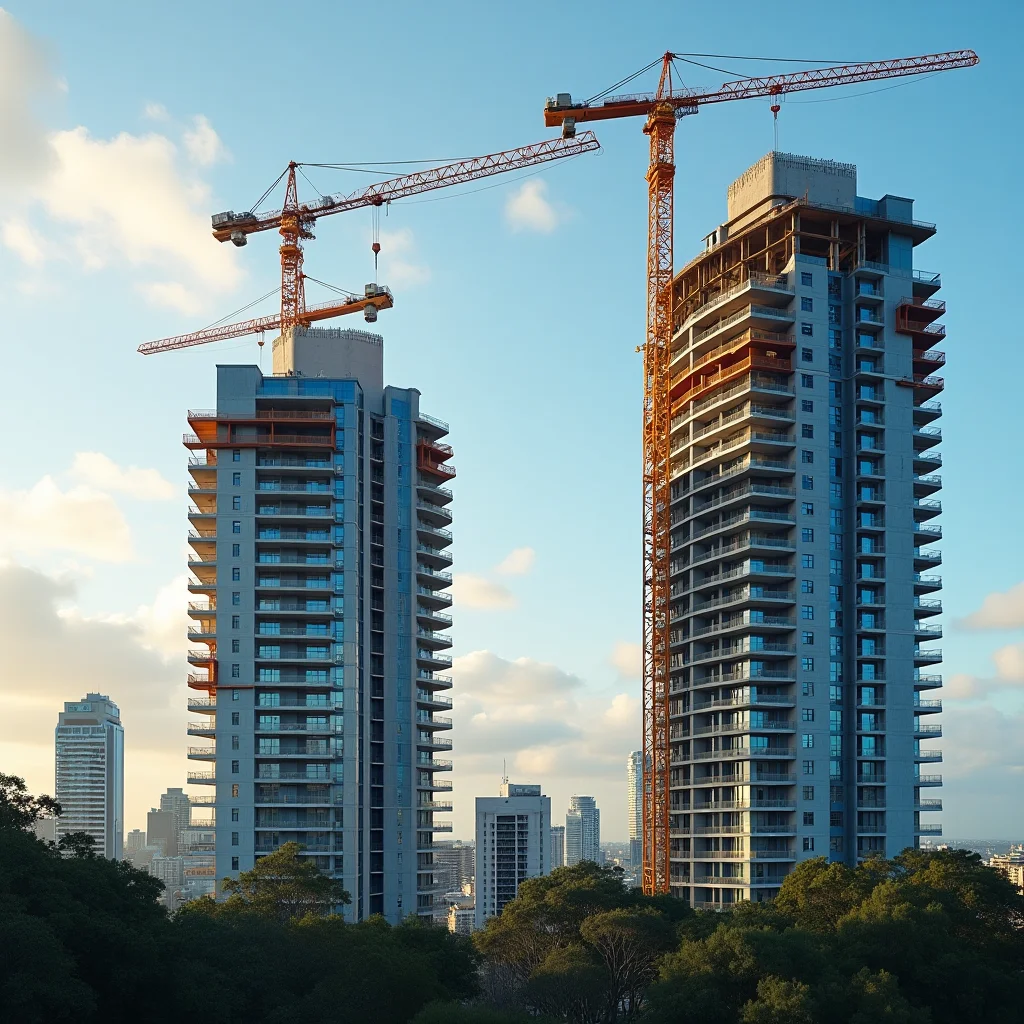
According to Property Update, Australia's population has surpassed 28 million people, accelerating ahead of official projections. The ABS's 2003 forecast expected Australia to reach 26.4 million people by 2051, but we've already exceeded that figure by more than 1.5 million people. This demographic shift is driven by net overseas migration of 311,000 people in the year to September 2025, creating sustained demand for housing in a market already experiencing structural undersupply.
Population Growth Outpaces Housing Supply
The population milestone highlights the ongoing challenge between housing demand and supply. With more than 300,000 people being added to Australia's population annually, each needing somewhere to live, the housing market faces persistent undersupply pressure. The Federal Government's National Housing Accord targets 1.2 million new homes by 2029, yet current dwelling approvals are running at 196,491 per year - 18% below the required 240,000 annual rate.
This supply-demand imbalance creates structural support for property values, particularly in well-located areas of major cities. Construction lags remain significant, with typical completion times of 9 to 15 months for houses and longer for apartments, meaning any improvement in commencements won't translate into material completions until late 2026 at the earliest.
Regional Growth Projections Favor Property Investment
Over the next decade, Australia is expected to benefit from rising population of around 4.1 million more people, 2.8 million additional jobs, and rising income of around $39,000 per household. CBRE estimates approximately $960 billion of additional income in the system to support mortgage, rent and other living expenses. Victoria, Queensland and Western Australia are projected to grow fastest over the next decade, while New South Wales is expected to remain the most populous state, reaching 9.6 million people by 2035-36.
Even with population growth forecast to ease to around 1.2% from 2026-27 onwards, Australia is still expected to add more than 300,000 people a year through the latter part of the decade. This sustained population pressure creates ongoing demand for housing that construction cannot immediately address.
Investment Strategy in Population-Driven Markets
The arithmetic for property investors remains straightforward: more people competing for a limited supply of well-located housing in major cities means ongoing upward pressure on both rents and values. Inner and middle-ring suburbs in Melbourne, Sydney, Brisbane and Perth remain best-positioned to absorb this demand and deliver capital growth over time.
The structural demand floor created by population growth provides one of the strongest long-term supports for well-located residential property in major cities. This demographic tailwind rewards investors who buy quality assets in the right locations and hold them through market cycles, particularly in areas with strong owner-occupier appeal and proven long-term demand.
Australia's population has passed 28 million decades ahead of ABS forecasts, with net overseas migration of 311,000 people annually driving sustained housing demand that construction cannot match.
Long-term Wealth Creation Through Demographic Trends
The 28 million milestone makes the case for property investment more visible, resting on structural demand that politicians cannot legislate away and developers cannot build fast enough to eliminate. Capital growth remains the engine of long-term wealth in property, with population growth at this scale providing precisely the kind of structural tailwind that supports sustained property value appreciation.
The investors who position themselves in inner and middle-ring suburbs of major cities, in areas with strong fundamentals and demographic support, benefit most from population-driven demand that planners consistently underestimated. This creates opportunities for intergenerational wealth building through well-located property assets.
Strata Investment Considerations
For investors considering property against other asset classes, strata title ownership presents unique considerations in population-driven markets. Strata properties offer shared ownership structures with ongoing levy obligations that affect total returns, while providing amenities and professional management that individual houses lack. Understanding these dynamics becomes particularly important in high-density urban areas where population growth creates sustained apartment demand.
Property investment requires active management, location research, and understanding of local market conditions, while offering inflation hedging and tax advantages through negative gearing and capital gains concessions. The demographic trends supporting Australia's property market favor investors willing to understand local fundamentals and hold quality assets through cycles, benefiting from the structural undersupply that rapid population growth creates across major metropolitan areas.
Current market conditions reflect the fundamental challenge between Australia's rapid population growth and housing supply constraints. With dwelling approvals running 18% below Housing Accord requirements and construction completion lags extending into 2026, property investors positioned in well-located assets benefit from sustained demographic demand that traditional economic cycles cannot easily disrupt.