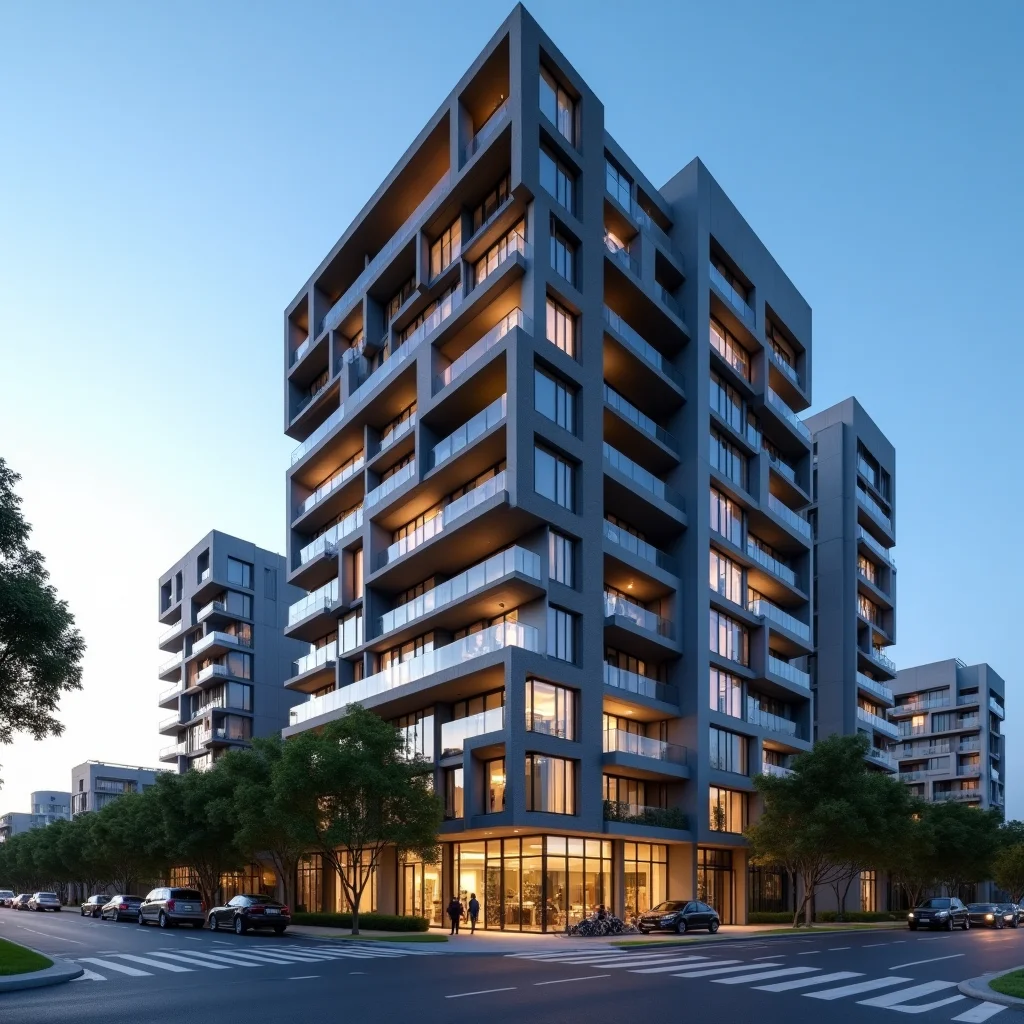
Commonwealth Bank economists predict the Reserve Bank of Australia will maintain the cash rate at 4.35% for the remainder of 2026, according to Property Update analysis published June 9. The forecast comes as Australia's housing market reaches a total value of $12.8 trillion, with recent federal budget tax changes creating distinct investment opportunities between new construction and established property markets.
Interest Rate Stability Creates Investment Planning Certainty
CBA's Head of Australian Economics team expects the central bank to pause further rate increases following three consecutive hikes that lifted the cash rate to its current 4.35% level in May 2026. This rate stability provides property investors with clearer planning parameters, particularly important given the federal government's recent restriction of negative gearing benefits to new construction projects only.
The interest rate environment directly impacts investment property cash flow calculations, with premium markets like Toorak maintaining strong clearance rates of 72% despite median prices reaching $2.8 million. Meanwhile, regional markets such as Port Macquarie face extended marketing periods of 48 days as higher borrowing costs affect buyer confidence in the $850,000 median price bracket. The stark contrast in days on market performance between Toorak's 23-day selling cycle and Port Macquarie's prolonged 48-day period demonstrates how interest rate sensitivity varies significantly across price segments.
South Perth exemplifies how premium Western Australian markets continue to attract investor interest with a 63.5% clearance rate and rapid 17-day marketing periods at a $1.45 million median price point. This performance indicates that well-located premium properties maintain liquidity even under the current 4.35% rate environment, while more affordable markets like Dandenong struggle with extended 40-day selling periods and lower 56% clearance rates at their $680,000 median.
Federal Tax Changes Create Two-Tier Investment Market
Recent federal budget modifications to negative gearing rules have established a clear division between new construction and established property investment strategies. REA Group reports that price declines across established housing markets result from the combined impact of rising interest rates and major tax policy shifts affecting investor demand.
The market response to these policy changes is evident across different price tiers, with Randwick demonstrating resilient performance at a 73.5% clearance rate and 23-day marketing cycle despite its $2.40 million median price. This contrasts sharply with Maroochydore's 54% clearance rate and 28-day selling period at a more accessible $1.05 million median, suggesting that luxury markets maintain investor confidence while mid-tier segments face increased pressure from both policy changes and borrowing cost considerations.
Western Australia markets demonstrate the divergent performance patterns, with premium locations showing stronger resilience to the combined policy and rate pressures. The data reveals how investors are increasingly selective, gravitating toward markets that offer either premium location benefits or new construction tax advantages, creating a bifurcated investment landscape where established mid-tier properties face the greatest headwinds.
South Perth's investment profile shows 13.8% annual growth with 17-day marketing cycles, demonstrating how premium Western Australia markets outperform national averages despite the 4.35% cash rate environment.
Premium vs Entry-Level Investment Performance
Market data reveals a clear performance hierarchy based on price points and location, with Randwick's 73.5% clearance rate at $2.40 million demonstrating superior market confidence compared to entry-level segments. The 23-day marketing period in Randwick reflects sustained demand from investors who can absorb higher interest costs due to the location's capital growth prospects and rental yield stability.
Queensland markets present compelling opportunities for investors seeking growth and cash flow balance. West End achieves strong market performance with a 62% clearance rate and efficient 22-day marketing periods at a $1.35 million median, while Maroochydore at $1.05 million shows more challenging conditions with 54% clearances and 28-day selling cycles. This performance gap illustrates how inner-city Brisbane locations like West End maintain investor appeal despite higher entry costs, while coastal markets face headwinds from both policy changes and interest rate sensitivity among buyers.
The data also reveals significant variations in market liquidity, with Prahran recording a 69% clearance rate and 25-day marketing period at its $1.55 million median, compared to Dandenong's struggling 56% clearance rate and extended 40-day selling cycle at $680,000. These metrics demonstrate that established property markets are experiencing a flight to quality, where investors prioritise location premiums and growth prospects over initial affordability, particularly given the loss of negative gearing benefits on established properties.
Strategic Investment Implications Under Current Policy Framework
The intersection of stable interest rates and modified negative gearing rules creates specific strategic opportunities, with market performance data highlighting the premium that investors now place on either new construction eligibility or superior location fundamentals. Property vs Other Investments for Australians analysis shows residential real estate typically delivers 7-9% annual returns over three decades, while the ASX 200 has achieved 9-10% including dividends. However, current market conditions favour new construction investments where negative gearing benefits remain available.
The performance gap between West End's 62% clearance rate at $1.35 million and Port Macquarie's 46% clearance at $850,000 illustrates how location quality now commands an even greater premium under the modified tax framework. Port Macquarie's extended 48-day marketing period compared to West End's efficient 22-day cycle reflects investor preference for established inner-city markets that offer both capital growth potential and rental yield stability, even without negative gearing benefits.
Victorian markets display the most pronounced bifurcation effects, with Toorak maintaining a strong 72% clearance rate and 23-day marketing cycle at $2.8 million, while Dandenong struggles with 56% clearances and 40-day selling periods at $680,000. This dramatic performance differential demonstrates how the combined impact of policy changes and rate stability has created distinct winner and loser segments, where premium locations retain investor interest while entry-level established properties face significant headwinds from reduced tax benefits and stretched affordability.
The data signals property investors should prioritise new construction opportunities to maintain negative gearing benefits while monitoring premium markets like South Perth, which combines a 63.5% clearance rate with rapid 17-day marketing cycles at $1.45 million. With the RBA rate likely stable through 2026, cash flow planning becomes more predictable, though established property investors face reduced tax advantages that may compress yields further, particularly in markets like Maroochydore where 54% clearance rates and 28-day selling periods indicate weakening investor sentiment.