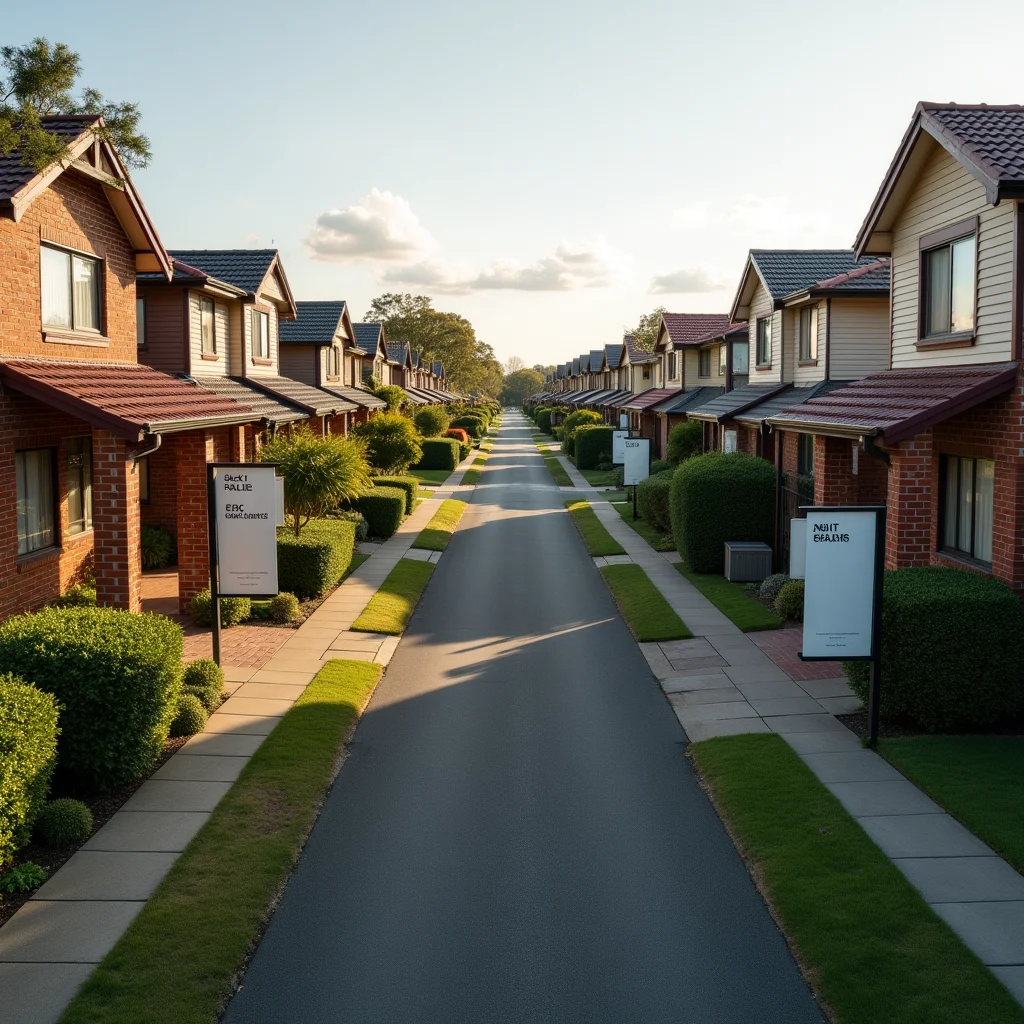
Construction has begun on Brisbane's $1.2 billion Hamilton Grove precinct, according to REA Group, a Los Angeles-inspired riverfront development that took 14 years to reach the construction phase after the developer first secured the site.
Brisbane's Riverside Signal: Hamilton Grove Breaks Ground
Hamilton Grove's scale — a $1.2 billion residential, lifestyle and retail precinct on Brisbane's riverfront — represents the kind of long-horizon infrastructure commitment that can accompany sustained developer confidence in a city's growth story. The 14-year gap between acquisition and construction, as reported by REA Group, reflects both the planning complexity of large riverside precincts and the patience required of developers backing Brisbane's growth story through multiple property cycles.
According to REA Group, Hamilton Grove will deliver 292 apartments, a 196-room five-star hotel and 3,000 square metres of retail space within Economic Development Queensland's 304-hectare Northshore Hamilton Priority Development Area. The Queensland Government is separately investing $154 million in infrastructure to support growth in the precinct, which is projected to inject more than $14 billion into the Queensland economy once completed.
Buyer Sentiment Diverges Across States
While developers like Wentworth Equities are committing long-term capital to large-scale Queensland projects, buyer sentiment elsewhere in the country tells a more cautious story. Separate REA Group reporting on new Westpac research found that South Australians are delaying plans to buy or sell property because of interest rate uncertainty more than residents of any other state, with 38% of South Australians citing this concern. Housing affordability was identified as the single biggest factor affecting SA buyers' and sellers' plans, at 44%.
That divergence in sentiment — large-scale, long-horizon development commitment in Brisbane against more hesitant buyer behaviour reported elsewhere — illustrates how differently confidence is playing out across Australian property markets at present, though suburb-level clearance rate and growth figures for specific Queensland, Victorian, New South Wales and Western Australian markets are not available in the source reporting referenced here.
Background: Where Regional Opportunity Fits in a Broader Portfolio
Investors weighing large infrastructure-backed precincts like Hamilton Grove against established capital city markets are effectively making a cycle-timing decision, one explored in detail in REAStats' Australian Property Market Overview. For investors who have already built exposure across Australian regional and capital city markets, some are now looking beyond domestic borders entirely. Investing in International Property from Australia outlines how Australian investors can purchase overseas property without FIRB approval, offering a further diversification layer once domestic opportunities have been assessed.
That international lens matters because Australia's property cycle has shown repeated boom-bust patterns across different states at different times, a dynamic covered in historical Australian property bubble analysis. Large precinct announcements like Hamilton Grove, and shifts in buyer sentiment such as those reported in South Australia, both sit within that longer pattern of capital and confidence rotating between states as affordability and interest rate dynamics shift.
What This Means for Investors
Hamilton Grove's scale signals that at least one major developer remains willing to commit long-term capital to Brisbane's riverside corridor, which may sustain developer and buyer interest in the area well beyond this construction phase. At the same time, the Westpac-sourced finding that South Australian buyers and sellers are more hesitant about interest rates than those in any other state is a reminder that confidence is not uniform across the country. Investors should treat precinct-specific announcements and state-level sentiment surveys as separate signals, and seek verified, suburb-specific clearance rate, median price and days-on-market data before drawing conclusions about any particular local market's performance.