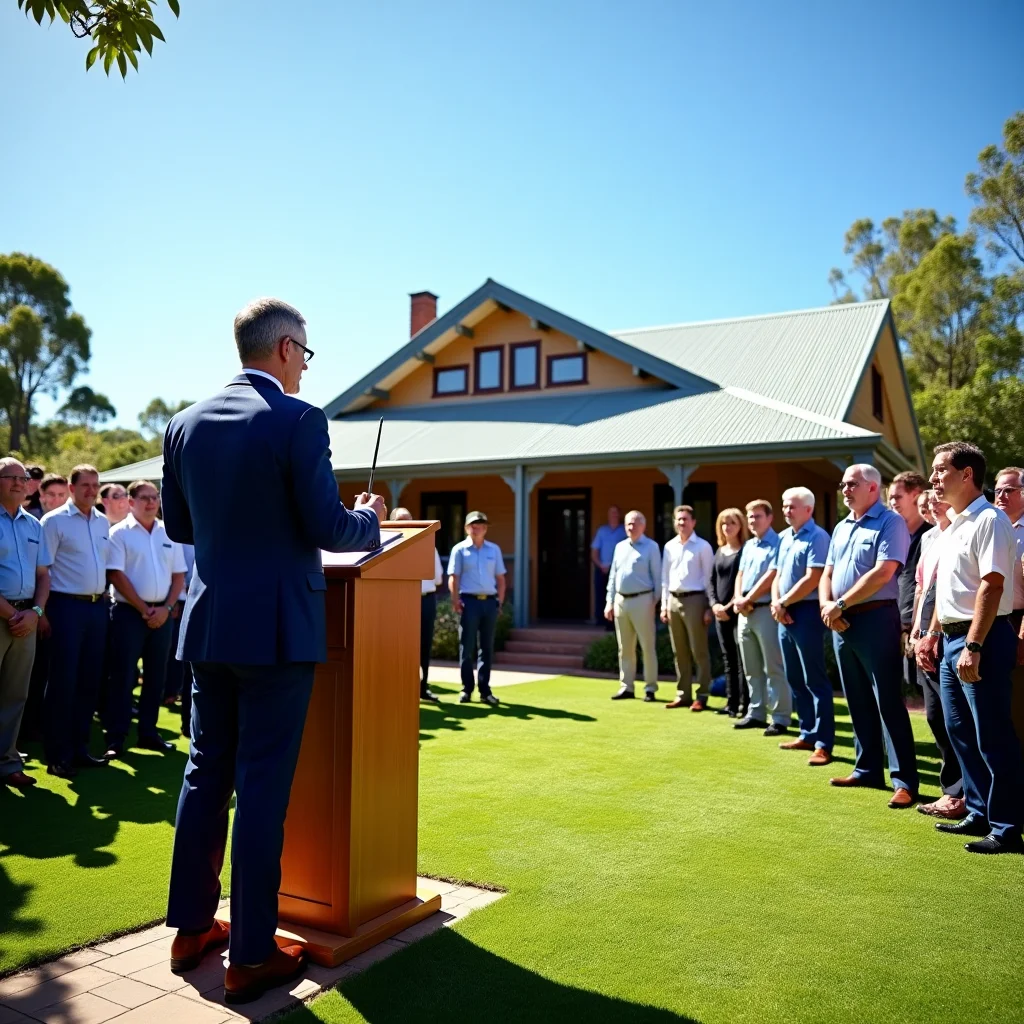
Dee Why recorded a 70.5% auction clearance rate against a $1,950,000 median price, with properties averaging just 26 days on market and 5.3% annual growth — metrics that position the Northern Beaches suburb as one of Sydney's more competitive mid-tier markets at a time when inner-city stock is visibly struggling. According to SMH Property on 9 August 2026, an inner Sydney terrace that sold for $3.15 million five years ago failed to reach that level at auction, highlighting the price pressure bearing down on Sydney's premium tier. Against that backdrop, Dee Why's clearance performance and sub-30-day sales cycle represent a markedly different buyer dynamic.
Dee Why's Clearance Rate and Days on Market in Context
A 70.5% auction clearance rate is a meaningful signal in the current Sydney environment. Randwick, one of the Eastern Suburbs' stronger performers, is running a 73.5% clearance rate at a $2,400,000 median — approximately $450,000 above Dee Why. Surry Hills sits at 73% clearance with a $1,920,000 median. Dee Why's clearance figure falls within the same competitive band as these well-established Sydney markets, but at a price point that remains more accessible to buyers who have been compressed out of the inner ring by the RBA's 4.35% cash rate.
The 26-day average days on market at Dee Why compares favourably with several peer suburbs. Prahran in Victoria sits at 25 days with a 69% clearance rate; Kew records 24 days at 71% clearance. Dee Why tracks slightly longer than these Melbourne comparisons, but its clearance rate is competitive or superior — meaning when stock does sell, it sells. The combination of a sub-30-day sales cycle and a 70.5% clearance rate points to demand depth that has not materially eroded despite the rate environment.
The Tax Environment Adds a New Layer to Investment Calculus
According to Property Update on 9 August 2026, from 1 July 2027, negative gearing benefits for residential property will generally be restricted to newly built homes, while the capital gains tax discount will be replaced by a system based on inflation indexation and a minimum tax rate on future gains. For investors weighing established suburb exposure versus new construction, this reform reshapes the return profile of suburbs like Dee Why in a specific way.
Dee Why's 2.6% rental yield is below the national average for units, reflecting the suburb's strong capital growth bias. At the current 4.35% cash rate, investors carrying established stock in Dee Why will face a tightening net position after 1 July 2027 once negative gearing on established dwellings is phased out. However, the 5.3% annual capital growth figure provides the counterargument: at $1,950,000, a 5.3% annual appreciation delivers approximately $103,350 in gross equity per year — a figure that still exceeds the after-tax yield gap for most leveraged positions over a medium-term horizon.
For investors reconsidering their residential exposure in light of these changes, the Australian property market data context is important: the shift toward newly built homes as the vehicle for negative gearing may redirect some demand from Dee Why's established housing stock toward new apartment supply in the suburb's medium-density corridor.
Dee Why's 70.5% auction clearance rate and 26-day average sales cycle place it within the same demand tier as Randwick (73.5%) and Surry Hills (73%) — but at a $1,950,000 median that sits $450,000 below Randwick, the suburb offers relative value on a per-clearance-point basis across the Sydney market in August 2026.
How Dee Why Compares to Distressed Inner-Sydney Stock
The SMH Property report on 9 August 2026 of an inner Sydney terrace passing in for $200,000 below its five-year-ago sale price is not an isolated data point — it reflects a pattern across Sydney's prestige inner ring where vendors who bought at 2021 peak conditions are now absorbing losses at auction. Dee Why does not operate in that same segment. Its $1,950,000 median is not immune to rate pressure, but the suburb's buyer cohort — typically owner-occupiers making a lifestyle-driven move to the Northern Beaches rather than purely speculative investors — provides a more stable demand floor.
The contrast with Port Macquarie is instructive. Port Macquarie records a 46% clearance rate, a 48-day average days on market, and 3.5% annual growth at an $850,000 median. That data set describes a market with low conversion, slow stock absorption, and muted growth — the opposite profile to Dee Why. Liverpool, another Sydney comparison, records a 60.5% clearance rate at $850,000 with a 38-day sales cycle. Both outer and regional NSW markets are underperforming Dee Why on all three primary metrics.
Strata Exposure and Buyer Due Diligence in a 70%-Clearance Market
A significant proportion of Dee Why's transaction volume involves strata-titled units and townhouses — product types that require specific due diligence beyond a standard building inspection. In a market clearing at 70.5%, buyers face genuine competitive pressure at auction and may be tempted to compress due diligence timelines. For anyone purchasing strata property in Dee Why, understanding the owners corporation structure, sinking fund balances, and by-law obligations before bidding is non-negotiable. The REAStats guide to Strata Title in Australia — How It Works, What You Own, and What to Check covers the full scope of what buyers need to review before committing at auction.
Strata levies in established Northern Beaches complexes can vary substantially depending on building age, lift and pool infrastructure, and the state of the sinking fund. A clearance rate of 70.5% means that in roughly three out of ten auction campaigns, properties are either passed in or sold post-auction — giving buyers in those situations more time to complete strata report reviews. For the 70.5% that sell under the hammer, pre-auction strata report access is the only protection against inheriting underfunded common property maintenance obligations. Buyers should also review the contract of sale carefully, as strata-specific disclosure requirements and cooling-off conditions vary by product type.
Growth Rate Benchmarking: Where 5.3% Sits in the August 2026 Market
Dee Why's 5.3% annual growth does not lead the national market — Western Australia's South Perth is posting 13.8% annual growth at a $1,450,000 median, and Nedlands has recorded 15% growth according to Australian Property Forum. Queensland's West End is running at 8.8% and Indooroopilly at 8.5%. Against those benchmarks, Dee Why's 5.3% growth looks conservative. However, the comparison is not entirely apples-to-apples: WA and QLD growth is being driven by interstate migration dynamics and a lower base effect that Sydney's established coastal suburbs do not share.
Within the NSW market, Dee Why's 5.3% compares favourably with Randwick at 5.6%, Surry Hills at 5.5%, and Kirribilli at 4.8%. Ballina in regional NSW is recording 4% annual growth with a 45-day sales cycle and 47% clearance — a combination that illustrates how growth and liquidity can decouple in regional markets. Dee Why, by contrast, maintains both metrics simultaneously: meaningful growth and fast, high-conversion sales activity. For buyers and investors seeking Sydney coastal exposure with a demonstrable demand signal, that combination is the core value proposition of the suburb's current data profile.
The rental yield of 2.6% remains the suburb's weakest metric for yield-focused investors. Fremantle in WA offers a comparable price point at $950,000 with similar yield characteristics, while Maroochydore in QLD at $1,050,000 and 8.5% growth may attract investors who prioritise growth-to-yield ratios over coastal Sydney proximity. For buyers anchored to the Northern Beaches by employment, family, or lifestyle factors, the yield figure is less determinative — but investors evaluating Dee Why purely on return metrics should model carefully against the post-2027 negative gearing changes outlined by Property Update.
For vendors currently holding Dee Why property, the 26-day sales cycle and 70.5% clearance rate signal that the auction method remains well-supported in this suburb. Agents running winter campaigns in Dee Why are not facing the same liquidity drag visible across inner Sydney's prestige tier, where passed-in results and post-auction negotiations are becoming more common. The data supports maintaining auction as the primary sale method for well-presented stock priced accurately at or below $2,000,000 — the psychological threshold that corresponds closely with the suburb's current median. Buyers, meanwhile, should treat the 70.5% clearance as a signal that unconditional preparation before auction day is essential: finance pre-approval, strata reports on strata lots, and comparable sales analysis are the minimum requirements to compete effectively in this market.

