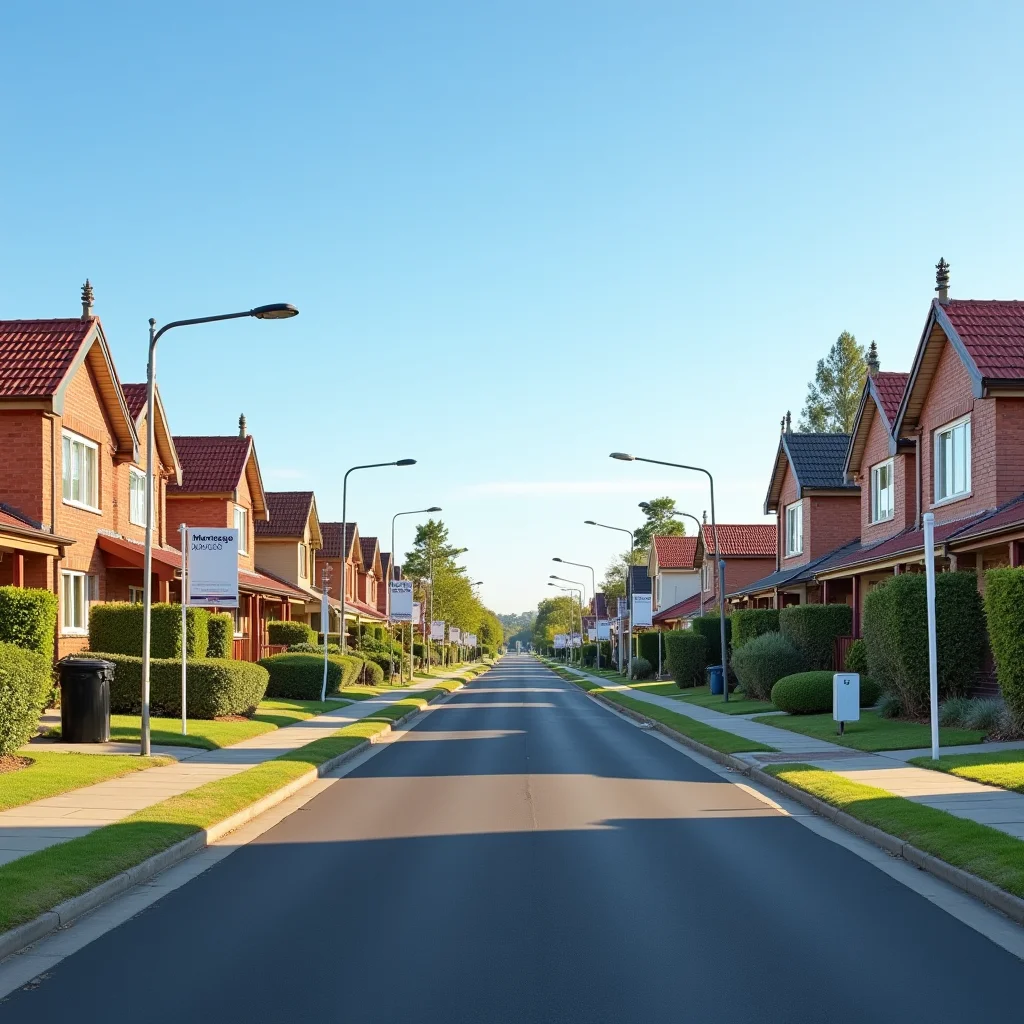
A local downsizer paid $12.12 million for a stylish Bronte house with north-facing views and knockout beach views, beating a competing family from the neighbourhood to secure the keys, in a result SMH Property reported was $870,000 above the $11.25 million reserve, on 18 October 2026. The sale stood out against a broader Sydney auction market that recorded a preliminary clearance rate of just 52% that week, still below the 60% level considered a balanced market, underscoring how a single premium eastern-suburbs listing can outperform softer citywide conditions.
The Bronte sale did not occur in isolation. Selling agent David Tyrrell of Ray White (Phillips & Co) said the market had softened "quite fast over the last three months," with roughly a 10 per cent shift in conditions, even as buyers continued "downsizing, moving, upgrading" in the area. That resilience in a tightly held, land-scarce pocket illustrates how individual agent and campaign performance can diverge sharply from the citywide clearance trend reported by Domain that week.
For broader market context, see World Property Forum international property intelligence.
A Strong Result Against a Softer Citywide Market
Citywide data from the same reporting period shows how exceptional the Bronte outcome was. Domain recorded a preliminary clearance rate of 52% from 501 reported results out of 845 scheduled Sydney auctions that week, with 154 auctions withdrawn — counted as unsold when the clearance rate is calculated. That reading improved on the previous week's 46%, the lowest of the year, but remained well short of the 60% threshold that signals a market balanced between buyers and sellers.
This divergence matters for how agent performance gets assessed. A $12.12 million result that cleared an $11.25 million reserve by $870,000 is not simply a function of suburb desirability; it reflects campaign quality, pricing discipline at the reserve-setting stage, and the depth of buyer databases agents can activate for a multimillion-dollar listing. The Bronte result — a local buyer beating a family bidder for a home with knockout views — is the kind of outcome premium-suburb agents are expected to deliver consistently, not occasionally.
Other Results Point to a Segmented Market
Other auctions reported alongside the Bronte sale reinforce how segmented the current Sydney market is. In West Pymble, a young family paid $2.3 million — exactly the reserve price — for a deceased estate at 15 Edenholme Street, with The Marshall Group RE's Ahmad Basam describing the market as "segmented": "The higher price points are struggling. This price point is definitely better — early $2 millions is still a decent price point." In Homebush, a renovated five-bedroom home at 30 Abbotsford Road sold under the hammer for $4,151,000 against a $4.1 million guide and $4.2 million reserve, with McGrath Strathfield's Tarun Sethi describing conditions as good and noting the most active part of the market was "turnkey propositions and instant solutions." REAStats' guide on How to Measure Real Estate Agent Performance sets out a framework for comparing campaign outcomes like these across suburbs, though caution is needed before generalising from a single week's results.
"We are selling most things, although we have seen it [the market] soften, and it softened quite fast over the last three months. We have seen probably a 10 per cent change although people are still downsizing, moving, upgrading in our area." — David Tyrrell, Ray White (Phillips & Co), on the Bronte result
Supply Pressure and the Trust Tax Question
Supply-side constraints are adding another layer to the conditions facing premium-suburb agents. According to Property Update, proposed federal changes to discretionary trust taxation are creating fresh obstacles for small and medium-sized developers, compounding construction costs that rose 2% in the June 2026 quarter and remain 51% above pre-pandemic levels, and tightening new-housing supply in established, high-demand suburbs more broadly.
While the Bronte property sold via public auction — with three registered local bidders, not a private sale — agents operating in land-scarce pockets may increasingly supplement public campaigns with direct buyer contact as listing volumes tighten. Off-Market Property Sales Explained outlines how these private channels work, though the specific share of transactions moving through them in any given prestige suburb is not established by the sources reviewed for this article.
Housing Supply Context Behind the Premium Market
Zooming out, the supply pressures described above sit within a broader national shortfall. According to the National Housing Supply and Affordability Council's August 2026 report cited by Property Update, approximately 308,000 homes had been completed during the first seven quarters of the National Housing Accord period — around one-quarter of the 1.2-million-home target after 35% of the available time had elapsed. The Council now expects the target to be met in the December quarter of 2030, well beyond the original mid-2029 deadline. Industry polling commissioned by the Housing Industry Association, Master Builders Australia, the Property Council of Australia, the Real Estate Institute of Australia and the Urban Development Institute of Australia found more than 60% of surveyed small and medium developers expect the proposed trust tax changes to affect project timing or viability, with 37% of those expecting an impact anticipating at least one project cancellation.
What the Bronte Result Signals Going Forward
The Bronte result shows that a well-prepared campaign in a land-scarce, high-demand pocket can still clear its reserve by hundreds of thousands of dollars even as the citywide Sydney auction market sits well below the 60% clearance threshold considered balanced. David Tyrrell noted a low volume of homes for sale in this price range, with little new stock expected to reach auction before year's end. Vendors in similarly tightly held suburbs may benefit from that scarcity, while broader supply pressure — compounded by proposed trust tax changes affecting small and medium developers — suggests established, high-demand pockets could remain comparatively insulated from softer citywide conditions for some time. Agencies and buyers should treat any single result, including Bronte's, as one data point rather than evidence of a broad clearance-rate trend across premium suburbs nationally.