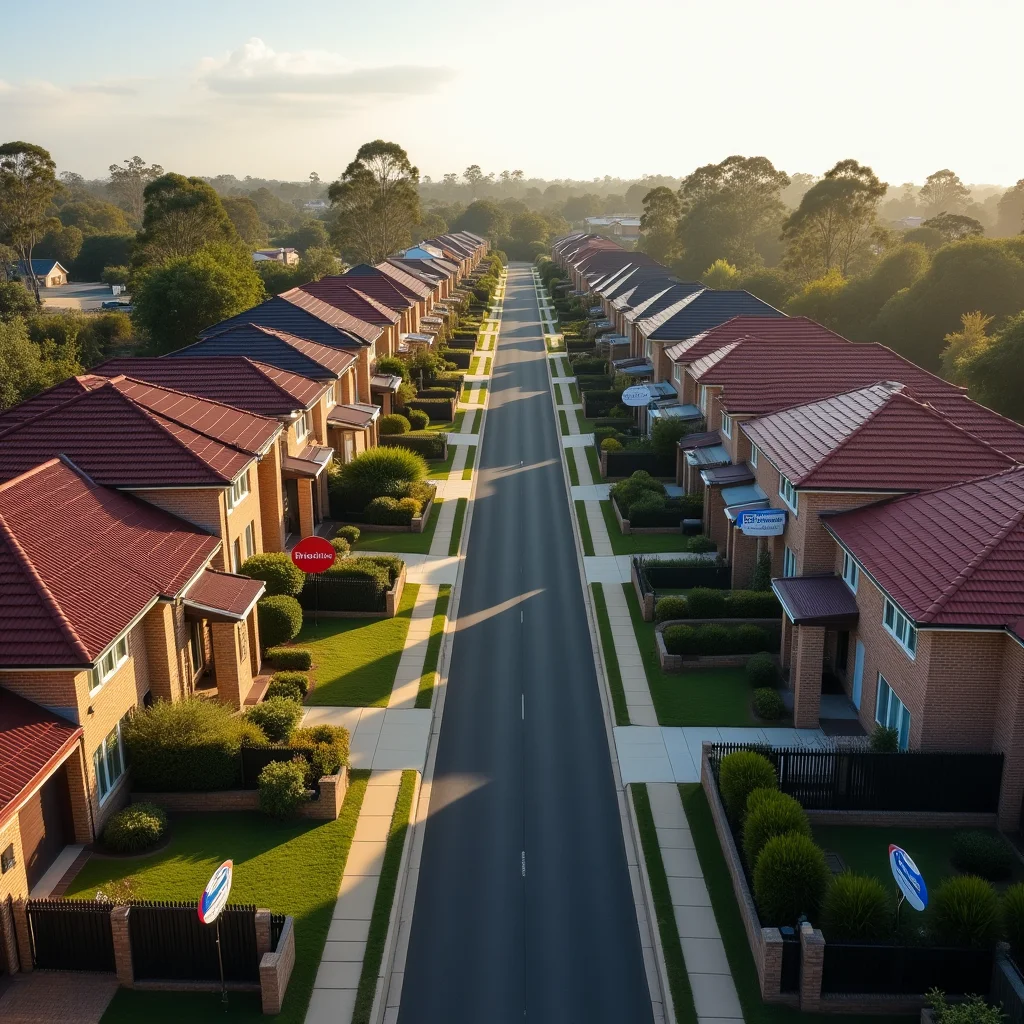
Dandenong's median house price of $680,000 sits at less than one-quarter of Toorak's $2.8 million — and that 4-to-1 gap within a single city tells only part of Australia's affordability story in September 2026. Across 20 suburbs tracked by REAStats, the RBA's 4.35% cash rate is amplifying a structural split between high-growth western markets, sluggish eastern capitals, and regional coastal pockets where days-on-market have blown out to 48 days. Meanwhile, REA Group reported on September 14 that a Mentone family extracted an almost $100,000 premium above expectations at auction — a result that underscores how strategic presentation and suburb selection can override broad affordability headwinds in specific micro-markets.
WA's Affordability-Growth Paradox: Nedlands and South Perth Lead Every Metric
Western Australia is producing the most striking data in this affordability cycle. Nedlands recorded 15% annual price growth and a median of $2.2 million, yet properties are clearing in just 15 days — the fastest of any suburb in this dataset. South Perth sits at $1.45 million with 13.8% annual growth and a 17-day sales cycle, supported by a 63.5% auction clearance rate. These figures are not characteristic of an overheated market bleeding buyer depth; they reflect a supply-constrained environment where qualified buyers act decisively.
Mandurah presents the inverse of the Nedlands story but remains equally compelling. At $550,000 median, it is the most accessible entry point among the WA suburbs tracked, yet it still posted 10.5% annual growth — outperforming every Victorian suburb in this dataset by a margin of at least 7.7 percentage points. Fremantle sits between these poles at $950,000 median with 5.8% growth and a 25-day sales cycle. For buyers priced out of Nedlands, Fremantle and Mandurah represent the clearest state-level affordability alternatives without sacrificing momentum.
Nedlands posted 15% annual growth and a 15-day sales cycle against a median of $2.2 million, while Dandenong's $680,000 median produced just 2.3% growth over 40 days — a performance gap that makes WA the standout affordability-growth combination of September 2026.
Victoria's Intra-City Divide: Dandenong at 2.3% Growth, Toorak at 4.5%
Melbourne's affordability divide is the sharpest of any capital city in this dataset. Dandenong records a $680,000 median — accessible relative to Sydney and inner Melbourne — but delivers only 2.3% annual growth over 40 days on market with a 56% auction clearance rate. That combination tells a clear story: the most affordable Melbourne entry points are also the slowest performers by every transactional measure. Buyers accepting a discount entry price are, by the data, also accepting reduced liquidity and lower capital return.
Toorak, at $2.8 million, posted 4.5% annual growth and cleared in 23 days at a 72% clearance rate. Kew at $2.1 million recorded 4.4% growth in 24 days. Prahran sits at $1.55 million with 3.9% growth. The pattern across inner Melbourne is consistent: higher absolute prices correlate with faster sales and stronger clearance rates under current conditions. Reservoir at $880,000 sits in the middle tier — 2.8% growth, 32-day sales cycle, 62% clearance — producing outcomes closer to Dandenong than to Kew or Toorak. This reinforces that the premium tier in Melbourne is functioning as a distinct market from its mid- and lower-tier counterparts.
For deeper context on how price gaps between suburbs translate into agent strategy decisions, the Real Estate Agent Industry Statistics — How the Sector Works guide documents the income and commission structures that shape how agents prioritise listings across these divergent price points. Agents working Dandenong and Reservoir face materially different transaction economics from those operating in Toorak, which affects marketing investment, auction strategies, and vendor counselling.
NSW's Coastal-Metro Split: Randwick at 73.5% Clearance, Port Macquarie at 46%
New South Wales data exposes the widest auction clearance gap of any state covered here. Randwick recorded a 73.5% clearance rate with a $2.4 million median, 5.6% annual growth, and a 23-day sales cycle. Surry Hills sits close behind at $1.92 million, 5.5% growth, and 73% clearance over 23 days. Kirribilli at $2.65 million returned 4.8% growth and 72.5% clearance in 24 days. These inner-Sydney results confirm that well-located, established suburbs are sustaining buyer competition despite the RBA holding at 4.35%.
The contrast with NSW's regional coastal markets is stark. Port Macquarie records an $850,000 median — 65% cheaper than Randwick — but posts a 46% clearance rate and 48 days on market. Ballina at $1.35 million produced just 4% annual growth over 45 days with a 47% clearance rate. Liverpool, at $850,000, sits in a more credible position with 60.5% clearance over 38 days, suggesting that Sydney's outer suburban ring is outperforming the coastal lifestyle markets on transactional velocity. Penrith at $880,000 aligns closely with Liverpool — 3.8% growth, 35 days on market, 62% clearance — confirming the outer-ring story.
For buyers weighing regional affordability against transactional risk, the 27.5-percentage-point clearance gap between Randwick and Port Macquarie is a material signal. Lower entry prices in coastal NSW are accompanied by lower market liquidity and weaker growth rates. Understanding auction underquoting practices is particularly relevant in these thinner regional markets, where the gap between quoted and achieved prices can be more variable than in liquid Sydney suburbs.
Queensland's Mid-Tier Growth Story: West End and Maroochydore Outrun Victoria
Queensland's affordability profile sits between WA's high-growth dynamic and Victoria's sluggish mid-market. West End in Brisbane posted an $1.35 million median with 8.8% annual growth over just 22 days — a pace that rivals South Perth's speed despite a higher price point. Indooroopilly at $1.38 million recorded 8.5% growth in 23 days with a 62.5% clearance rate. These inner-Brisbane results demonstrate that QLD's premium tier is sustaining genuine buyer competition, not just headline volume.
Maroochydore on the Sunshine Coast represents the clearest affordability-growth balance in QLD. At $1.05 million median, it returned 8.5% annual growth and cleared in 28 days. That combination — sub-$1.1 million entry, 8.5% growth, faster-than-average days on market — makes Maroochydore the most data-supported affordability argument in the entire 20-suburb dataset for buyers with a mid-tier budget. The 54% clearance rate is weaker than inner-Brisbane results, but the growth rate more than compensates on a total-return basis.
For context on how Queensland compares to international growth markets under similar rate environments, international property market analysis shows that mid-tier coastal markets in comparable economies have historically absorbed rate pressure more effectively than prestige-only markets, a pattern consistent with QLD's current performance spread. For buyers and investors tracking macro and interest rate conditions affecting all these markets, macro and interest rate market analysis provides the broader monetary policy context underpinning the RBA's 4.35% hold.
Renovation Premiums and the Micro-Market Exception
Against the backdrop of broad affordability pressure, REA Group reported on September 14 that a prestige home that took five years to renovate topped Australia's weekly auction results at $17 million, part of an event that sold more than $28 million under the hammer. On the same date, a Mentone family secured an almost $100,000 premium above expectations through targeted renovation improvements. These two results — separated by $16.9 million in price — share a common structural factor: presentation-driven value creation in a market where buyers are highly selective.
The renovation premium data matters for affordability analysis because it identifies which market segments remain active under 4.35% rate conditions. At the $17 million end, prestige buyers are rate-insensitive and renovation quality is the primary value driver. At the Mentone end, sub-$1.5 million buyers are applying comparable selectivity — rewarding well-presented stock and bypassing unrenovated equivalents. This bifurcation is consistent with the clearance rate data: high-performing suburbs like Randwick (73.5%) and Toorak (72%) are seeing buyers concentrate on quality listings while thinner markets like Port Macquarie (46%) and Ballina (47%) absorb the inventory that premium buyers have passed over.
For vendors in mid-tier markets — Reservoir, Dandenong, Liverpool, Penrith — the renovation premium signal is operationally significant. In a 56%–62% clearance environment with 32–40-day sales cycles, presentation investment carries a measurable return. The Mentone result reported by REA Group is not an outlier; it is the data-supported outcome of applying premium presentation discipline in a price-selective buyer pool. Agents operating in these suburbs should be positioning renovation ROI as a core component of campaign strategy, not an optional add-on.

