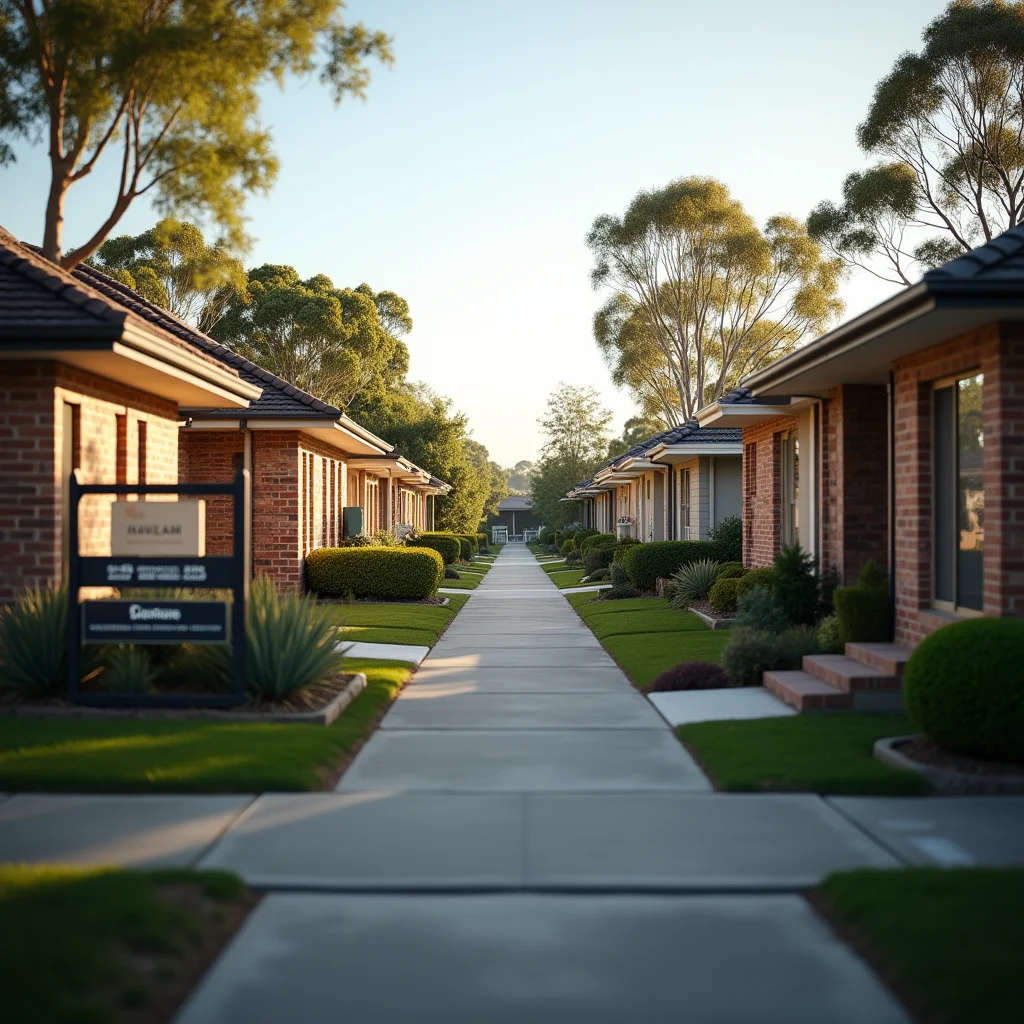
A Northcote triple-brick home passed in on a vendor bid of $1.7 million over the weekend, with agents telling SMH Property that buyers and sellers spent the weekend debating the state of Melbourne's falling market and the chance of another interest rate move. The pass-in lands days after a leading auctioneer told REA Group that Melbourne sellers chasing prices beyond what buyers will pay are the real driver of the city's auction struggles, not buyer reluctance. That distinction matters most at the entry level, where REAStats suburb data shows first home buyer activity is holding up in a way the premium tier is not.
The Vendor Expectation Gap Driving Melbourne Pass-Ins
The Northcote result fits a pattern REA Group's commentary describes directly: sellers anchored to prior-cycle valuations are refusing to meet the market, and buyers are responding by withholding bids rather than chasing. REAStats data on Melbourne's middle and upper suburbs shows clearance rates still clustered in the high-60s to low-70s for premium stock — Toorak at 72%, Kew at 71%, Prahran at 69% — yet median growth across the same suburbs has slowed to between 3.9% and 4.5% annually. That combination of firm clearance and soft growth points to vendors testing the market with ambitious reserves rather than outright buyer absence.
Where the gap widens is at the affordability boundary. Newtown in Victoria is clearing at just 52% with 35 days on market, well below the state's premium suburbs, suggesting mid-tier vendors are the ones most exposed to the pricing disconnect the auctioneer described. First home buyers priced out of Northcote's $1.7 million bracket are not disappearing from the market — they are moving further down the price curve, and that shift shows up clearly in the entry-level data.
Where First Home Buyers Are Still Transacting
Dandenong, Victoria's most affordable suburb in the REAStats dataset at a $680,000 median, is clearing at 56% with a 40-day average campaign — softer growth at 2.3% annually, but a functioning market rather than a stalled one. Reservoir, at $880,000 median and 62% clearance over 32 days, sits closer to the state's broader entry-level band and shows buyers are still willing to transact when pricing is realistic. These figures suggest first home buyer demand has not evaporated under the current rate settings; it has simply concentrated below the $900,000 mark while premium listings like the Northcote home struggle to attract committed bidders.
The pattern is not Melbourne-specific. In New South Wales, Liverpool ($850,000 median, 60.5% clearance, 38 days) and Penrith ($880,000 median, 62% clearance, 35 days) show comparable entry-level resilience in Sydney's outer ring, even as the city's broader auction market has softened through 2026. Port Macquarie, by contrast, carries a 48-day average campaign at a similar $850,000 median — a reminder that affordability alone does not guarantee speed, and that regional entry points can carry longer settlement timelines than metro equivalents.
Melbourne's entry-level suburbs are clearing at 56% to 62% even as mid-tier stock like Newtown slips to 52%, indicating first home buyer demand is holding firm below roughly $900,000 while vendor expectations above that line remain the primary source of auction pass-ins.
State Comparisons: Where Entry Conditions Are Easiest
Western Australia offers the sharpest contrast to Melbourne's current mood. South Perth is recording 13.8% annual growth with a 17-day average campaign, and Nedlands — admittedly a $2.2 million median suburb — is moving in just 15 days at 15% annual growth. Mandurah, at a $550,000 median with 10.5% growth and a 24-day campaign, is the most accessible entry point in the WA dataset and is moving faster than any comparable Victorian or NSW suburb in this list. Fremantle, at $950,000 and 54.6% clearance, sits closer to the national entry-level pattern but still outpaces Dandenong on speed.
Queensland's entry-level corridor tells a similar story of resilience: Maroochydore is growing at 8.5% annually with 54% clearance over 28 days, while Indooroopilly and West End — both above $1.3 million median — are clearing above 62%. The spread across these four states shows first home buyers are not facing a uniform national squeeze; conditions vary sharply by state and by price band, and WA's faster-moving, higher-growth entry suburbs stand apart from Victoria and NSW's slower, more contested bottom tier.
Background: Reading the Signals Behind a Pass-In
A pass-in at vendor bid, as occurred in Northcote, is one of the clearest signals a market can send about where buyer and seller expectations diverge — and tracking how long a property has been listed is central to interpreting that gap, as explained in Days on Market — What It Tells You. Campaigns stretching past 40 days, as seen in Dandenong and Port Macquarie, typically indicate vendors are recalibrating price expectations mid-campaign, while sub-20-day cycles in Nedlands and South Perth point to pricing that matched buyer appetite from the outset.
The broader rate environment sits behind all of this. With the RBA cash rate holding at 4.60%, borrowing capacity remains the binding constraint for most first home buyers, and macro and interest rate market analysis suggests further tightening would compress entry-level budgets further before any easing cycle begins. For broader context on how national price movements interact with rate settings, see the Australian Property Market Overview.
What This Means for Buyers and Vendors
For first home buyers, the data points toward a narrower but navigable window: suburbs clearing above 55% with campaigns under 35 days — Dandenong, Reservoir, Liverpool, Penrith, Mandurah — represent markets where realistic vendor pricing is meeting genuine demand. For vendors in Melbourne's mid-to-premium tier, the Northcote outcome and REA Group's commentary both point to the same conclusion: reserves set against 2023-era valuations are producing pass-ins rather than sales, and buyers in this cycle are prepared to wait rather than stretch. Agents working entry-level stock in the 50-900k band across Victoria, NSW and WA are seeing the fastest clearance and shortest campaigns in this dataset — a gap vendors above that threshold will need to close before clearance rates recover.