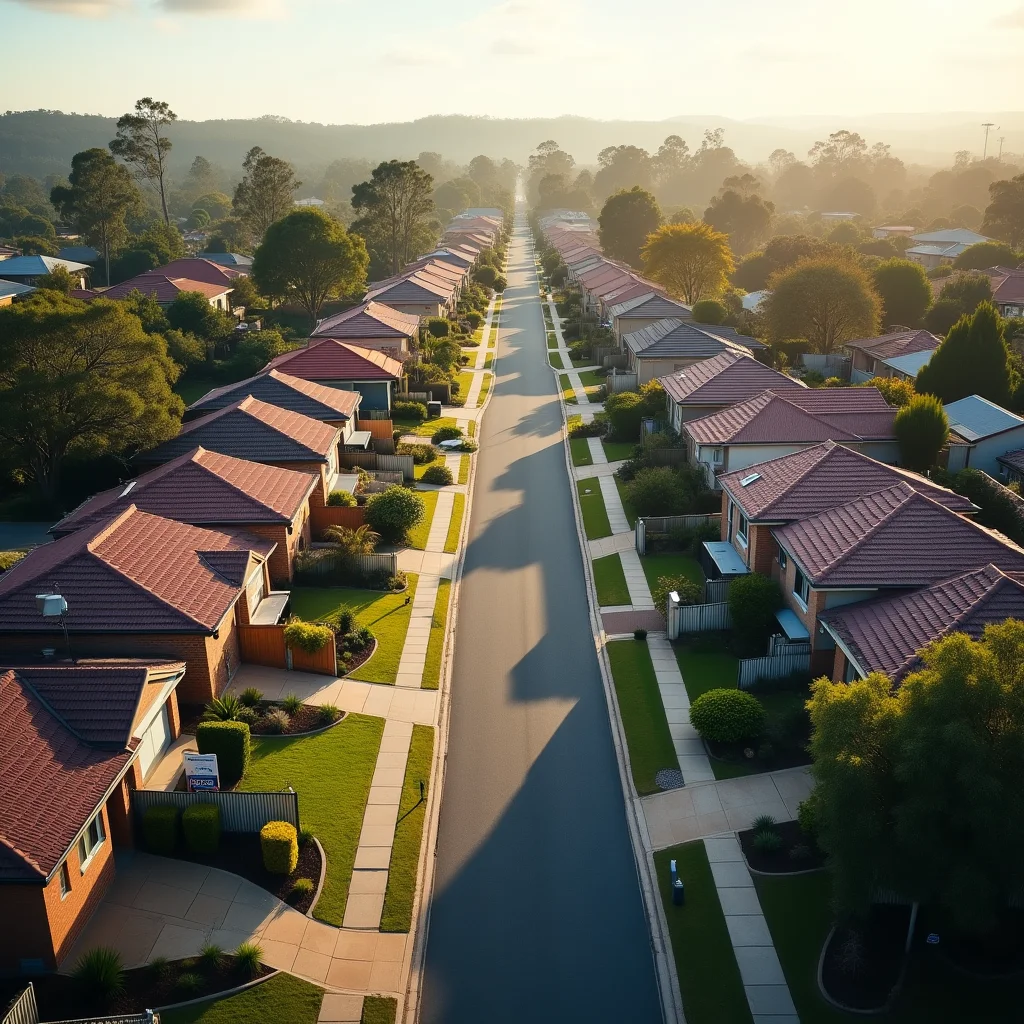
According to REA Group, the Reserve Bank of Australia kept the cash rate on hold at 4.35% on August 11, 2026 — a decision framed as a potential turning point ahead of the spring selling season. But a single national rate produces sharply different outcomes across Australia's state property markets: Western Australia's Nedlands recorded 15% annual growth with properties clearing in 15 days, while NSW's Port Macquarie sits at a 46% auction clearance rate and 48 days on market — a divergence of 33 days in sales velocity between two markets operating under the identical monetary policy setting.
Western Australia: The Outlier State That Keeps Outperforming
Western Australia's premium suburbs are delivering growth figures that have no parallel in the eastern states at present. Nedlands, with a median price of $2,200,000, recorded 15% annual growth and an auction clearance rate of 65.5% — with stock clearing in just 15 days. South Perth, at a $1,450,000 median, posted 13.8% annual growth with a 17-day sales cycle and a 63.5% clearance rate. Mandurah, Perth's southern coastal market at a $550,000 median, recorded 10.5% annual growth with a 24-day average days on market.
These figures represent a structural divergence, not a cyclical blip. WA's relatively constrained housing supply, strong interstate migration, and a resource-sector employment base that has remained insulated from the rate environment afflicting mortgage-heavy eastern-state households have combined to sustain buyer competition. Fremantle, at a $950,000 median, recorded 5.8% annual growth and cleared stock in 25 days — a figure that would represent an outperformance benchmark in most Victorian or NSW markets at present. For a broader international comparison of what supply-constrained coastal markets look like under rate pressure, international property market data reinforces that WA's dynamic is not unique globally, but it is exceptional domestically.
Western Australia's Nedlands recorded 15% annual growth and a 15-day average days on market, while South Perth added 13.8% annually — both suburbs outperforming the national median growth rate by a margin of more than 10 percentage points in the same rate environment.
Queensland: Sustained Momentum Across Price Tiers, But Clearance Rates Signal Caution
Queensland's market is broadly outperforming Victoria and NSW on growth metrics, though auction clearance rates remain softer than the headline price numbers might suggest. West End in Brisbane recorded 8.8% annual growth at a $1,350,000 median, with a 22-day sales cycle — among the fastest in the eastern states. Indooroopilly posted matching 8.5% growth at a $1,380,000 median with a 23-day days on market figure and a 62.5% clearance rate. Maroochydore on the Sunshine Coast delivered 8.5% annual growth at a $1,050,000 median, though its 54% clearance rate indicates a more contested auction environment where vendors are relying on private treaty to close transactions.
The 22-to-28-day sales cycle across Brisbane's inner suburbs contrasts directly with the 35-to-48-day figures recorded across comparable NSW regional and outer-metro markets. This velocity differential has practical implications for vendor campaign strategy: shorter days on market reduce holding costs, minimise price fatigue, and maintain competitive tension between buyers. Queensland's relative affordability advantage over Sydney — particularly at the $1,050,000-to-$1,380,000 median price range — continues to channel interstate buyer capital northward from NSW, a pattern that has sustained Queensland growth rates well above the national average through the current rate cycle.
New South Wales: A Market Split Between Prestige Enclaves and Struggling Outer Markets
NSW presents the sharpest internal market split of any state in the current data. Randwick, with a $2,400,000 median, recorded a 73.5% auction clearance rate and 5.6% annual growth — with properties moving in 23 days. Kirribilli at $2,650,000 posted a 72.5% clearance rate and 4.8% annual growth with a 24-day cycle. Surry Hills at $1,920,000 recorded a 73% clearance rate and 5.5% growth. These inner-Sydney prestige and near-city suburbs are demonstrating genuine competitive depth at auction, with clearance rates consistently above 70%.
The divergence with outer and regional NSW is severe. Port Macquarie sits at a 46% clearance rate, 48 days on market, and 3.5% annual growth at an $850,000 median. Ballina recorded a 47% clearance rate with 45 days on market and 4% annual growth at a $1,350,000 median — a median price that exceeds several inner-Brisbane suburbs, yet produces clearance rates more than 25 percentage points below them. Liverpool returned a 60.5% clearance rate at a $850,000 median with 38 days on market. Penrith at $880,000 posted a 62% clearance rate but a 35-day sales cycle. The data pattern is consistent: the further a NSW property sits from Sydney's inner ring, the longer it sits unsold and the lower the probability of an auction result on the day. For context on how Auction Underquoting in Australia — How It Works, Why It Happens, and Your Rights can distort clearance rate interpretation in soft outer markets, the dynamics at play in Port Macquarie and Ballina warrant scrutiny before accepting headline auction metrics at face value.
Victoria: Prestige Holds, Middle Ring Struggles, and Outer Suburbs Stall
Victoria's market is operating in three distinct tiers. Toorak, at a $2,800,000 median, posted a 72% auction clearance rate with a 23-day sales cycle and 4.5% annual growth — a solid result for a market under rate pressure, though still tracking well below WA's premium-suburb performance. Kew at $2,100,000 recorded a 71% clearance rate and 4.4% annual growth with 24 days on market, while Prahran at $1,550,000 returned a 69% clearance rate and 3.9% growth in 25 days. Victoria's prestige tier remains fundamentally functional as a market.
The middle and outer rings tell a different story. Reservoir at $880,000 posted a 62% clearance rate and 2.8% annual growth with 32 days on market. Dandenong at $680,000 recorded a 56% clearance rate, just 2.3% annual growth, and 40 days on market — the weakest growth figure in the entire dataset. Newtown (VIC) at $950,000 returned a 52% clearance rate with 3.8% growth and 35 days on market. The 52% clearance rate in Newtown is particularly notable: at that level, more properties are failing to sell at auction than succeeding, which shifts effective price discovery to post-auction negotiation. Australian Property Forum has reported that Melbourne families are pivoting from detached houses to townhouses in the same suburbs to save up to $400,000 — a structural demand shift that is reshaping middle-ring Victorian market composition and may be suppressing clearance rates for detached product specifically.
The rate hold at 4.35% provides a floor of stability for Victorian prestige buyers, but the REA Group reporting on families borrowing against homes to cover basic costs maps directly onto the Dandenong and Reservoir segments — markets where mortgage stress exposure is highest relative to income levels and where growth has been most suppressed. For a detailed breakdown of how to interpret clearance rate data across different market conditions, the Auction Clearance Rates Explained guide provides the methodological context that distinguishes genuine demand compression from temporary seasonal effects.
What the Rate Hold Means for Each State's Spring Campaign Window
The RBA's decision to hold at 4.35% removes immediate upward rate risk from the spring listing window that typically opens in late August and accelerates through September and October. For Western Australia, rate stability reinforces an already strong demand position — vendors in Nedlands and South Perth face limited inventory competition and buyer pools that are not materially rate-constrained in the $1.4-to-$2.2 million range. The 15-to-17-day sales cycles in these suburbs will likely compress further as spring listings increase buyer activity.
For Queensland, the hold provides a confidence signal that supports the interstate migration pattern underpinning Brisbane and Sunshine Coast growth. West End's 22-day cycle and 8.8% growth are products of a buyer pool that has already priced in the current rate environment. For NSW's outer markets and Victoria's middle ring, the hold provides stability but not stimulus — the structural affordability barriers that are producing 38-to-48-day sales cycles and sub-50% clearance rates are not resolved by a rate pause. Vendors in Port Macquarie, Ballina, and Dandenong entering the spring market should expect extended campaign periods and may need to calibrate reserve prices against private treaty outcomes rather than auction premiums. For macro and interest rate market analysis tracking whether additional RBA cuts materialise in late 2026, the trajectory of spring clearance rates across these underperforming segments will be a leading indicator of genuine demand recovery.

