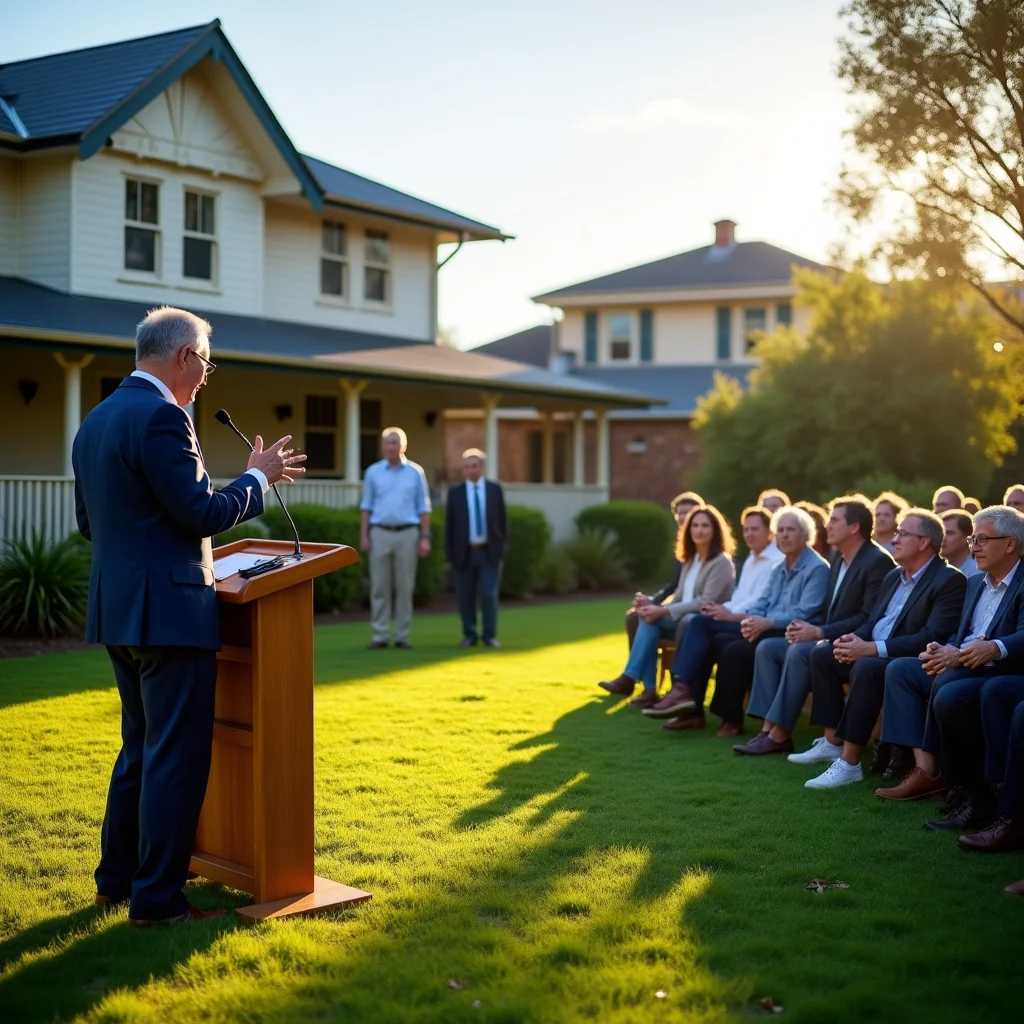
A Surry Hills terrace at 70 Cooper Street attracted 53 bids before selling for $1.945 million on October 24, 2026, according to REA Group — a result $145,000 above the seller's reserve, even as Sydney auction volumes fell 24% year-on-year to just 694 scheduled auctions, per Australian Property Forum. The sale came despite Surry Hills' median property value sitting at $2.13 million, having fallen 11.2% over the past 12 months, underscoring how a single scarce, unrenovated asset can buck a softening local market. For buyers watching the inner-Sydney market, the result is a reminder that under-supplied micro-markets can still produce fierce competition even as the broader auction market cools.
A 53-Bid Auction Signals a Pocket of Demand in a Cooling Market
Six bidders registered for the Cooper Street auction, with at least three actively placing bids and a crowd of around 30 people filling the property's small patio, per both REA Group and Australian Property Forum's reporting on the same campaign. That a single, long-vacant original terrace could draw 53 bids suggests pockets of demand remain intense at this price point even while overall listing volumes contract. REA Group's coverage frames the sale as a contrast to a broader slumping auction market — but Australian Property Forum's analysis suggests the result says more about the scarcity of original-condition, well-located stock than about a citywide turnaround.
The 24% year-on-year listing drop cited by Australian Property Forum matters here: fewer properties coming to market intensifies competition for the stock that remains. Sydney's clearance rate at the time sat at 68.2%, against a national clearance rate of 62.8%, according to Australian Property Forum — context that frames the Surry Hills result as a genuine outlier rather than evidence of a market-wide rebound.
Other Sydney Auctions Reveal the Same Scarcity Pattern
The Surry Hills sale was not an isolated case that weekend. In Alexandria, a two-bedroom apartment sold for $1.305 million to a first home buyer after a ten-month search, drawing 11 bidder registrations — a result agent Brad Gillespie called a "pleasant surprise" given the market's general softness. In Hornsby, a home at 30 Pretoria Parade sold for $2.82 million with five registered bidders, which agent Daniel Dennis attributed to a "lack of good quality homes on the market" rather than broad-based demand. In Como, a five-bedroom home at 17 Wollun Street sold for $3.14 million — $410,000 over reserve — after roughly 50 bids, against a suburb median of $1.72 million.
The pattern across these results is consistent: scarcity of specific property types — original terraces, generational family homes, well-located apartments — is driving isolated bidding wars inside an otherwise cooling citywide market, rather than any broad-based recovery in demand.
Clearance Rates and the Broader Rate Environment
At the time of the Surry Hills sale, the RBA cash rate stood at 4.35%, with markets expecting a hold at the next meeting. Sydney's clearance rate of 68.2% sat above Melbourne's 63.5% and the national figure of 62.8%, according to Australian Property Forum — suggesting Sydney's auction market, while clearly down in volume, was not uniformly weak across every price band or suburb.
"There's not your traditional investors in the market at the minute … but there are still cash heavy investors that are looking for good opportunities." — Hayden Richards, Ray White Touma Taylor, selling agent for 70 Cooper Street, Surry Hills
That dynamic — leveraged buyers stepping back while cash-rich investors and determined owner-occupiers remain willing to compete hard for the right property — is consistent with a market where falling volumes concentrate competition on a smaller pool of standout listings rather than eliminating demand altogether.
Background: Why Single Results Can Mislead
Clearance rate and auction volume data are most useful when read in context rather than extrapolated from a single headline sale — a principle covered in detail in Australian Property Market Statistics 2025 — The Complete Data Guide. A 53-bid result on one terrace does not offset a suburb-wide median that has fallen 11.2% over 12 months, nor does it reverse a 24% year-on-year drop in Sydney auction volumes. In Surry Hills' case, the sale reflects the scarcity value of a genuinely original, long-vacant asset rather than a shift in underlying suburb-level demand.
Broader Australian property market data across comparable inner-city pockets reinforces that standout auction results tend to cluster around scarce, well-located, unrenovated or generational homes during periods of falling listing volumes — a dynamic that can dominate headlines without signalling a turnaround in the wider market.
What the Data Signals Near Term
For vendors in Surry Hills and similar inner-Sydney suburbs, the data supports caution rather than confidence: a single outlier result sits alongside a median value down 11.2% over the year and a 24% drop in listing volumes citywide. For buyers, scarce, original-condition stock in tightly held inner-city pockets can still attract fierce competition even as the aggregate market softens — but this should not be mistaken for a broad resurgence in demand. Agents working this segment should expect continued patchiness: strong results for genuinely scarce properties, and comparatively muted interest for standard renovated stock, through the remainder of 2026, with the RBA's 4.35% cash rate and tighter lending conditions continuing to shape buyer participation.