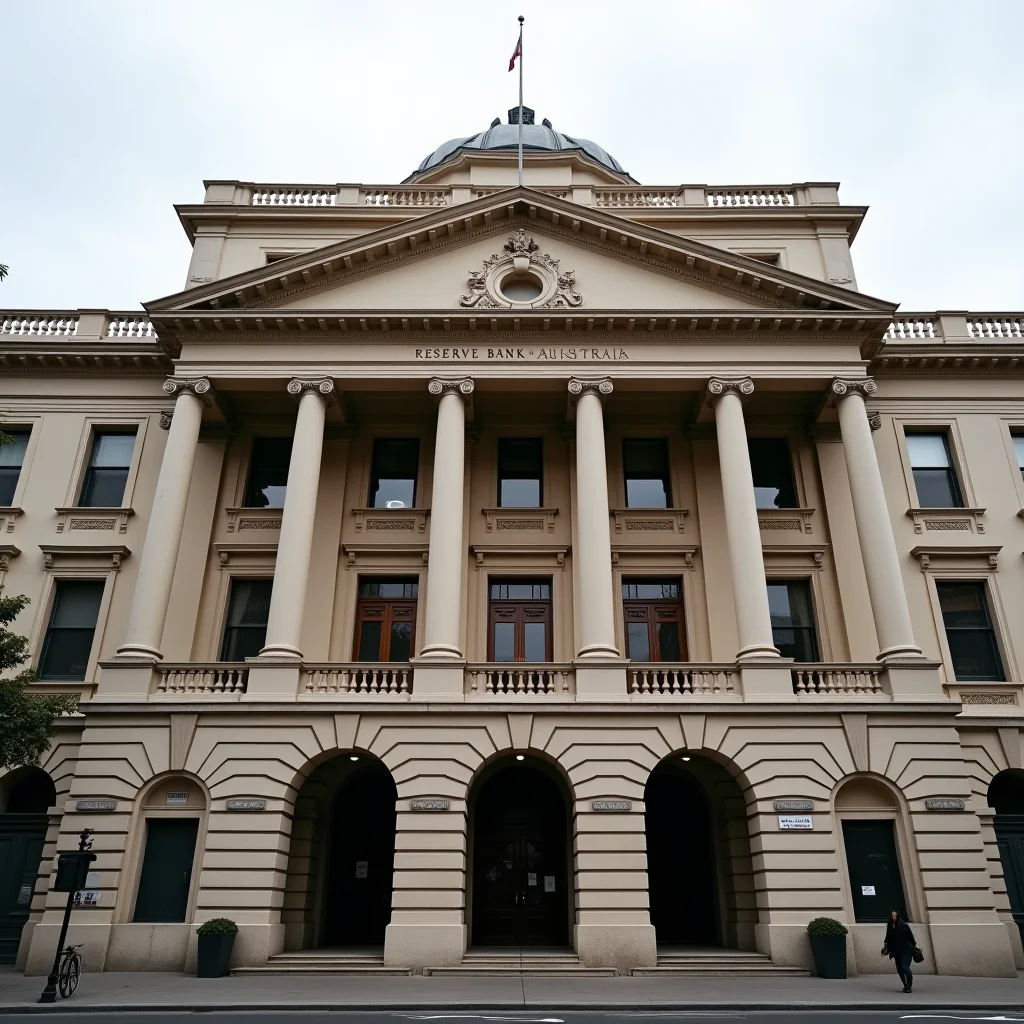
According to REA Group, Sydney's auction market has slumped to another low, extending a record eight-week streak of weak results that began with the May 2026 budget release — while simultaneously, first-home buyers and young professionals battled it out at auction for a Melbourne family home that sold for $1.5m. These two data points — Sydney sellers retreating from auctions and Melbourne buyers still competing hard at the $1.5m mark — define the affordability fault line splitting Australia's property market in July 2026. Against a backdrop of the RBA's 4.35% cash rate and national median prices under pressure, the gap between what buyers can access in Mandurah at $550,000 and what the market demands in Randwick at $2,400,000 has rarely been wider.
Sydney's Auction Retreat Signals a Market Repricing in Real Time
Sydney's sustained auction withdrawal is not a seasonal blip — it is a structural response to a market where vendor price expectations have outpaced buyer capacity. REA Group's reporting confirms the weakness extends across eight consecutive weeks, a streak that began precisely when the federal budget introduced significant tax changes affecting property investors. The knock-on effect for affordability is direct: as private treaty volumes rise and auction clearance rates stagnate, price discovery becomes less transparent, and buyers face a longer, more uncertain campaign environment.
The suburb-level data reinforces this. Randwick, one of Sydney's most contested inner-east markets, holds a $2,400,000 median with 5.6% annual growth and a 73.5% clearance rate — still one of the strongest in the city. Yet at Port Macquarie, where the median sits at $850,000, clearance rates have fallen to 46% and days on market have blown out to 48. That 33-day gap in selling time between a prestige Sydney suburb and a mid-tier regional market tells buyers everything about where liquidity has concentrated. Liverpool, at $850,000, records a 60.5% clearance rate and 38 days on market — marginally better than Port Macquarie, but still a market where vendors are waiting.
Penrith, at $880,000, offers a similar picture: 3.8% annual growth, 35 days on market, and a 62% clearance rate. For first-home buyers, these western Sydney suburbs represent the outer edge of what the RBA's 4.35% cash rate makes serviceable. According to Australian Property Forum, the RBA's current cash rate — the highest in over a decade — translates to materially higher monthly repayments than buyers faced as recently as 2022, compressing borrowing capacity across every price bracket.
Melbourne's $1.5m Battleground: Where First-Home Buyers Still Compete
The Melbourne auction that drew first-home buyers and young professionals to a $1.5m family home result is a data point that cuts against the broader narrative of buyer retreat. It signals that in Melbourne's middle ring, demand for liveable family stock at attainable — if stretched — price points remains genuine. Prahran, at a $1,550,000 median with 3.9% annual growth and a 69% clearance rate across 25 days on market, represents this segment accurately: competitive but not frenzied, with vendors securing results in reasonable timeframes.
At the affordable end of Melbourne's market, Dandenong records a $680,000 median — the lowest in this dataset — with 2.3% annual growth, a 56% clearance rate, and 40 days on market. Reservoir, at $880,000, posts 2.8% growth and a 62% clearance rate across 32 days. These are suburbs where the affordability case is strongest on paper, but where buyer competition has softened along with growth momentum. The contrast with Toorak is stark: a $2,800,000 median, 4.5% annual growth, 23 days on market, and a 72% clearance rate confirm that Melbourne's prestige tier continues to clear stock efficiently even as the broader market struggles.
Mandurah's $550,000 median and 10.5% annual growth versus Randwick's $2,400,000 median and 5.6% growth illustrates a $1,850,000 price gap between Australia's most affordable and most expensive tracked markets — with the cheaper suburb delivering nearly double the capital growth rate.
Western Australia's Affordability Premium: Growth Without the Price Barrier
Western Australia continues to present the most compelling affordability-plus-growth case of any major state market. Mandurah at $550,000 is delivering 10.5% annual growth with a 56% clearance rate and 24 days on market — numbers that Sydney's comparable price bracket cannot match. Fremantle, at $950,000, records 5.8% growth and sells in 25 days with a 54.6% clearance rate. South Perth, at $1,450,000, is the standout prestige performer: 13.8% annual growth, 17 days on market, and a 63.5% clearance rate that outpaces many higher-priced Sydney equivalents.
Nedlands is in a category of its own. A $2,200,000 median combined with 15% annual growth — the highest in this dataset — and a 15-day selling time with a 65.5% clearance rate represents WA's prestige market firing at a level the eastern states simply cannot replicate in the current rate environment. The mechanics behind this performance include interstate migration from Victoria and New South Wales, a constrained supply pipeline, and a local economy supported by resources sector employment. For buyers considering macro and interest rate market analysis before committing to a state market, WA's combination of entry-point diversity and growth consistency is a difficult case to argue against.
The WA data also highlights how affordability is not solely a function of median price. A buyer entering Mandurah at $550,000 with a 20% deposit faces a $440,000 mortgage — manageable at 4.35% for a dual-income household. The same buyer entering Liverpool at $850,000 faces a $680,000 mortgage for a suburb posting half the annual growth rate. The capital growth differential compounds over five years into a significant wealth outcome gap.
Queensland's Middle Tier: The Affordability Sweet Spot Between Perth and Sydney
Queensland's market data presents a middle path between WA's high-growth affordability and Sydney's price-compressed stagnation. Maroochydore at $1,050,000 records 8.5% annual growth and a 54% clearance rate across 28 days on market — a suburb where buyers are still absorbing a seven-figure median without the volume collapse seen in Sydney's comparable price bracket. West End in Brisbane posts a $1,350,000 median with 8.8% annual growth, a 62% clearance rate, and 22 days on market. Indooroopilly, at $1,380,000, mirrors West End's growth at 8.5% with a 62.5% clearance rate.
These Queensland results are particularly significant when read against Sydney's eight-week auction slump. Markets at comparable or higher price points are clearing faster and growing harder in Queensland's inner suburbs than in Sydney's middle ring. For buyers who can relocate or investors willing to operate interstate, the affordability calculation increasingly favours Queensland's growth corridor over comparable Sydney price brackets. The Investing in International Property from Australia guide contextualises this dynamic well: Australian investors who look beyond their home state — or even beyond national borders — can access materially different risk-return profiles than their local market offers.
Ballina provides a Queensland-adjacent comparison from northern NSW: $1,350,000 median, 4% annual growth, 45 days on market, and a 47% clearance rate. At the same price as West End, Ballina delivers less than half the growth rate and takes twice as long to sell. The regional NSW premium for lifestyle access is being tested severely by the rate environment.
What the Affordability Data Signals for Buyers, Vendors, and Agents This Quarter
The July 2026 affordability picture across Australia's major cities resolves into three distinct tiers. The first tier — Nedlands, Randwick, Toorak, Kirribilli — maintains liquidity and growth at prestige price points because the buyer cohort at these levels is less sensitive to mortgage rate changes. Kirribilli at $2,650,000 with a 72.5% clearance rate and 24 days on market confirms prestige Sydney is still clearing. The second tier — Melbourne's Prahran, Queensland's West End and Maroochydore, WA's Fremantle — represents owner-occupier demand running at sustainable velocity. These markets are not booming, but they are not stalled.
The third tier — Dandenong, Reservoir, Port Macquarie, Ballina, Liverpool — is where the RBA's 4.35% cash rate is most legible in the data. Longer days on market, sub-60% clearance rates, and sub-4% annual growth across markets that should theoretically benefit from affordability-driven demand suggest that buyer borrowing capacity has been sufficiently compressed to dampen volume even at lower entry points. For a deeper read on how current borrowing costs affect this tier specifically, the analysis at Australian Property Forum quantifies the repayment impact across loan sizes that map directly to these suburb medians.
For vendors in Sydney's middle and outer rings, the eight-week auction slump documented by REA Group is a direct instruction: price to the current buyer pool, not the 2024 comparables. For buyers in WA and Queensland's growth corridors, the Melbourne $1.5m auction result is a reminder that competition for well-located family stock at attainable price points persists even in a softening national market. For agents working the third tier — outer suburban and regional markets — private treaty campaigns with realistic vendor price guides will outperform optimistic auction strategies until clearance rates recover from their current lows. The auction underquoting practices that inflated vendor expectations in previous cycles are now working against vendor confidence when results fall short. Pricing integrity, not auction theatre, is what this market rewards.

