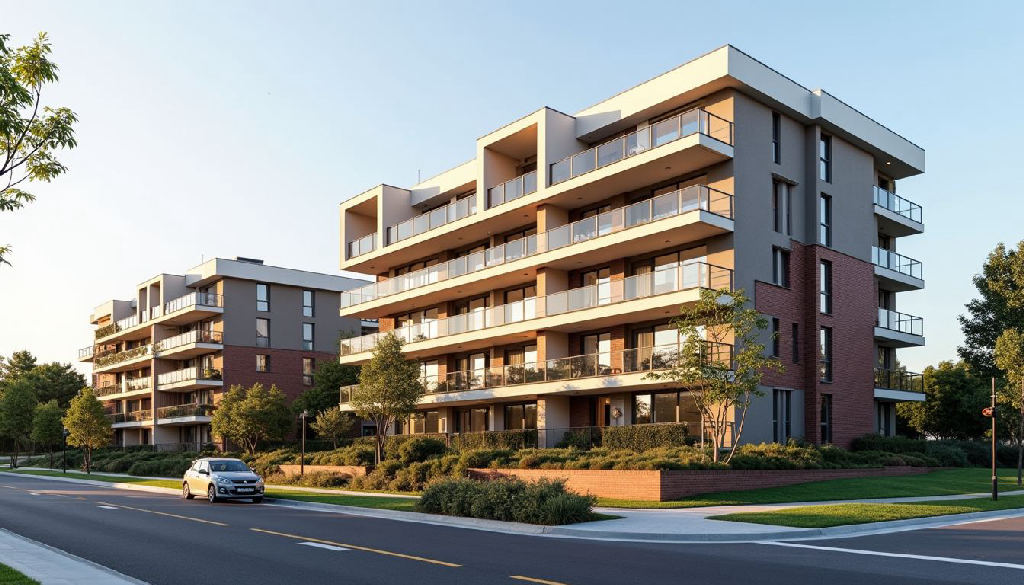
Almost 300 Sydney apartment buyers remain locked out of completed units after $24 million in deposits disappeared from trust accounts, with developer Landmark now pursuing a law firm through the NSW Supreme Court. According to ABC News, the missing funds relate to 140 purchasers at the Casa Delmar development in Dee Why and 145 purchasers at the Second Avenue project in Blacktown, with the matter returning to court on November 30.
What Happened to the $24 Million
Landmark alleges only part of the deposits held in trust were transferred to Hendrix Legal as directed after the original firm changed hands. The developer has launched legal action against Branston Neville Lawyers and solicitor Ken Neville to recoup the funds. The Law Society of NSW has suspended Mr Neville's practising certificate and appointed a manager to take control of Branston Neville Lawyers "with immediate effect," according to ABC News, while the Supreme Court has issued freezing orders and subpoenas to financial institutions to trace the money.
For broader market context, see Bubblepedia's historical Australian property bubble analysis.
For purchasers like Aziz Namazov, who sold his only property to fund the Dee Why deposit, the timing compounds the damage. He had terminated his rental lease, transferred utility accounts, and packed his belongings ahead of a planned December 2 settlement before being told the deal could not proceed. Daniel Uzun de Oliveira, who was due to settle the same week, said the deposit he paid two years ago into a trust account is "as far as we are aware ... gone."
Legal Exposure and the Fidelity Fund Shortfall
In a separate statement reported by ABC News, Landmark founder Arash Tavakoli described the situation as unprecedented, noting that in "over 25 years and thousands of homes delivered, this has never happened to us or our buyers." Tavakoli has urged affected purchasers to lobby NSW Premier Chris Minns and local MPs to lift the cap on compensation available through the Law Society's Fidelity Fund, which currently sits at $1 million per law practice unless the Law Society authorises a higher payout. Against $24 million in missing funds spread across 285 purchasers, that cap represents a fraction of potential losses if the money cannot be recovered through litigation.
Wainwright Legal principal Clare Wainwright, who represents 42 of the affected Dee Why purchasers, said she has never fielded calls like the ones she's received this week, describing clients who "don't have anywhere to go" despite having met every contractual obligation. Premier Minns has called the situation "a concern," noting that deposits held in trust accounts require full investigation if protocols were breached.
Almost 300 home buyers — 140 at Dee Why's Casa Delmar and 145 at Blacktown's Second Avenue — were due to receive keys between late November 2026 and early 2027 when $24 million in trust-held deposits could not be accounted for, according to ABC News reporting on the NSW Supreme Court matter.
Why This Lands in a Market Already Under Pressure
The timing matters. REAStats data puts the RBA cash rate at 4.85% as of late November 2026 and the national auction clearance rate at 68.8% — a market where buyers are already absorbing higher borrowing costs and tighter settlement timelines. Off-the-plan purchasers in particular carry settlement risk that established-home buyers avoid, because deposits sit in trust for years before a project completes. In softer conditions, a trust account failure of this scale is harder for affected families to absorb financially, since many — like Mr Namazov — have already liquidated other assets to fund the purchase.
Suburb-level data illustrates the contrast between healthy off-the-plan demand and the risk exposed by the Landmark case. West End in Brisbane, for example, carries an 8.8% annual growth rate and a 62% auction clearance rate on REAStats figures, reflecting continued appetite for apartment stock in strong-growth corridors. Randwick, by comparison, clears at 73.5% against a national benchmark of 68.8%, while Port Macquarie trails at 46% — a reminder that settlement confidence varies sharply by location and that buyer protections around trust accounts are not uniform in practice even where demand is robust. The Landmark case shows that even completed, market-ready stock in a tier-one metro area offers no guarantee against conveyancing failure.
Background: Trust Accounts, Off-the-Plan Risk and Buyer Protections
Deposit bonds and solicitor trust accounts are supposed to be the safest part of an off-the-plan purchase — money sits untouched until settlement, with strict regulatory oversight of law firms handling the funds. The Landmark situation tests that assumption directly, and it is likely to renew scrutiny of Fidelity Fund compensation caps. Buyers considering off-the-plan contracts should understand how government schemes and grants interact with settlement timing, since many purchasers using first-home buyer concessions face strict occupancy deadlines that compound the pressure when settlement is delayed through no fault of their own.
Engaging a buyer's agent earlier in the process can also help purchasers scrutinise a developer's conveyancing arrangements before committing a deposit, while a thorough pre-settlement check using standard inspection tools remains essential once keys are finally handed over, given the Casa Delmar building itself is reportedly complete and ready for occupation.
What This Signals for Buyers, Agents and Vendors
For agents handling off-the-plan stock, the Landmark matter is a reminder to disclose trust account arrangements transparently and flag any mid-contract changes of conveyancing firm to purchasers immediately — Landmark's own account suggests the switch to Hendrix Legal is where the funds discrepancy emerged. For buyers, the case strengthens the argument for independent legal advice that verifies trust account custody at each stage of a long settlement, not just at exchange. For vendors and developers, the reputational cost of a $24 million shortfall — regardless of fault — will likely accelerate calls for higher statutory compensation caps before the Supreme Court hearing on November 30 delivers its next development.

