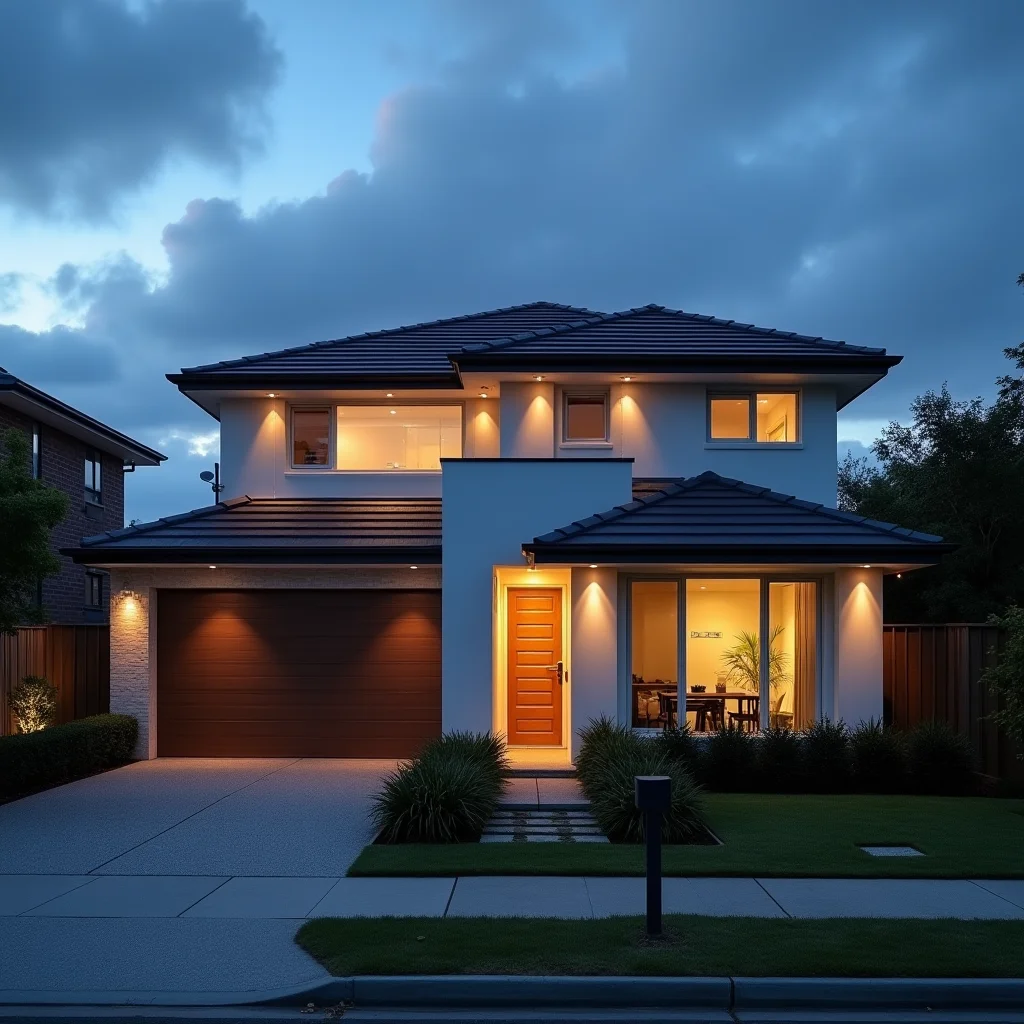
Six buyers competed at the auction of an Adelaide cottage on 24 August 2026, according to REA Group, with the property selling for $952,000 in what the platform describes as an Australian home price hotspot — a result that stands in sharp contrast to Melbourne's weekend, where most auctions failed to clear. On the same day, SMH Property reported a century-old Auchenflower house smashing its reserve despite original shagpile carpet and mustard-coloured lino — a result that reflects sustained buyer conviction in Brisbane's inner-west. Together, these two weekend results point directly to where interstate migration capital is concentrating as the RBA holds its cash rate at 4.35%.
Adelaide and Brisbane Absorb Migration Demand as Melbourne Clearance Rates Falter
The six-bidder Adelaide result is not an isolated data point. It reflects a structural shift in buyer geography that has been building throughout 2026: migrants moving interstate — whether from Victoria, New South Wales, or internationally — are disproportionately targeting South Australia and Queensland for affordability, lifestyle, and relative price runway. While the Adelaide cottage sold at $952,000, this price point remains meaningfully below the equivalent inner-city product in Sydney or Melbourne, giving incoming buyers both a quality-of-life and purchasing-power argument.
For broader market context, see WealthWatchPro macro and interest rate analysis.
Brisbane's Auchenflower result reinforces this pattern. A century-old home with cosmetically tired presentation still cleared its reserve, demonstrating that buyer depth in inner Brisbane is sufficient to absorb properties that would languish in Melbourne's current environment. According to REA Group, most Melbourne auctions over the same weekend failed — a direct contrast that maps the divergence between migration-receiving cities and those experiencing population stagnation or outflow.
West End QLD, which sits adjacent to Brisbane's inner-west auction corridor, recorded 8.8% annual growth at a $1,350,000 median with a 22-day sales cycle and 62% clearance rate. Indooroopilly posted matching 8.5% annual growth at $1,380,000 median with a 23-day campaign. Maroochydore on the Sunshine Coast — a known destination for interstate relocators from Sydney and Melbourne — also recorded 8.5% annual growth at a $1,050,000 median. These three Queensland data points form a consistent migration-driven growth band that the Adelaide and Auchenflower weekend results sit squarely within.
The Melbourne Divergence: What Outbound Migration Looks Like in Price Data
While Adelaide and Brisbane absorbed active bidding pools on 24 August 2026, Melbourne's weekend told the opposite story. REA Group reported that a Melbourne house selling with a sheep named Smudgie thrown into the deal managed to smash its reserve by $100,000 — but framed this as the exception, noting that most Melbourne auctions failed over the weekend. The fact that a novelty livestock incentive became the headline result for Melbourne's auction week underscores how much buyer conviction has retreated from that market.
The suburb data corroborates this. Dandenong in Victoria recorded just 2.3% annual growth at a $680,000 median, with a 40-day sales cycle and 56% clearance rate. Reservoir posted 2.8% annual growth at $880,000 median with a 32-day campaign. Even Kew — where SMH Property reported a young family paying $3.92 million for a renovated heritage home in what was described as an unusually spirited competition despite a weak market — sits at only 4.4% annual growth with a $2,100,000 median. The Kew result, like the Smudgie house, was reported as an outlier in a broadly soft environment.
Prahran recorded 3.9% annual growth at $1,550,000 median with a 25-day cycle, while Toorak posted 4.5% at $2,800,000. These figures confirm that even Melbourne's prestige tier is underperforming relative to Queensland and Western Australian equivalents — a divergence that directly reflects net interstate outflow from Victoria as buyers and renters seek lower costs and better amenity value in competing capitals.
South Perth recorded 13.8% annual growth at a $1,450,000 median with a 17-day sales cycle and 63.5% clearance rate, while Nedlands posted 15% annual growth at $2,200,000 median with a 15-day campaign — both markets running more than three times Victoria's Dandenong growth rate of 2.3% over the same period.
Western Australia's Migration Premium: Speed and Growth Metrics That Melbourne Cannot Match
Western Australia continues to record the most extreme interstate migration price signals in the country. South Perth's 17-day sales cycle sits alongside Nedlands' 15-day campaign — both figures reflecting a buyer pool that is not hesitating. For context, Port Macquarie in NSW posted a 48-day sales cycle and 46% clearance rate, while Ballina recorded 45 days on market and 47% clearance at a $1,350,000 median. The speed differential between WA's migration-receiving suburbs and NSW's regional coastal markets is now measured in weeks, not days.
Mandurah, which has emerged as a key entry point for affordability-driven interstate migrants, recorded 10.5% annual growth at a $550,000 median with a 24-day sales cycle. Fremantle posted 5.8% annual growth at $950,000 median with a 25-day campaign. These WA price points remain materially below their Sydney equivalents — Randwick sits at $2,400,000 median with 5.6% growth, Surry Hills at $1,920,000 with 5.5% — which means the affordability arbitrage for a Melbourne or Sydney household selling into those markets and buying in Perth remains substantial even after sustained WA price growth.
For macro and interest rate context on how the RBA's 4.35% cash rate is shaping these interstate capital flows, Australian Property Forum's analysis of CPI data and RBA policy expectations for 2026 provides important background on the rate environment underpinning these migration decisions. With rate cuts pushed to mid-2027, the holding cost gap between high-priced Sydney or Melbourne mortgages and WA or QLD equivalents continues to drive relocation decisions at the household level.
What the Auction Weekend Data Signals for Interstate Migration Flows
The Adelaide six-bidder result and the Auchenflower reserve-smashing sale share a common structural explanation: both cities are net migration recipients from Victoria and, to a lesser extent, NSW. Buyers arriving with equity extracted from Melbourne or Sydney properties can compete aggressively at Adelaide price points well below $1 million or at Brisbane's inner-west tier, where the Auchenflower result sits. This dynamic produces the bidder depth required to generate competitive auctions even in a national environment where clearance rates are under pressure.
Adelaide's status as what REA Group explicitly calls a "home price hotspot" reflects this migration-driven demand compression. Six registered bidders for a single cottage represents a supply-demand imbalance consistent with a market receiving buyers faster than stock is being listed. The same dynamic is visible in West End QLD's 22-day sales cycle and Maroochydore's 28-day campaign — both figures indicating buyer-side urgency in markets where interstate arrivals are competing against local upgraders.
For a broader statistical foundation, the Australian Property Market Statistics 2025 — The Complete Data Guide provides the clearance rate, days-on-market, and median price benchmarks against which these migration-driven suburb movements can be calibrated. The interstate migration effect does not appear uniformly across price tiers or property types — it concentrates in entry-to-mid-range stock in migration-receiving cities, which is precisely the segment the Adelaide cottage and Auchenflower results represent.
For additional data on how Australian property trends are tracking against international market benchmarks, international property market comparison data places Australia's interstate migration-driven growth corridors in a global context.
Near-Term Signals for Agents and Vendors in Migration-Receiving Markets
The August 24 auction results from Adelaide and Brisbane, combined with the suburb-level data from WA and QLD, produce a clear directional signal: agents operating in South Australia, inner Brisbane, and metropolitan Western Australia are working in markets where interstate migration demand is providing a structural floor under clearance rates that does not exist in Victoria's current environment. Vendors in Adelaide and Brisbane can price with confidence where stock is tight — the six-bidder Adelaide result and the Auchenflower reserve smash both occurred in conditions where most Melbourne auctions failed simultaneously.
For agents in Victoria and coastal NSW, the migration headwind is now legible in the clearance data. Dandenong's 40-day sales cycle, Ballina's 45-day campaign, and Port Macquarie's 48-day result reflect markets where buyer pools have been thinned by interstate outflow, not just rate pressure. The practical implication is that vendor pricing expectations formed during 2021–2022 need to be adjusted against current migration-adjusted demand data, not peak-cycle comparables. Auction campaigns in these markets require more conservative reserve positioning than their Queensland and WA counterparts, where competing bidders are arriving with interstate equity and genuine urgency to transact.