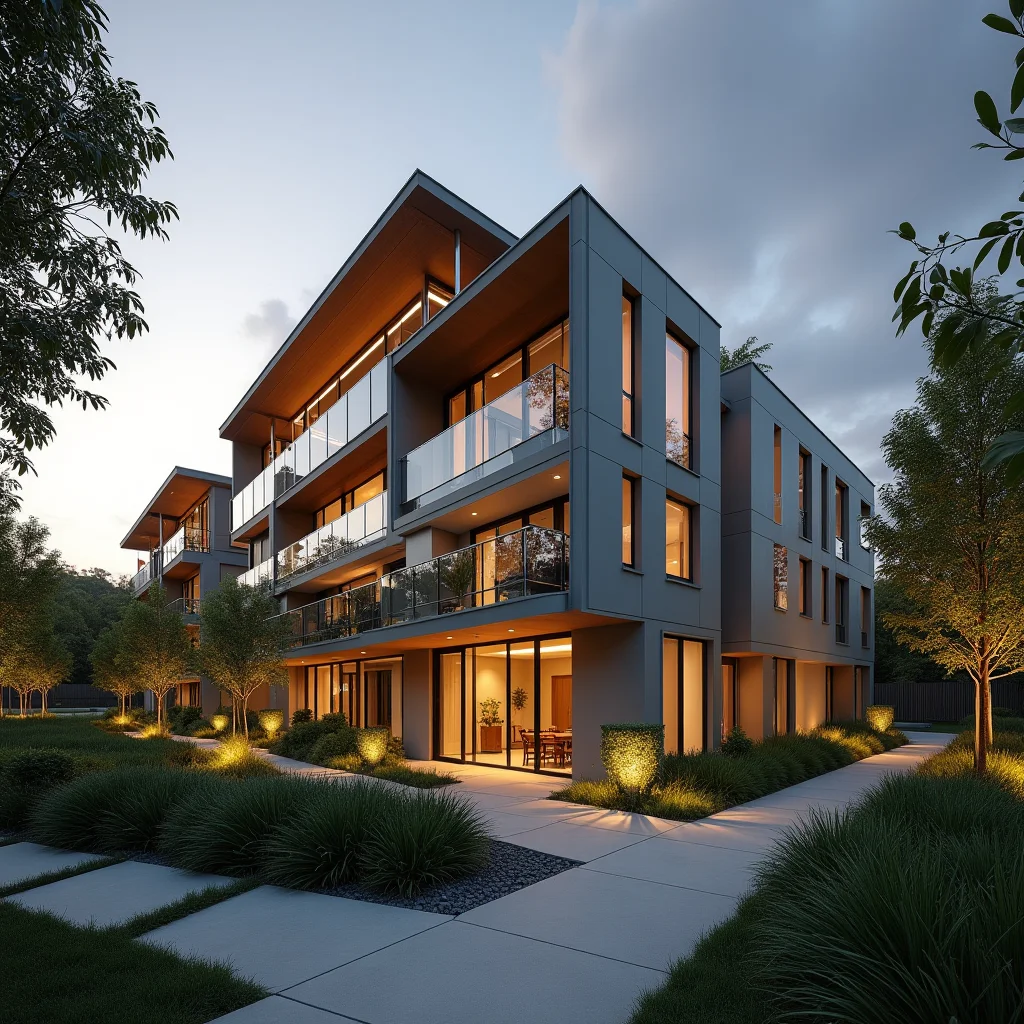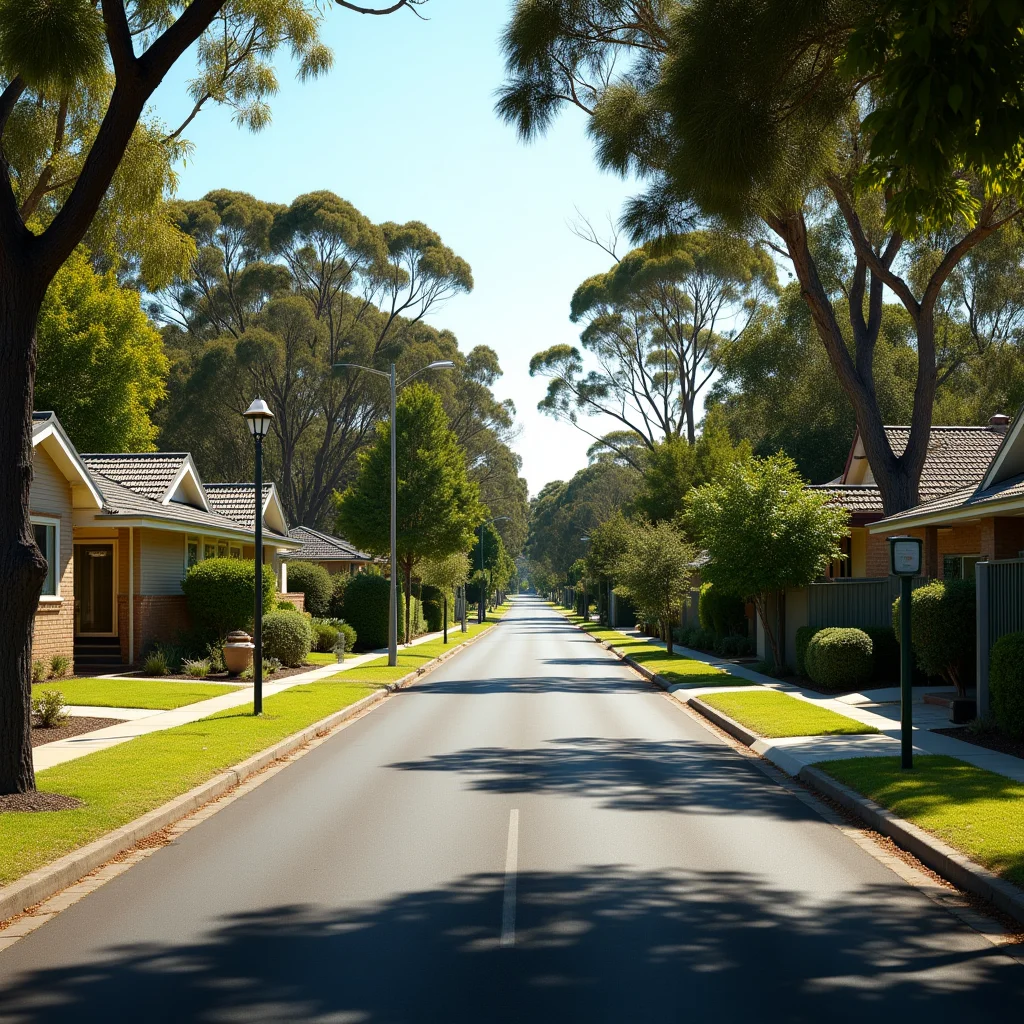
Box Hill's property market is demonstrating notable resilience, with a median property price of $1.25 million and a solid auction clearance rate of 65.5%. These figures establish the suburb as a key performer in Melbourne's middle-ring, or 'tier 3', market segment. A moderate annual growth rate of 3.5% and an average of 30 days on market indicate a stable and balanced environment, positioning Box Hill as a strategic alternative to premium inner-east suburbs while maintaining competitive performance metrics that outperform more peripheral locations.
This performance occurs within a broader macroeconomic context shaped by the Reserve Bank of Australia (RBA) holding the cash rate steady after a period of aggressive tightening. While higher interest rates have constrained borrowing capacity across the board, demand for well-located, amenity-rich suburbs like Box Hill continues to be supported by upgraders, downsizers, and investors.
The Widening Affordability Gap and Comparative Value
Box Hill’s $1.25 million median house price places it in a compelling position on Melbourne’s property ladder. It sits substantially below the city's premium postcodes, creating a significant affordability advantage. For instance, Toorak's median currently commands approximately $2.8 million and Camberwell's reaches $2.25 million. The resulting $1.55 million gap between Box Hill and Toorak represents a price differential of over 55%, highlighting the tangible savings for buyers seeking an established eastern suburb with strong fundamentals.
Interestingly, Box Hill's median price aligns exactly with that of inner-city Collingwood, which also sits at $1.25 million. Both suburbs offer distinct lifestyle propositions but share similar entry points and comparable auction clearance rates, with Collingwood recording 66.5%. This parallel underscores Box Hill's value proposition as a family-oriented suburb with transport links that competes on price with more central, but often smaller, gentrified locations.
Interstate and Local Market Positioning
When compared to analogous suburbs in New South Wales, Box Hill’s value is further emphasised. Sydney’s Rhodes, another transport-centric hub with significant high-density development, commands a higher median of $1.35 million with a 69% clearance rate. Epping, a comparable Sydney suburb known for its schools and transport links, reaches a substantially higher median of $1.58 million with 68.5% clearances. This places Box Hill at a $100,000 to $330,000 discount relative to its Sydney counterparts, a differential that reflects the broader price disparity between Australia’s two largest capital city markets.
The data below illustrates Box Hill's positioning relative to key comparable suburbs:
| Suburb | State | Median Price | Clearance Rate | Annual Growth |
|---|---|---|---|---|
| Box Hill | VIC | $1.25M | 65.5% | 3.5% |
| Toorak | VIC | $2.80M | 64.0% | -1.2% |
| Camberwell | VIC | $2.25M | 68.0% | 2.9% |
| Collingwood | VIC | $1.25M | 66.5% | 3.5% |
| Rhodes | NSW | $1.35M | 69.0% | 4.1% |
| Epping | NSW | $1.58M | 68.5% | 4.5% |
Note: Data is indicative and subject to market fluctuations.
Market Velocity and Growth Consistency
Properties in Box Hill spend an average of 30 days on market before selling, a metric that signals steady, consistent buyer demand. This velocity places the suburb firmly in the middle tier of the market spectrum. It is slower than the frenetic pace seen in some premium markets—such as Sydney's Bondi Beach (20 days) or Melbourne's Toorak (23 days)—but faster than more affordable outer-fringe areas like Reservoir (32 days). This 30-day average, according to PropTrack data, is closely aligned with the Melbourne-wide average, suggesting a market in equilibrium rather than one experiencing either overheating or a significant downturn.
"Box Hill's $1.25 million median creates a $1.55 million affordability gap compared to Toorak, while delivering identical 3.5% growth rates as premium Brighton despite a $1.15 million price difference."
Notably, Box Hill’s 3.5% annual growth rate matches that of both Collingwood ($1.25 million median) and the bayside prestige suburb of Brighton ($2.4 million median). This parity across vastly different price points suggests that Box Hill's growth is driven by fundamental demand drivers—such as infrastructure and amenities—rather than being purely a function of its price bracket. Buyers are securing capital appreciation comparable to more expensive suburbs, but with a significantly lower cost of entry.
Infrastructure and Demographics as Key Drivers
Box Hill's classification as a resilient tier 3 suburb is heavily underpinned by its extensive infrastructure. As a major transport hub, the Box Hill railway station and extensive bus network provide direct connectivity to the Melbourne CBD and surrounding areas. Proximity to the Whitehorse Road and Box Hill Central commercial precincts adds to its appeal, offering retail, dining, and services that solidify its status as a '20-minute neighbourhood'.
Crucially, Box Hill is a key station on the planned Suburban Rail Loop (SRL) project. This multi-decade infrastructure investment is expected to transform the suburb into a super-hub, connecting it directly to other middle-ring suburbs and key employment zones, including Monash and Melbourne Airport. This long-term project provides a significant pipeline of future demand and value uplift, insulating it from short-term market volatility.
The suburb's demographic profile, as highlighted by Australian Bureau of Statistics (ABS) census data, also plays a critical role. A large and established community of residents with Chinese ancestry has created a vibrant cultural and economic ecosystem, supporting local businesses and generating organic demand for property. The proximity to Deakin University and the Box Hill medical precinct further diversifies the buyer and renter pool, attracting students, healthcare professionals, and academics.
The auction clearance rate of 65.5%, while slightly below top-tier performers like Hawthorn (70.5%) and Kew (71%), is robust, particularly when Melbourne's city-wide average has often hovered in the low 60s. It comfortably exceeds rates in more affordable suburbs like Reservoir (62%), indicating that vendor expectations are largely being met without the intense overbidding seen at the market's peak.
An Investment-Grade Middle-Market Profile
The combination of a $1.25 million median price, consistent 3.5% growth, and a 30-day market velocity presents a compelling, investment-grade profile. Box Hill successfully bridges the gap between accessibility and performance. It significantly outperforms more affordable options like Reservoir ($880,000 median, 2.8% growth) on growth metrics while offering substantial savings compared to nearby Doncaster ($1.38 million median, 3.7% growth).
For market participants, Box Hill represents a 'sweet spot' where affordability constraints for many buyers are beginning to ease, yet the core fundamentals for capital growth remain firmly in place. The diverse housing stock, ranging from post-war family homes on large blocks to an increasing supply of modern, high-rise apartments, caters to a wide spectrum of buyers, from families seeking access to the Box Hill High School zone to investors capitalising on strong rental demand. Rental yields for apartments, in particular, remain attractive, supported by low vacancy rates driven by the student and professional demographic.