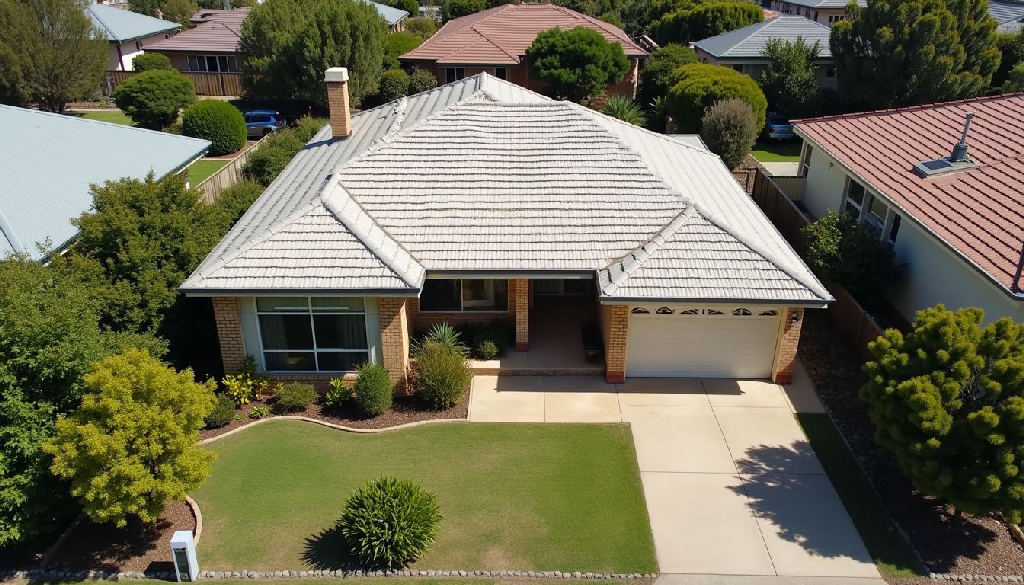
A four-bedroom, two-bathroom rental in Abbey, a coastal pocket of Busselton 230km south of Perth, has been listed at $2,300 a week — a figure ABC News reports sits roughly 160 per cent above the suburb's $880-a-week median for a comparable house. The listing, built in 1976 on an 806sqm block and marketed by ABC News, sparked a wave of online reaction after being posted this week, with commenters questioning who could realistically pay that amount. The backlash comes as Cotality data shows Busselton recorded the nation's steepest regional price decline of 4.1 per cent in the July 2026 quarter.
A Premium Listing or a Pricing Signal?
Acton Belle South West, the agency behind the listing, has defended the figure. Director Lyn Perks told ABC News the property "sits firmly within the premium end of the market" and should not be read as representative of broader Busselton rental pricing, pointing to its location, fixtures and presentation as the differentiators from a standard rental. That is a conventional agent position — premium stock is priced to premium buyers or tenants, not to the median — but the defence lands differently in a market where Accordwest, the region's not-for-profit housing provider, describes shrinking rental supply pushing hundreds of families into competition for a shrinking pool of stock.
For broader market context, see Bubblepedia's historical Australian property bubble analysis.
Local investor David Newman, who owns two comparable four-bedroom, two-bathroom rentals in the area, offered a more measured read: owners are free to ask what they like, but he doubts a long-term tenant would actually pay double the going rate, noting plenty of similar homes are available around $900 a week — a figure close to the suburb median cited in the ABC report. That gap between what an agent can list and what a tenant will actually sign for is the practical test this property now faces.
Busselton's Price-Rent Disconnect
The friction here is a market signal as much as a public relations problem. Cotality's finding that Busselton recorded the country's steepest regional price decline of 4.1 per cent for the July quarter sits awkwardly against a rental ask running at more than double the local median.
Local property data shows the median rent for a house this size in Abbey is $880 a week, meaning the listing is roughly 160 per cent above the going rate.
That divergence — falling capital values paired with an outlier rent push — sits at the centre of the debate playing out in Busselton. REAStats national data puts the median property price at $818,000 with a national auction clearance rate of 68.8 per cent as of October 2026, against an RBA cash rate holding at 4.85 per cent. These national benchmarks offer context for the scale of Busselton's quarterly decline, though ABC News reporting does not detail what specifically prompted the $2,300 weekly asking price.
Comparing WA's Investment Dynamics
Busselton's downturn stands in contrast to other Western Australian markets tracked in REAStats data. Nedlands recorded 15 per cent annual growth with a median of $2.2 million and a 15-day sales cycle — the fastest-clearing suburb in the national dataset. South Perth posted 13.8 per cent annual growth at a $1.45 million median with a 17-day cycle, and Mandurah, a more affordable coastal comparison point, recorded 10.5 per cent annual growth against a $550,000 median. Fremantle, another WA coastal market, sits at 5.8 per cent growth and a $950,000 median.
Set against that backdrop, Busselton's 4.1 per cent quarterly decline marks it as an outlier within its own state rather than representative of broader WA conditions. Investors weighing coastal regional exposure in WA are effectively choosing between markets running double-digit annual growth and 15-to-20-day sales cycles, and a market where Cotality's own data shows values moving in the opposite direction. That split matters for anyone using Busselton rental yields as a proxy for the suburb's investment case — a single $2,300-a-week listing tells buyers very little about the market's actual direction.
What the Busselton Case Signals for Investors and Agents
For vendors and property managers, the lesson is less about this specific listing and more about the risk of anchoring rental price to presentation quality rather than comparable sales. Accordwest's Matt Wilson described the $2,300 figure as an outlier but one that reflects genuine affordability pressure building across the South West — a tension that shows up when tourism operators, cited in the ABC report, note their own staff are struggling to cover rent even at standard rates. Siesta Park Holiday Resort's owners pointed out that a figure this high reads more like a peak-season short-stay rate than a standard lease, warning that pushing long-term residential rents to similar heights makes it harder for local businesses to find year-round staff.
Agents pricing premium stock in a softening market carry a dual risk: overstating value against comparable evidence invites exactly the scrutiny this listing has received, while underpricing against genuine premium features leaves money on the table. Reviewing comparable sales and rental evidence — rather than presentation alone — remains the more defensible approach, and buyers and tenants alike are better served comparing median figures to any individual listing before treating it as a market benchmark. Further reading on this distinction is available via REAStats' guide to median vs average property price, which explains why median figures resist exactly the kind of distortion a single outlier listing can create. Agents and agencies navigating these pricing calls can also review REAStats' guidance on measuring real estate agent performance and choosing the right real estate agent for vendors assessing whether a quoted figure reflects genuine local evidence.
For the near term, Busselton's case is a reminder that a single asking price — however widely shared online — is not a market indicator. Cotality's 4.1 per cent quarterly decline is the harder data point, and it points toward a regional market where vendors and landlords will need comparable evidence, not presentation claims, to justify premiums above the median.