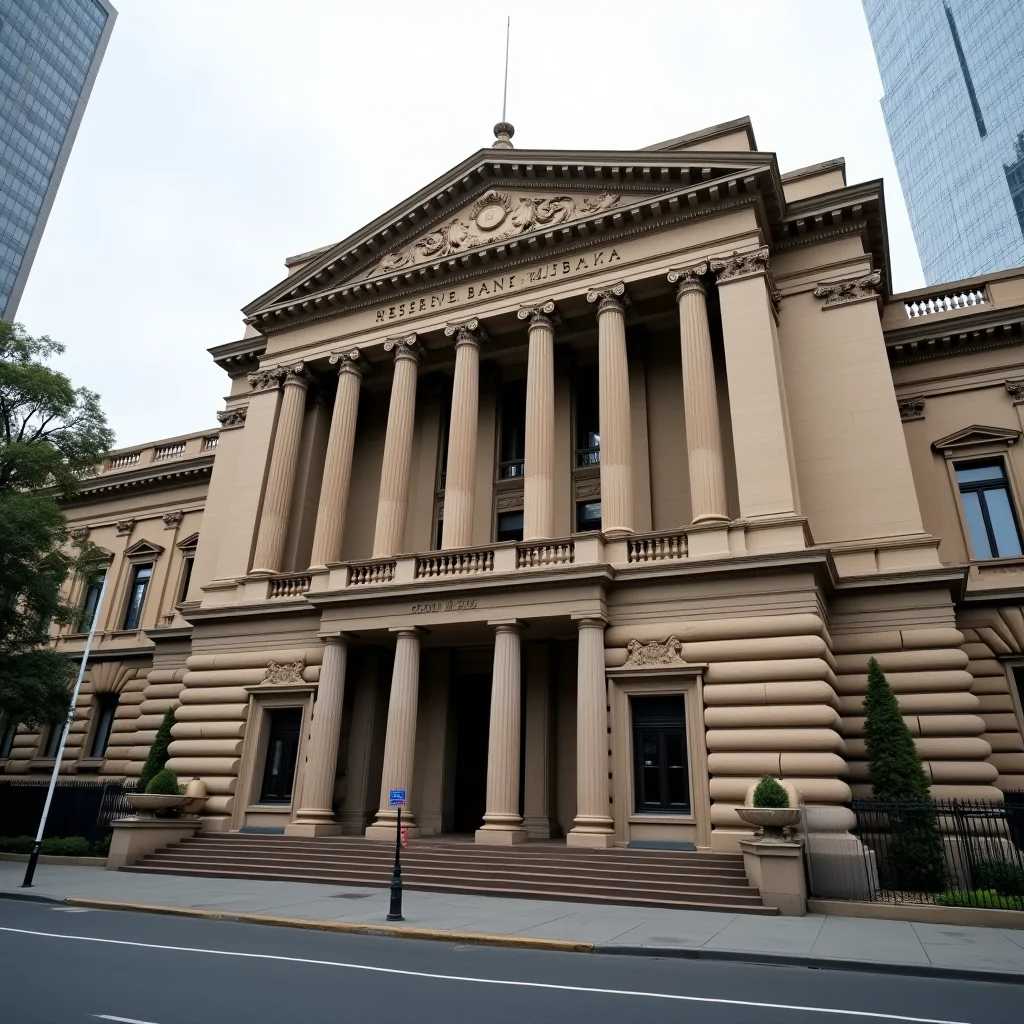
Carindale recorded 9.2% annual growth at a $1,150,000 median price, with properties clearing in just 24 days and an auction clearance rate of 62% — figures that position this southeast Brisbane suburb as one of Queensland's most compelling Tier 3 affordability propositions heading into the second half of 2026. At the RBA's current 4.35% cash rate, Carindale's combination of sub-25-day campaign cycles, sub-$1.2m entry pricing, and near double-digit growth separates it from slower eastern-states markets where comparable medians are delivering half the capital return.
Why Carindale's Pricing Structure Defines the Tier 3 Affordability Case
Defining Tier 3 affordability in 2026 requires precision. Carindale at $1,150,000 sits well below prestige benchmarks like Toorak ($2,800,000) and Randwick ($2,400,000), but it also clears the entry-level floor occupied by suburbs like Dandenong ($680,000) and Mandurah ($550,000). That mid-market positioning — accessible enough to attract genuine buyer depth, established enough to sustain capital growth — is exactly what separates high-performing Tier 3 markets from affordability traps.
According to Your Investment Property, published 3 July 2026, vacancy rates, rents, migration, housing supply, and lending patterns often tell a clearer story for property investors than interest rates alone. Carindale's 24-day sales cycle and 62% clearance rate are precisely the kind of structural indicators that signal genuine demand — not rate-driven speculation — underpinning the suburb's price floor. At the current 4.35% RBA cash rate, markets with these fundamentals are outperforming those dependent on cheap debt to sustain demand.
Contrast Carindale's 24-day campaign with Port Macquarie's 48 days on market at an $850,000 median and 3.5% annual growth. Despite being $300,000 cheaper, Port Macquarie's slower velocity and weaker growth signal lower buyer conviction — a pattern consistent with markets where supply is adequate but demand drivers, including migration and rental pressure, are less concentrated. Carindale's tighter days-on-market figure reflects a structurally undersupplied southeast Brisbane corridor with strong organic demand.
Growth Rate in Context: How Carindale Compares Across States
Carindale's 9.2% annual growth places it firmly in Queensland's upper-performing cohort — ahead of comparable Victorian markets by a significant margin. Prahran recorded 3.9% annual growth at a $1,550,000 median, meaning buyers are paying a $400,000 premium for a suburb growing at less than half Carindale's rate. Reservoir, Melbourne's more accessible alternative at $880,000, delivered just 2.8% annual growth with 32 days on market — slower velocity and weaker appreciation at a lower price point.
Within Queensland, Carindale's 9.2% growth is competitive with Maroochydore (8.5% at $1,050,000) and Indooroopilly (8.5% at $1,380,000), while sitting below the top performers like West End (8.8% at $1,350,000). What distinguishes Carindale is the combination of a $1,150,000 median, 9.2% growth, and a 24-day campaign — a trifecta that Maroochydore comes close to matching but at a slightly lower price and with 28 days on market. For buyers seeking established suburban infrastructure rather than coastal or inner-city exposure, Carindale represents the better liquidity profile at a comparable price point.
Western Australia's outperformers — Nedlands at 15% annual growth and South Perth at 13.8% — remain in a separate category driven by interstate migration dynamics and constrained listing supply. Carindale's 9.2% is more consistent with Queensland's structural migration tailwind, which continues to underpin southeast Brisbane price floors without the extreme listing compression seen in Perth's premium corridors.
Carindale's 62% auction clearance rate, 24-day sales cycle, and 9.2% annual growth at a $1,150,000 median represent a demand profile that consistently outperforms eastern-states Tier 3 comparators operating at similar or higher price points with slower capital return.
The 3.3% Rental Yield: What It Signals for Investors at 4.35%
Carindale's 3.3% rental yield sits below the RBA's current 4.35% cash rate — a gap that frames the suburb primarily as a capital growth play rather than a cash-flow-positive investment at current financing costs. This is not an unusual position for a $1,150,000 suburban market growing at 9.2% annually; the capital appreciation trajectory is, by definition, compressing the yield as price growth outpaces rental increases. Buyers entering Carindale at the current median are effectively pricing in continued price appreciation to justify the financing cost differential.
The signal from Your Investment Property's July 2026 analysis is directly relevant here: watching vacancy rates and rental supply conditions provides a more reliable read on yield sustainability than the cash rate alone. For Carindale, a 3.3% yield in an undersupplied southeast Brisbane rental market — where migration inflows continue to absorb available stock — is structurally more defensible than a 3.6% yield in a market with rising vacancy and stagnant rents. Buyers who read building inspection reports carefully and understand structural condition will also find that established Carindale properties tend to command rental premiums over newer outer-ring stock with higher maintenance profiles. For guidance on what to assess before committing, the REAStats guide on how to read a building inspection report outlines how to categorise defects and negotiate accordingly.
For investors running a negative gearing calculation at 4.35%, a 9.2% capital growth rate against a 3.3% yield still produces a positive total return equation — provided the growth rate holds. The risk is any sustained softening in southeast Brisbane demand, which the current 62% clearance rate and 24-day campaign cycle do not yet support. Markets showing clearance rates below 55% and days on market above 35 — such as Maroochydore at 54% and Port Macquarie at 46% — are the ones where negative gearing arithmetic becomes more precarious at current rates.
Auction Clearance Rate and Days on Market: Reading the Demand Signal
Carindale's 62% auction clearance rate is consistent with a market operating in equilibrium — neither the vendor-dominated conditions of Randwick (73.5%) nor the buyer-driven softness of Port Macquarie (46%). At 62%, clearance rates indicate competitive buyer interest without the speculative bidding pressure that can inflate short-term results and mask longer-term demand weakness. For agents operating in Carindale, this rate supports auction as the primary campaign method without requiring the aggressive private treaty pivot that is reshaping strategy in softer Queensland coastal markets.
The 24-day days-on-market figure is equally instructive. Compared to Dandenong's 40 days and Ballina's 45 days, Carindale's campaign cycle reflects a deep and active buyer pool that can absorb new listings quickly. This speed-to-contract metric is one of the clearest indicators that demand is structural rather than episodic — sustained by the suburb's proximity to Brisbane CBD, school catchment strength, and established retail and infrastructure amenity rather than any single pricing event. For context on what days on market data actually measures and how to interpret movements, Australian property market data provides useful baseline comparisons across southeast Queensland suburbs.
Vendors in Carindale currently hold a meaningful negotiating position — a 24-day campaign with a 62% clearance rate leaves limited room for buyers to apply time-pressure tactics. Those who have held for three or more years at the current 9.2% growth trajectory are sitting on substantially appreciated assets relative to their acquisition cost, and the current campaign velocity suggests no urgency discount is required to transact within a standard marketing window. Buyers, by contrast, should be prepared to move decisively — conditional offers requiring extended due diligence periods are less competitive in a 24-day market than in slower campaigns.
Background: Carindale's Position in Southeast Brisbane's Growth Corridor
Carindale's performance reflects broader southeast Brisbane dynamics that have positioned Queensland as the standout state for Tier 3 affordability in 2026. While Sydney's auction clearance rate has slipped below 50% in recent weeks and Melbourne's winter conditions have pushed days on market above 30 in multiple suburbs, southeast Brisbane's established middle-ring markets have maintained demand depth. Carindale's $1,150,000 median, while above the national median, is priced below the $1,380,000 Indooroopilly benchmark and the $1,350,000 West End entry point — making it a more accessible proposition for buyers priced out of inner-Brisbane corridors.
Understanding the full contractual process before committing at this price point is essential. The contract of sale explained guide covers key clauses buyers should review, including finance and building inspection conditions — particularly relevant in a 24-day market where pressure to waive conditions can be higher. The cooling-off period rules in Queensland also give buyers a limited window to exit a signed contract, though this protection does not apply to properties purchased at auction — a meaningful distinction in a suburb running a 62% auction clearance rate.
What the Data Signals for Buyers, Vendors, and Agents
For vendors, Carindale's current metrics — 9.2% annual growth, 24 days on market, 62% clearance rate — support a confident auction campaign with realistic expectations of a result within or above median. The market is not exhibiting the vendor-discount pressure visible in Melbourne's softer suburbs or Sydney's rate-affected corridors, and listing exposure periods remain short enough that private treaty is unlikely to deliver a material premium over auction for well-presented properties.
For buyers, the 24-day campaign cycle demands preparation: finance pre-approval, building and pest inspections completed ahead of auction day, and a clear maximum bid established before auction conditions preclude conditional exits. At $1,150,000 median with a 3.3% yield and 9.2% growth, Carindale is not a cash-flow-positive entry — it is a total-return proposition where capital appreciation carries the investment thesis. Buyers who understand that distinction and are positioned to hold for a five-to-seven-year cycle are best placed to benefit from the suburb's current demand profile.
For agents, Carindale's metrics support prioritising auction campaigns over private treaty, maintaining vendor price expectations anchored to recent comparable sales, and investing in quality marketing collateral given the suburb's established buyer depth. The 62% clearance rate provides a defensible benchmark for vendor conversations — strong enough to justify auction confidence, without the overextension risk of markets operating above 70% where any demand softening can produce sharp corrections in vendor expectations.

