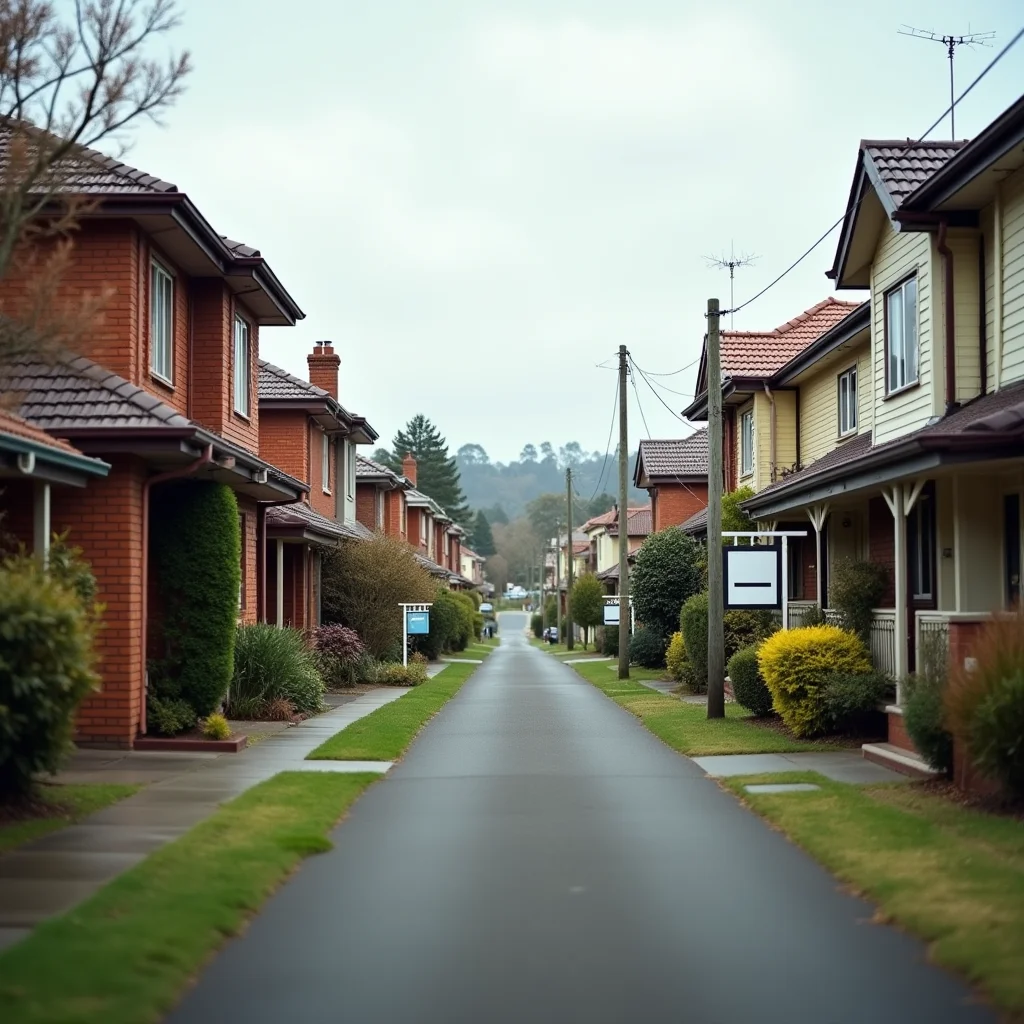
According to SMH Property, first home buyers paid $2.33 million under the hammer for a three-bedroom north shore house on August 17, 2026 — a result that drew registered interest from young couples, families, and first-time purchasers competing at a price point that would have been unthinkable for market entrants a decade ago. On the same weekend, REA Group reported that prospective buyers are slowly returning to Adelaide auctions after a months-long absence, with sellers beginning to benefit from renewed competition. Together, these two data points define the bifurcated reality of first home buyer market entry across Australian capitals in August 2026.
Sydney's North Shore: First Home Buyers at $2.33m Redefine the Entry Price Ceiling
The north shore auction result — $2.33 million secured by first home buyers — represents a structural shift in what market entry means in Sydney's established middle ring. The sale demonstrates that first home buyers with access to significant parental equity, dual incomes, or savings accumulated over prolonged rental periods are now competing at price points previously reserved for upsizers and investors. With the RBA cash rate held at 4.35%, the serviceability burden on a $2.33 million purchase is substantial: at standard assessment rates applied by Australian lenders, a borrower carrying a $1.8 million mortgage faces repayments exceeding $10,000 per month on a principal-and-interest basis.
For broader market context, see WealthWatchPro macro and interest rate analysis.
The competitive dynamic at the north shore auction — with young couples and families among registered bidders — reflects a pattern of compressed buyer pools. When prestige-tier purchasers and institutional investors step back due to rate sensitivity, first home buyers with strong balance sheets can gain footholds in suburbs previously out of reach. However, this represents a statistical outlier rather than a broad market trend: the $2.33 million result sits far above the entry thresholds accessible to the majority of first-time buyers, even with government assistance schemes factored in.
Suburb data from the current market further illustrates the challenge. Randwick in NSW posts a median of $2,400,000 with 5.6% annual growth and a 73.5% auction clearance rate — conditions that reward well-capitalised buyers but lock out those relying on deposit savings alone. Even Liverpool, one of Sydney's more affordable submarkets, sits at an $850,000 median with a 38-day average days on market and a 60.5% clearance rate. At the RBA's 4.35% cash rate, serviceability on an $850,000 purchase with a 10% deposit remains a significant hurdle for first-time buyers without parental support.
Adelaide's Buyer Return: What the Auction Recovery Signal Means for Affordability
REA Group's August 17 report on Adelaide's auction market represents the more significant signal for first home buyer strategy. After months in which prospective buyers largely stepped away from the auction room — a period that coincided with the RBA's sustained 4.35% hold and ongoing cost-of-living pressure — buyer traffic is beginning to recover. Sellers in Adelaide are described as reaping the benefits of this gradual return, suggesting clearance rates are firming and vendor confidence is recovering.
Adelaide's re-engagement matters for first home buyers nationally because it highlights a metro market operating at a structurally different price level than Sydney or Brisbane's premium corridors. Where first home buyers in Sydney face a $2.33 million north shore benchmark, Adelaide's auction market offers entry points that are more accessible, and the recovery in buyer attendance signals that demand, when conditions allow, concentrates in markets where affordability constraints are less severe. First home buyers priced out of Sydney and Melbourne have increasingly looked to Adelaide and Perth as viable alternatives — a trend that Adelaide's renewed auction activity does nothing to discourage.
The contrast with the bayside home that attracted no genuine bids at $2.2 million — reported the same day by SMH Property — underscores the selectivity of buyer behaviour at the top of the market. A renovated bungalow with a heated pool and period facade drew silence at the same price point where a north shore family home drew fierce competition. First home buyers, where they do participate in prestige-adjacent markets, are responding to specific attributes — location, school catchments, land content — rather than renovation quality or lifestyle features.
Market Entry Data: Where First Home Buyers Can Still Compete in August 2026
Current suburb data reveals significant dispersion in conditions relevant to first home buyer market entry. Dandenong in Victoria posts a $680,000 median with 2.3% annual growth and a 56% clearance rate — one of the few remaining capital city suburbs where first home buyers using the First Home Guarantee scheme's price caps can access detached housing stock. Days on market sits at 40, indicating reduced competition and a buyer-friendly negotiating environment, though the subdued growth rate reflects weaker underlying demand.
Mandurah in Western Australia presents a different profile: a $550,000 median with 10.5% annual growth and a 56% clearance rate. For first home buyers willing to accept a longer commute to Perth's CBD, Mandurah represents one of the few markets combining affordability with genuine capital growth momentum. The 24-day days on market figure suggests stock is moving, but not at the frenzied pace of inner Perth markets like Nedlands, where the median has reached $2,200,000 with a 15-day sales cycle. Penrith in NSW — at $880,000 median and a 35-day days on market — remains another option for Sydney-based first home buyers, though the 3.8% annual growth rate signals limited short-term equity generation.
Mandurah's $550,000 median with 10.5% annual growth sits alongside Dandenong's $680,000 median at 2.3% growth — a $130,000 price gap that produces a nearly fivefold difference in capital appreciation, illustrating how first home buyers face a direct trade-off between entry cost and growth potential across Australian suburbs in August 2026.
Reservoir in Victoria records an $880,000 median with 2.8% annual growth and a 32-day days on market. While above many state government scheme price thresholds, Reservoir represents a middle-ring Melbourne option where first home buyers face fewer competing bidders than inner-city auctions — its 62% clearance rate sits at a level that still rewards prepared buyers but does not guarantee the competitive pressure of tighter markets. For those researching Australian property market data by suburb and price tier, the divergence between Victorian and WA entry conditions in August 2026 is among the sharpest on record.
Brisbane and the School Catchment Premium: What the East Brisbane $3.3m Result Tells Buyers
The weekend's East Brisbane auction — a character home 200 metres from a top private school that sold for $3.3 million after two families competed with $1,000 incremental bids, as reported by SMH Property — is not a first home buyer story, but it illuminates the school catchment premium that shapes buyer behaviour across all entry tiers. When established family buyers concentrate demand around elite school zones, first home buyers are systematically displaced into adjacent or outer-ring suburbs.
Brisbane's West End records a $1,350,000 median with 8.8% annual growth and a 22-day days on market at a 62% clearance rate. Indooroopilly posts $1,380,000 with 8.5% growth and a 23-day cycle. Both markets sit well above what first home buyers can access without substantial equity, yet both reflect the demand pressure that premium school catchments and lifestyle infrastructure create in Brisbane's inner ring. For first home buyers targeting Queensland, Maroochydore on the Sunshine Coast — at a $1,050,000 median with 8.5% growth and a 28-day days on market — represents a regional alternative with comparable growth momentum at a slightly lower price ceiling.
Background: Government Schemes, LMI, and the Technology Tools Reshaping Market Entry
First home buyer market entry in August 2026 occurs within a framework of federal and state assistance schemes that have not kept pace with price growth in major capitals. The gap between scheme price caps and actual sale prices — illustrated sharply by the $2.33 million north shore result — means many buyers in Sydney and inner Brisbane fall outside eligibility thresholds for the First Home Guarantee and state stamp duty concessions. Understanding all available schemes is essential before campaign strategies are finalised; the Technology for Property Investors — Managing Your Portfolio Remotely guide covers tools that help buyers track listings, manage documents, and model borrowing scenarios in real time — capabilities that are increasingly necessary when auctions move at the pace reflected in Nedlands' 15-day and Mandurah's 24-day sales cycles.
Lenders mortgage insurance remains a key cost consideration for first home buyers entering with deposits below 20%. At an $880,000 purchase price in Penrith with a 10% deposit, LMI adds a material sum to the total acquisition cost — a factor that, combined with the RBA's 4.35% cash rate and standard serviceability buffer rates applied by lenders, constrains the effective buying power of first-time purchasers across all markets. For buyers using the Home Guarantee Scheme to avoid LMI entirely, price cap eligibility must be confirmed before bidding, particularly in WA markets where growth has pushed previously affordable suburbs above threshold levels.
What August 2026 Conditions Signal for First Home Buyers, Vendors, and Agents
The convergence of Adelaide's buyer return, Sydney's $2.33 million first home buyer result, and continued softness in bayside prestige markets signals that the August 2026 market is rewarding specificity over generalisation. First home buyers who succeed at auction are those targeting defined attributes — school proximity, transport access, established land content — in suburbs where competing buyer pools remain manageable. Adelaide's gradual auction recovery suggests that markets operating below the national median are now attracting renewed attention from buyers who retreated during the period of peak rate uncertainty.
For agents working with first home buyers, the data supports a clear campaign positioning shift: Mandurah at $550,000 with 10.5% growth and Dandenong at $680,000 are the markets where buyer education — around scheme eligibility, days on market timing, and auction strategy — delivers the clearest return. Vendors in these markets benefit from buyer pools that include first home buyers, investors, and downsizers simultaneously. In Sydney's north shore and Brisbane's premium school zones, first home buyer registrations will continue to appear at auctions, but clearing at $2.33 million represents a ceiling case, not a floor — and the agents, buyers, and vendors who understand that distinction will execute the more disciplined campaigns through the spring season ahead.

