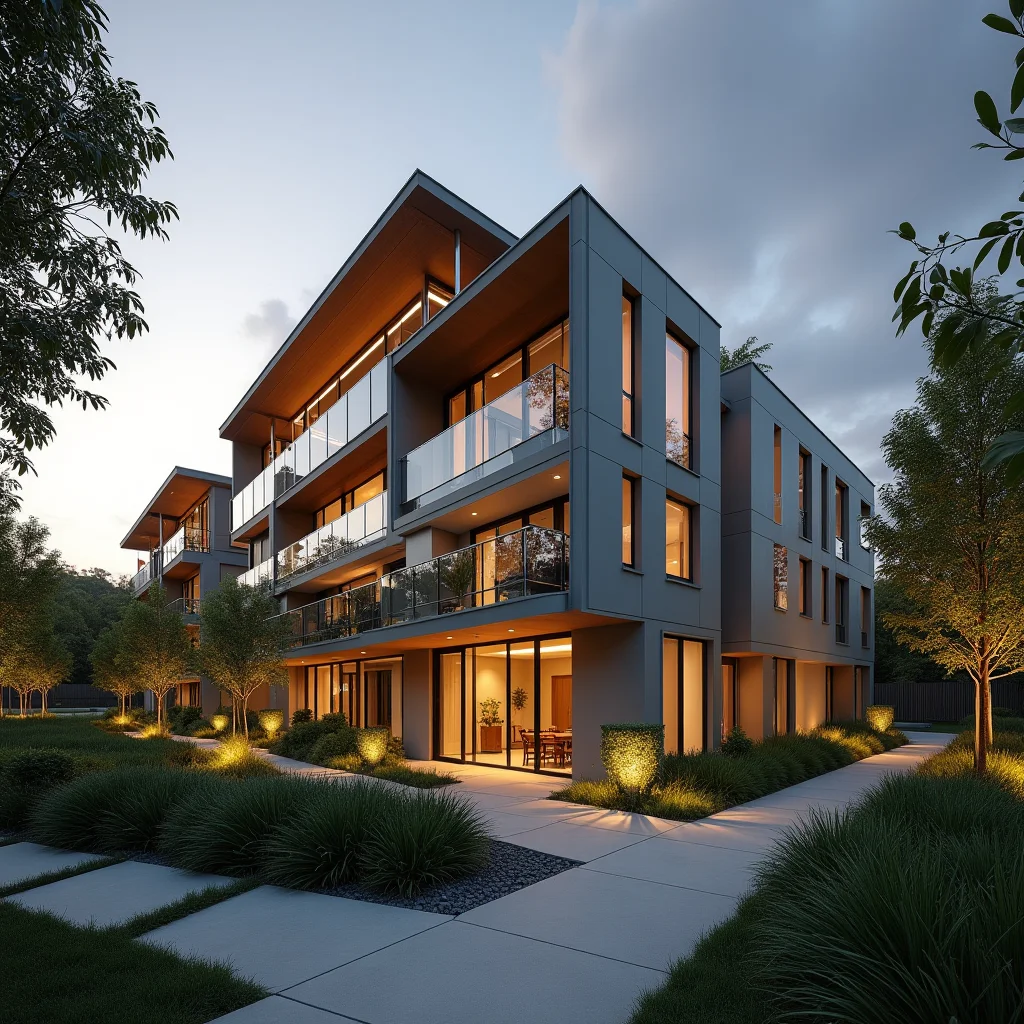
According to REA Group, the Queensland government is committing infrastructure upgrades across six Gold Coast suburbs to support 19,000 new homes as the region tracks toward a one-million-resident population by 2040 — a development that directly reshapes the new versus established investment calculus for Queensland buyers. On the same day, REA Group reported that a rare inner-Adelaide development site at Klemzig attracted more than 30 offers before transacting at $15 million, signalling that developer appetite for new-stock pipeline remains fierce even as the RBA holds its cash rate at 4.35%. These two data points — mass infrastructure-backed supply in Queensland and premium land pricing in South Australia — arrive at precisely the moment when established suburb performance data across WA and QLD is making the strongest capital growth case in years.
The Gold Coast New-Supply Pipeline: What 19,000 Homes Mean for Investors
The Queensland government's infrastructure commitment to six Gold Coast suburbs is one of the most consequential supply interventions in the region's recent history. Infrastructure-led rezoning of this scale historically compresses land scarcity premiums in the immediate delivery zone while simultaneously elevating values in surrounding established precincts as liveability metrics improve. For investors weighing off-the-plan or new-build purchases within the affected corridors, the pipeline creates a structural challenge: new stock supply competing for the same rental pool tends to suppress yields in the medium term, particularly when delivery volumes reach the 19,000-home threshold.
Maroochydore, the closest major data point in this dataset, is currently recording an $1,050,000 median with 8.5% annual growth and 28 days on market — performance driven largely by constrained established supply rather than new development. The Gold Coast infrastructure announcement introduces a different supply dynamic further south on the coast. Investors targeting the Gold Coast corridor for yield should model vacancy risk carefully against a delivery timeline that extends toward 2040, while those seeking capital growth may find the established, infrastructure-adjacent precincts more defensible than direct new-build exposure inside the rezoned zones.
West End in Queensland presents a useful contrast: at $1,350,000 median with 8.8% annual growth and only 22 days on market, it demonstrates what established inner-urban scarcity looks like in the same state. The Gold Coast's new supply program has no equivalent demand compression mechanism in Brisbane's inner suburbs, reinforcing why location selection within Queensland remains the primary investment variable — not simply the state-level growth story.
Klemzig's $15m Land Deal and the New-Build Premium in South Australia
The Klemzig landholding result — 30-plus offers for a single inner-Adelaide development site — is a precise indicator of developer competition for new-stock pipeline in a city where median prices have recently crossed the $1 million threshold. For individual investors, the data signal here is indirect but important: when developers are paying $15 million for raw land in inner Adelaide, the embedded land cost in new-build product purchased off-the-plan reflects those acquisition figures. New-build investors in Adelaide are, in effect, absorbing developer margin on top of already-elevated land values.
Established property in comparable Adelaide precincts does not carry this embedded development margin. The Klemzig result illustrates a structural cost disadvantage that new-build investors frequently underestimate: the all-in price of a new property in a competitive land market includes acquisition cost, construction cost escalation (which has been significant across 2024–2026), developer profit margin, and marketing costs — none of which appear in the comparable sales data for established homes in the same postcode. At a 4.35% cash rate, where debt servicing costs amplify the importance of entry price discipline, this margin compression matters materially to total return outcomes.
Perth's Nedlands recorded 15% annual growth and a 15-day median days on market at a $2,200,000 median — while Mandurah delivered 10.5% growth at $550,000 with 24 days on market. Both results were achieved through established property in constrained supply markets, with no new-build pipeline exposure required to generate top-quartile returns.
Established Suburb Performance: WA's Case Against New Construction
The strongest argument against new-build investment in July 2026 is not theoretical — it is embedded in the suburb-level data across Western Australia. According to SMH Property, Perth's multi-million-dollar coastal enclaves are selling faster than the broader suburban market despite rate pressure — a clear signal that established prestige stock in supply-constrained locations is operating under different demand rules than the wider Perth market. Nedlands confirms this at a data level: 15% annual growth, 15 days on market, and a $2,200,000 median represent a performance profile that no new-build product in Perth has matched in the same period.
South Perth at 13.8% annual growth and a $1,450,000 median with 17 days on market reinforces the pattern. These are established suburbs with limited developable land, strong owner-occupier demand, and deep buyer competition. Mandurah at the entry end of the WA market — $550,000 median, 10.5% growth, 24 days on market — shows that the established property outperformance case in WA extends well below the prestige segment. In each case, the growth is driven by resale of existing stock in constrained catchments, not by infrastructure announcements or developer-driven supply programs.
For investors conducting a direct comparison, the data is unambiguous: WA's top-performing established suburbs have delivered between 10.5% and 15% annual growth in the current cycle. New-build product in Perth and its surrounds has not generated comparable returns on a like-for-like basis, and construction cost pressures through 2024–2026 have further reduced the margin of safety on off-the-plan purchases in the state.
Victorian and NSW Established Markets: Where New Supply Competition Is Changing the Calculus
Victoria and New South Wales present a more complex picture for the new versus established debate. Melbourne's established suburbs are underperforming sharply relative to WA and QLD: Toorak sits at 4.5% annual growth with a $2,800,000 median, Prahran at 3.9% with a $1,550,000 median, and Dandenong at 2.3% with a $680,000 median. At these growth rates, the argument for established property over new construction is weaker — particularly where new-build product offers depreciation benefits under the RBA's 4.35% rate environment that established properties cannot replicate. For negatively geared investors in Victoria, the tax efficiency of new construction becomes more relevant when capital growth differentials narrow.
New South Wales follows a similar pattern at the non-prestige level. Port Macquarie at 3.5% growth and 48 days on market, Penrith at 3.8% growth and 35 days on market, and Liverpool at 3.5% growth and 38 days on market all reflect markets where established property is not generating the scarcity-driven capital growth that justifies bypassing new-build tax advantages. In these submarkets, the new versus established question becomes a yield and tax optimisation exercise rather than a pure capital growth decision. For investors considering these NSW regional and outer-suburban markets, the historical Australian property bubble analysis provides important context on how supply-demand cycles in outer metropolitan areas have resolved in previous rate cycles.
Randwick at 5.6% growth and a $2,400,000 median with a 73.5% auction clearance rate demonstrates that established inner-Sydney prestige remains in a different demand tier — and reinforces that the new versus established debate cannot be resolved at the city level. It must be resolved suburb by suburb, with clearance rates and days on market used as the primary liquidity signals.
The Investment Framework: How to Assess New vs Established at 4.35%
At the RBA's current 4.35% cash rate, the decision framework for new versus established property investment in July 2026 requires investors to weigh five variables simultaneously: entry price discipline, supply pipeline risk, tax efficiency, liquidity (measured by days on market), and capital growth trajectory. The Gold Coast infrastructure announcement and the Klemzig land deal both introduce supply pipeline risk into their respective markets — risk that does not exist in established, land-constrained suburbs like Nedlands, South Perth, or West End.
The Understanding the Contract of Sale framework is particularly relevant for new-build purchasers, who face materially different contractual exposures than established property buyers — including sunset clauses, construction risk, and settlement price variation mechanisms that can erode returns in a rising cost environment. Investors comparing new and established options should ensure their due diligence accounts for these structural contract differences, not just the headline purchase price comparison.
For investors seeking a structured approach to the tax efficiency dimension — particularly the depreciation benefits available on new construction — the analysis of macro and interest rate market analysis provides relevant modelling on how debt servicing costs interact with depreciation schedules at different cash rate levels. At 4.35%, the annual debt cost on a $1,000,000 loan at a typical variable rate of approximately 6.5% exceeds $65,000 per annum — a figure that makes the depreciation differential between new and established stock meaningful in year-one cash flow terms, even if capital growth outcomes ultimately favour established stock in supply-constrained markets.
What the Data Signals for Investors in the Near Term
The July 2026 data presents a clear two-speed conclusion for property investors. In WA and QLD's established, supply-constrained suburbs — Nedlands, South Perth, Mandurah, West End, and Maroochydore — the capital growth case for existing stock is overwhelming and does not require new-build exposure to achieve top-quartile returns. In Victoria and outer NSW, where established property growth rates have compressed to 2.3%–4.5%, new construction's tax efficiency and depreciation benefits become more investment-relevant, provided investors rigorously price entry costs to exclude embedded developer margin. The Gold Coast infrastructure program will create genuine opportunities in established precincts adjacent to the six upgraded corridors — but investors who purchase new-build stock inside those delivery zones face meaningful vacancy and yield compression risk as 19,000 homes reach the rental market over the coming decade. The $15 million Klemzig land result confirms that developer appetite for new-build pipeline remains strong — but for individual investors, that appetite is a signal to scrutinise new-build pricing against established comparable sales with heightened discipline, not to follow developer sentiment into an inflated entry price.