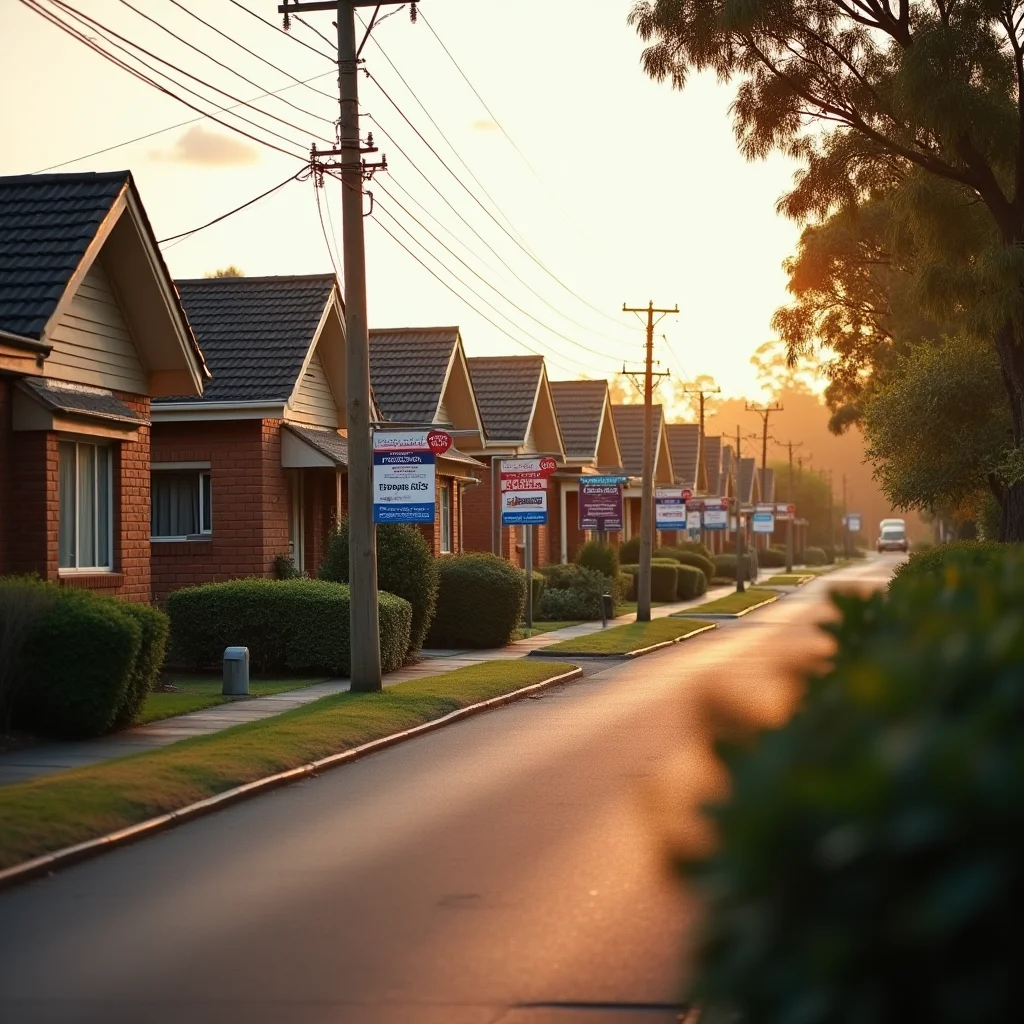
Real estate identity John McGrath told REA Group, in his McGrath Report 2027 opinion piece published 25 October 2026, that the Albanese government is "taxing us to death," calling federal politicians an "uninspiring, one-dimensional lot." The comments come as McGrath describes the current property downturn as his eighth market correction in more than 40 years in the industry, with Sydney down 8.6% from its February 2026 peak and most big metropolitan markets down 10-15% over the past six months, some as much as 20%.
McGrath's Tax Broadside Targets the Federal Budget Backflip
McGrath's central complaint is a specific policy reversal: the federal budget plan to end negative gearing on established homes purchased from Budget 2026-27 night onward, and to wind back the capital gains tax discount. He argues this breaks a prior election commitment and will not fix housing affordability, instead blocking what he calls "the greatest path most Australians have to financial freedom: residential property."
For broader market context, see Bubblepedia's historical Australian property bubble analysis.
McGrath points to separate research — a 2025 Centre for International Economics report commissioned by the Housing Industry Association — finding that on a newly built $1 million Sydney apartment, around $380,000 (close to 40%) goes to local, state and federal taxes, charges, developer levies, infrastructure contributions and regulatory compliance costs. The HIA further notes housing is the second most taxed sector in Australia, behind only alcohol and tobacco. On a new house, McGrath says that tax share is closer to half.
McGrath's Case Against Scrapping Negative Gearing on Established Homes
McGrath's argument is that negative gearing has long been one of the main mechanisms by which ordinary Australians build wealth through property, and that removing it for established homes purchased after Budget 2026-27 night — combined with a reduced capital gains tax discount — will discourage investment rather than improve affordability. He frames the government's approach as relying on "the tax mallet" as its only tool, rather than addressing the supply side of the housing problem.
"Over-taxing plus absurdly slow approvals are killing property," McGrath writes, arguing the government should instead release land for medium-density housing, tackle rising labour and materials costs, and fast-track approvals for complying developments.
McGrath's proposed alternative is a supply-side solution: releasing suitable land for medium-density living, addressing the cost of labour and materials, and creating an expedited approvals pathway so complying developments are approved in weeks rather than years, rather than relying solely on tax changes to address affordability.
A Market Correction Already Underway
McGrath's commentary lands against a backdrop of a broader national correction. He notes that data agencies are reporting single-digit falls nationally, with 97% of capital city suburbs recording price falls over the three months to the end of September 2026, and that Australia's current decline is on track to outpace the 2022-23 correction. Regional markets, by contrast, have plateaued but may still face a 7-10% correction over the next 12 months, according to McGrath. He also points to history: Australia's last five corrections averaged 12.2 months in length and a 6% price decline, with markets historically gaining an average of 32% in the three years following a correction of this kind.
McGrath is careful to note his view is not politically motivated — he states he voted for the current government — but says he is "sick and tired of the lack of creativity and innovation" he believes is slowly damaging the economy, and calls on the government to do more to stimulate the country rather than relying on tax increases.
The Bathla Group Collapse Adds to Sector Pressure
McGrath also flags the August 2026 collapse of Bathla Group, one of Sydney's largest residential developers, which entered voluntary administration with around $3.4 billion in debt and creditor claims across 219 projects carrying a preliminary value of roughly $4.9 billion. He warns these projects may need to be discounted by 30-50% to be sold quickly in a soft market, with flow-on risk to lenders, trades, suppliers and buyers — some of whom put down 10% deposits that administrators have confirmed were not all held in trust.
Due Diligence Still Matters for Property Buyers
Regardless of how the negative gearing and capital gains tax settings ultimately shift, buyers purchasing established or new homes still need the same settlement-stage diligence — a point covered in Property Inspection Tools — What Every Australian Buyer Should Have Before Settlement. Structural issues or unresolved defects discovered after settlement can erase the financial benefit of any purchase, tax-advantaged or otherwise.
Understanding contract terms and cooling-off protections also matters more in a market undergoing the kind of correction McGrath describes — see Cooling-Off Periods in Australia — State-by-State Rules and How They Work for the state-by-state variations.
What McGrath's Comments Signal for 2026-27 Investment Strategy
The broader context is laid out in the Australian Property Market Overview, which frames tax policy as one input among several — alongside interest rates, approval timelines and supply constraints — that determine investor outcomes. McGrath's intervention adds political urgency to a debate that is already playing out through a sharp national price correction and a major developer collapse.
For agents and investors alike, McGrath's message is that the planned changes to negative gearing and capital gains tax for established homes, layered on top of an already-sharp correction and a major construction-sector shock from the Bathla collapse, raise the stakes on getting the policy and timing settings right.