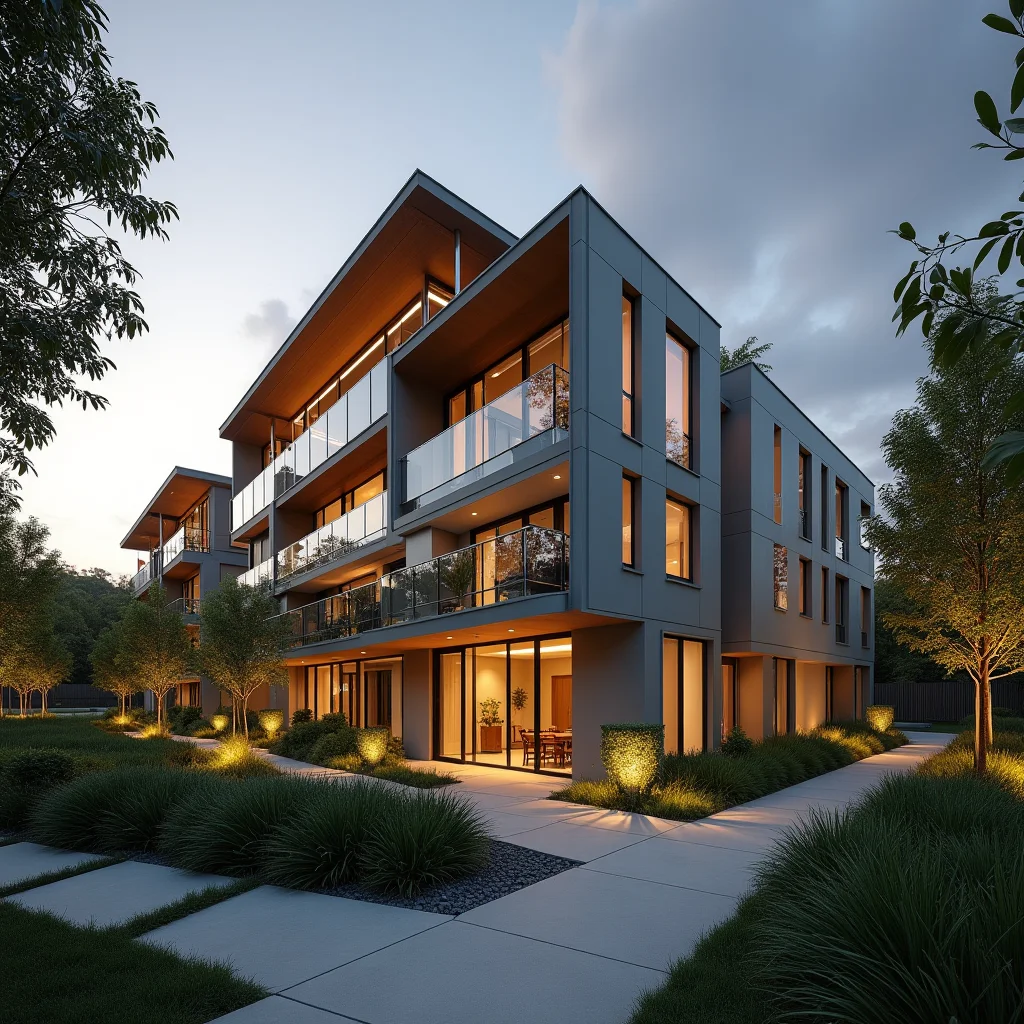
Gordon recorded a 70% auction clearance rate against a $2,100,000 median price in July 2026, with properties selling in a median 26 days — metrics that place this Upper North Shore suburb among Sydney's most consistently liquid markets at its price tier. Annual growth of 5.1% has held firm despite the RBA cash rate sitting at 4.35%, underscoring genuine buyer demand from owner-occupiers and long-hold investors who view Gordon as an accessible entry point into one of Sydney's most tightly held school catchment corridors.
Gordon's Price Point in Context: What $2,100,000 Buys on the Upper North Shore
At $2,100,000, Gordon sits below the prestige ceiling of suburbs like Randwick ($2,400,000 median, 5.6% annual growth) and well below Kirribilli's $2,650,000 median — yet it delivers comparable or superior clearance dynamics. Randwick's 73.5% clearance rate edges Gordon's 70%, but Randwick commands a $300,000 price premium with no material improvement in days on market (23 days versus Gordon's 26). For buyers who require Upper North Shore positioning — proximity to the Pacific Highway rail corridor, selective school catchments, and established streetscapes — Gordon's $2,100,000 entry point represents a measurable discount to the next tier.
The tier 3 accessibility framing is meaningful here. Gordon does not compete with Toorak ($2,800,000 median, 4.5% growth in Victoria) or the inner prestige belt. Instead, it occupies a defined niche: established suburb character, sub-30-day sale cycles, and a clearance rate that consistently clears 70% — a threshold that, in the current environment, signals vendor pricing is meeting market. Buyers entering at this level are typically making a long-term capital positioning decision, not a speculative short-cycle trade.
5.1% Annual Growth at 4.35% Cash Rate: The Return Arithmetic
Gordon's 5.1% annual growth against an RBA cash rate of 4.35% produces a narrow but positive real-return spread for unencumbered or low-leverage holders. For mortgaged buyers, the arithmetic tightens considerably — a standard 80% LVR purchase at $2,100,000 carries approximately $1,680,000 in debt, and variable rates tracking above 6% mean holding costs significantly exceed rental income at Gordon's 2.5% gross rental yield. This yield figure is characteristic of Upper North Shore residential holdings and reflects the suburb's owner-occupier dominance rather than investor-grade rental returns.
The 2.5% rental yield places Gordon well below the national average for investment-grade suburbs. By comparison, Mandurah in Western Australia delivers a 10.5% growth rate at a $550,000 median — a structurally different investment case built on yield accessibility and population inflow. Gordon's investment thesis is capital-growth-led, held over five to ten year cycles, with rental income functioning as a partial cost offset rather than a primary return driver. Buyers entering Gordon at current prices should model holding periods accordingly. For context on how Australia's hottest property markets in 2026 are emerging in unexpected locations, the data reinforces that outperformance increasingly comes from local demand fundamentals rather than proximity to CBD centres alone.
For buyers who want to understand how rental yields interact with vacancy conditions in upper-tier suburbs, the Rental Vacancy Rates Explained guide provides a detailed breakdown of how occupancy dynamics affect gross and net yield calculations across Australian markets.
26 Days on Market: What Gordon's Sale Cycle Signals About Buyer Depth
A 26-day median sale cycle is the operational signal most agents and serious buyers should focus on in Gordon's data profile. It sits 22 days faster than Port Macquarie's 48-day median — a regional NSW market at $850,000 — and compares favourably with Prahran's 25-day result at $1,550,000 in Victoria. The 26-day figure tells two things simultaneously: stock is being absorbed without extended discounting campaigns, and buyer depth at the $2,100,000 price level is sufficient to clear well-presented stock within a standard four-week campaign window.
This matters for vendors timing campaigns. Winter 2026 has produced softness across multiple Sydney markets, with clearance rates in outer suburbs and some inner-ring precincts declining sharply. Gordon's 70% clearance rate in this environment is not a residual figure from a hot 2024–25 cycle — it reflects current, active buyer competition for a limited pool of listings. Suburbs with strong school catchment credentials and established infrastructure typically hold clearance rates better than the broader market during rate-tightening phases, as the buyer cohort skews toward established family buyers with equity rather than first-home buyers sensitive to borrowing cost movements.
Gordon's 70% auction clearance rate and 26-day median sale cycle, recorded against an RBA cash rate of 4.35%, signal that buyer depth in this Upper North Shore corridor remains sufficient to absorb well-priced stock without extended vendor discounting — a materially different demand profile from Sydney's weaker outer-suburban markets in July 2026.
Supply Constraints and the Mona Vale Density Signal for Sydney's North
According to REA Group, a 53-unit tower has been proposed for Mona Vale under a fast-tracked approval process — a development that signals the NSW government's intent to accelerate medium-density delivery in established low-rise Sydney suburbs. While Mona Vale sits on the Northern Beaches rather than the Upper North Shore corridor, the planning precedent is directionally relevant: fast-tracked density approvals in established suburbs respond to the same supply-demand imbalance that underpins Gordon's price performance.
Gordon's existing housing stock is dominated by established detached houses and older unit blocks on generous land parcels. Significant new supply addition within the suburb boundary is constrained by heritage overlays, lot sizes, and existing infrastructure capacity. This supply constraint is a structural support for the $2,100,000 median: new comparable product cannot be delivered at speed, and buyers who want Gordon's catchment profile must compete for existing stock. The Mona Vale development precedent suggests that rezoning pressure will eventually reach Upper North Shore corridors — but the planning and delivery timeline for any material new supply is measured in years, not months, providing medium-term price support for current holders.
Buyer Strategy at Gordon's $2,100,000 Entry: Auction Preparation and Contract Readiness
A 70% clearance rate in a suburb with a 26-day sale cycle means the majority of properties that go to auction sell on the day. Buyers entering Gordon's market should treat private treaty offers as a secondary strategy — the auction clearance data confirms that vendors and agents are achieving competitive results under the hammer, which limits the negotiation leverage available to buyers who delay or condition their offers. Pre-auction due diligence, finance pre-approval at the $2,100,000 to $2,300,000 range, and a completed review of the contract of sale before auction day are the minimum preparation requirements.
The cooling-off period rules in NSW provide limited post-auction protection — properties purchased at auction in NSW are not subject to a cooling-off period, which reinforces the importance of completing all building and pest inspections, strata searches (where applicable), and legal reviews before bidding. For buyers considering whether professional buyer representation is warranted at this price level, the buyer's agent guide outlines where independent representation adds demonstrable value in competitive auction markets. For macro context on how interest rate movements are shaping buyer capacity across Sydney's middle-to-upper price tiers, macro and interest rate market analysis provides the broader monetary policy framing.
Vendors in Gordon considering spring 2026 campaigns should note that the current 70% clearance rate provides a stronger base than many comparable Sydney markets. Properties that are well-presented, correctly price-guided, and launched with a full four-week campaign in late August or September will be positioned to capture the seasonal uptick in buyer activity that typically follows the winter trough. The 5.1% annual growth trajectory confirms that pricing discipline — rather than optimistic reserve-setting — is the strategy most consistent with achieving clearance on auction day.