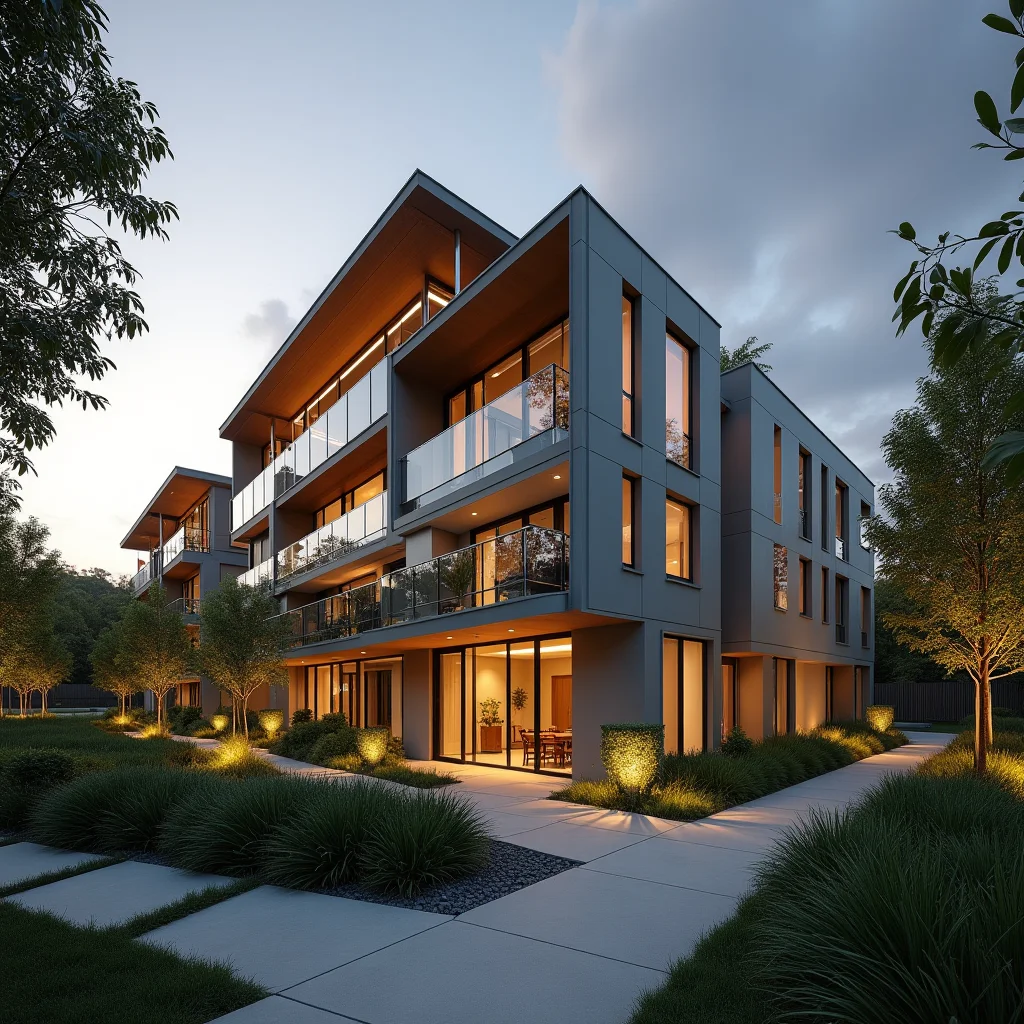
Gordon recorded a $2,100,000 median house price alongside a 70% auction clearance rate and an average 26 days on market — metrics that stand out sharply against Sydney's broader auction market, where clearance rates have been tracking well below historical norms through mid-2026. With 5.1% annual growth and a 2.5% rental yield, Gordon occupies a distinctive position on Sydney's Upper North Shore: priced firmly within the prestige bracket, yet offering entry conditions that buyers struggling to access inner-ring suburbs are increasingly willing to meet.
Gordon's Clearance Rate Outperforms a Softening Sydney Market
A 70% auction clearance rate in Gordon is a materially stronger result than what agents are recording across much of metropolitan Sydney in the current cycle. For context, Randwick — one of Sydney's more resilient eastern suburbs auction markets — is recording a 73.5% clearance rate at a $2,400,000 median, while markets further from the CBD are struggling to sustain buyer competition. Gordon's 70% figure, achieved at a $300,000 discount to Randwick's median, reflects genuine and consistent buyer demand rather than isolated auction outcomes.
The 26-day average selling period reinforces that signal. Properties in Gordon are not sitting. Compared to Port Macquarie's 48-day average or Liverpool's 38-day cycle, Gordon's 26-day figure indicates that qualified buyers are engaging quickly and that vendor pricing is broadly aligned with where the market is clearing. At the RBA cash rate of 4.35%, that kind of market velocity in a $2,100,000 suburb is not automatic — it reflects a specific buyer cohort with equity and borrowing capacity acting with conviction.
According to REA Group, property identities including John McGrath, Andrew Winter, and Terry Ryder published their top suburb picks for the next decade on June 18, 2026 — with accessibility, infrastructure, and relative value within established corridors cited as key selection criteria. Gordon's profile aligns with several of those themes: established train access, proximity to quality schools, and a price point that, while high in absolute terms, sits below the $2,400,000–$2,800,000 range occupied by comparable Sydney prestige suburbs.
Affordability and Accessibility Within the Prestige Tier
The framing of Gordon as an "accessible" prestige suburb requires precision. At $2,100,000, Gordon is not affordable in any conventional sense — it sits well above Sydney's broader median and demands a substantial deposit under current lending conditions. The accessibility argument is relative: Gordon offers prestige-tier amenity, school catchments, and capital growth at a discount to inner-ring alternatives. Buyers priced out of Kirribilli ($2,650,000 median) or Toorak-equivalent Sydney suburbs are finding Gordon's entry point comparatively achievable.
The 5.1% annual growth rate adds another dimension to that accessibility case. Growth at 5.1% is not speculative — it is measured and consistent with a market where demand is stable rather than volatile. Compare that to Nedlands in Western Australia, which is recording 15% annual growth at a $2,200,000 median, or South Perth at 13.8% growth and $1,450,000. Those WA markets are delivering sharper short-term returns, but they also carry more mean-reversion risk. Gordon's 5.1% growth reflects a market where price discovery is mature and buyer behaviour is disciplined.
For buyers approaching a $2,100,000 purchase, understanding the full cost of acquisition — including stamp duty, legal fees, and conveyancing — is critical. The REAStats guide to Conveyancing in Australia — What It Is, What It Costs, and How to Choose outlines state-by-state cost structures and what buyers should verify before settlement. In NSW, conveyancing costs and stamp duty on a $2,100,000 property add tens of thousands of dollars to the acquisition cost, a consideration that buyers comparing Gordon to slightly cheaper alternatives must factor in accurately.
Rental Yield and the Investment Case at $2,100,000
Gordon's 2.5% rental yield is the most constrained metric in the suburb's performance profile. At a $2,100,000 median, a 2.5% yield implies gross rental income of approximately $52,500 per annum — or roughly $1,010 per week. That figure is consistent with the upper end of the Upper North Shore rental market, but it means Gordon is emphatically not a cash flow investment. At an RBA cash rate of 4.35%, investors carrying significant debt against a $2,100,000 asset at 2.5% yield will be negatively geared, often substantially so.
The investment case in Gordon therefore rests on capital growth, not income. The 5.1% annual growth rate at a $2,100,000 base represents approximately $107,100 in gross capital appreciation per year on median — a figure that makes the negative carry more manageable for high-income investors who can absorb the annual shortfall. For investors examining macro conditions, Property Update's coverage of the RBA Chart Pack June 2026 highlights the interest rate environment shaping borrowing costs and investment feasibility across Australian property markets. For a broader international comparison of how yield-compressed prestige suburbs perform in rate-tightening cycles, World Property Forum's international property market analysis provides useful context.
Gordon's 70% auction clearance rate at a $2,100,000 median and 26-day selling period positions it among Sydney's most consistently liquid prestige markets — a combination that distinguishes it from both the slower outer-metro markets and the higher-priced inner-city suburbs where vendor expectations are being tested more severely.
RBA Rate Environment and Its Effect on Upper North Shore Buyer Behaviour
The RBA cash rate at 4.35% is the defining structural condition for every transaction in Gordon right now. A buyer purchasing at $2,100,000 with an 80% LVR is carrying approximately $1,680,000 in debt. At current variable mortgage rates — which sit materially above the cash rate — the annual interest servicing cost on that debt exceeds $100,000 before principal repayment. That is a significant hurdle, and it is one reason why the buyer pool in Gordon has narrowed to a specific cohort: owner-occupiers with substantial equity from a prior sale, dual-income professional households, or investors with high income seeking long-term capital preservation.
What the 70% clearance rate and 26-day selling period tell us is that this cohort remains active and committed. Gordon is not experiencing the buyer paralysis seen in some outer-suburban markets. The suburb's school catchment profile, direct rail access to the CBD, and the relative scarcity of comparable properties on the market at any given time are sustaining competition among qualified buyers even as the broader Sydney auction market experiences pressure.
The June 2026 RBA Chart Pack, as covered by Property Update, confirms that macroeconomic conditions remain challenging for leveraged buyers nationally — but established prestige corridors with genuine owner-occupier demand continue to absorb supply more efficiently than rate-sensitive investor-driven markets. Gordon's metrics are consistent with that pattern.
What Gordon's Data Signals for Buyers, Vendors, and Agents
For vendors in Gordon, the current data presents a reasonably clear picture: the market is working. A 70% clearance rate means that seven in ten properties taken to auction are selling under the hammer, which reduces the risk of a prolonged campaign or a price adjustment after a passed-in result. Vendors who price accurately and present well are meeting an active buyer pool within 26 days on average. That is a strong operating environment relative to much of Sydney's current market.
For buyers, the 5.1% annual growth rate and the relative discount to comparable suburbs like Kirribilli and Randwick make Gordon a defensible purchase at the $2,100,000 median — provided the buyer has the financial capacity to hold through any further rate headwinds and is not relying on rental income to service the debt. Buyers at this price point should also be thorough in pre-purchase due diligence; understanding the contract of sale and what protections it provides is essential at $2,100,000 where the financial stakes of a defective transaction are substantial.
For agents operating in Gordon, the 26-day average selling period and 70% clearance rate are performance benchmarks worth monitoring closely. If either metric softens over the coming quarter — particularly if clearance rates drift toward the 60% range that characterises less liquid Sydney markets — it will signal that the RBA rate environment is beginning to compress the active buyer pool even in this more resilient corridor. For now, the data supports a market that is functioning with discipline and delivering consistent outcomes for both sides of the transaction.