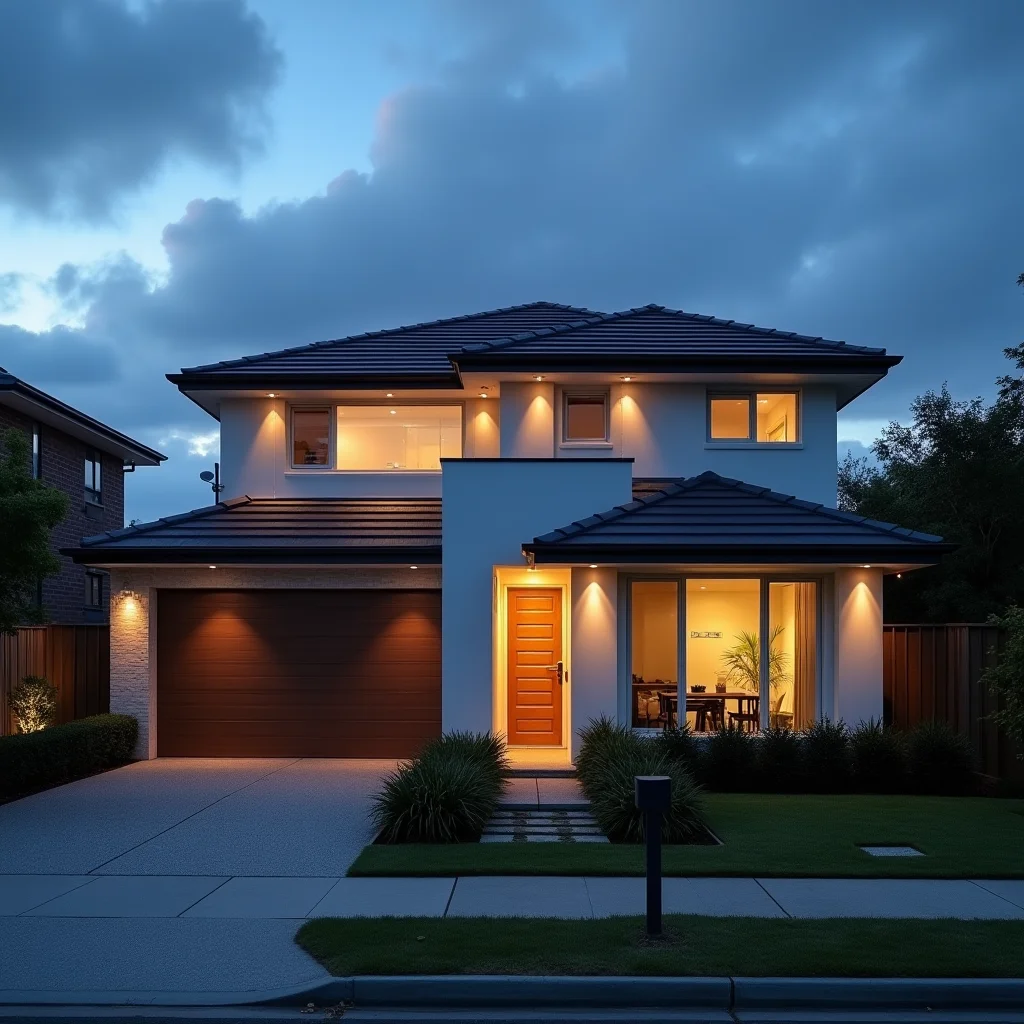
According to REA Group, granny flat search activity has been climbing all year across Australia, with builders expecting to produce ten times more secondary dwellings than they once did — a structural shift that is reshaping how vendors, investors, and buyers assess property value mid-winter. The surge arrives as June 2026 auction data shows Australia's property market fracturing along clear state lines, with Western Australia's Nedlands recording a 65.5% clearance rate and 15-day average campaign while Port Macquarie, NSW, posts a 46% clearance rate and 48-day sales cycle against a 4.35% RBA cash rate.
Granny Flat Demand Reflects a Structural Housing Shift, Not Just a Seasonal Trend
The granny flat surge reported by REA Group on June 20, 2026 is not a short-term winter phenomenon — it reflects a sustained response to Australia's ongoing housing supply deficit. Search volumes for secondary dwellings have risen continuously throughout 2026, and the builder pipeline has expanded dramatically in response. Properties with existing secondary structures or dual-occupancy potential are attracting measurably stronger buyer interest, particularly in outer metropolitan and regional markets where land parcels support construction.
From an investment standpoint, this demand surge directly intersects with seasonal market dynamics. Winter campaigns traditionally see thinner auction volumes and compressed buyer pools, yet properties offering rental income from a secondary dwelling are holding vendor price expectations more firmly than comparable single-dwelling listings. In markets like Mandurah, WA — where the median sits at $550,000 with 10.5% annual growth — the dual-income proposition is proving particularly durable, with a 24-day average sales cycle suggesting demand has not cooled with the season.
Meanwhile, REA Group also reported on June 20 that Development Victoria has commenced a 400-home estate in Melbourne's east on a former pesticide testing facility — another signal that state governments are activating supply-side responses to the housing crisis at scale. For agents operating in Melbourne's eastern corridor, this incoming supply represents a medium-term pricing consideration that vendors listing in winter 2026 may not yet be pricing in.
Winter Clearance Rates Expose a Three-Speed Market Across States
June 2026 clearance data across the REAStats suburb dataset confirms a market operating at meaningfully different speeds depending on geography. Western Australia's premium suburbs continue to outperform: Nedlands recorded a 65.5% clearance rate with properties spending just 15 days on market, while South Perth achieved a 63.5% clearance rate in 17 days at a $1,450,000 median — 13.8% annual growth despite a winter auction calendar.
Queensland's inner-urban markets are also sustaining momentum. West End posted a 62% clearance rate with a 22-day campaign average, and Indooroopilly reached 62.5% at 23 days — both against a $1,350,000-plus median price range. Maroochydore, further north on the Sunshine Coast, recorded 8.5% annual growth at a $1,050,000 median with a 28-day campaign, reinforcing that Queensland's growth corridor is holding its seasonal depth better than southern capitals.
Victoria's data tells a different story. Dandenong recorded just 2.3% annual growth at a $680,000 median, with a 56% clearance rate and 40-day campaign. Even prestige pockets like Prahran ($1,550,000 median, 3.9% growth) are running 25-day campaigns at 69% clearance — stronger than the state average but materially behind WA's equivalent tier. For macro and interest rate market analysis, this state-level divergence is directly traceable to the 4.35% cash rate's uneven impact: Victoria's heavier investor exposure and higher price points compress buyer pools more sharply than WA's relatively lower median base.
South Perth recorded 13.8% annual growth at a $1,450,000 median with a 17-day average sales campaign — compared to Dandenong's 2.3% growth at $680,000 with a 40-day average. The same cash rate environment is producing structurally different outcomes across state borders in June 2026.
NSW Regional Markets Extend Campaign Lengths as Sydney Prestige Holds Firm
New South Wales presents its own internal split. Regional markets are carrying the weight of the 4.35% rate environment more visibly than the Sydney metro. Port Macquarie recorded a 46% clearance rate with a 48-day average campaign at an $850,000 median — one of the longest marketing periods in the current dataset. Ballina, at a $1,350,000 median, recorded a 47% clearance rate with a 45-day campaign, suggesting the NSW regional lifestyle market that surged during the pandemic relocation wave is now working through an extended correction phase.
Within Sydney itself, the picture is more resilient at the upper end. Randwick cleared at 73.5% with a 23-day campaign at a $2,400,000 median — a 5.6% annual growth rate that outperforms much of Melbourne's prestige tier. Kirribilli posted a 72.5% clearance rate in 24 days at a $2,650,000 median. Surry Hills, at $1,920,000, reached 73% clearance in 23 days with 5.5% annual growth. These results confirm that Sydney's prestige and inner-ring markets are decoupled from the regional softness — driven by constrained supply, owner-occupier depth, and limited substitution options at this price point.
Penrith, at an $880,000 median, recorded a 62% clearance rate at 35 days — a middle-ground result that reflects outer-ring buyer sensitivity to borrowing costs, without the extended campaigns seen in comparable regional NSW markets. For agents working across Sydney's western corridor, this 35-day average signals that winter campaigns require more active buyer management than the sub-25-day inner-ring norm.
The Myth of 'Buy Right, Win Instantly' and What Cycle Data Actually Shows
Property Update, writing on June 20, challenged the persistent belief that property profits are locked in at purchase — arguing that holding period, market selection, and ongoing management decisions determine outcomes more reliably than entry-point negotiation alone. The current June 2026 data supports this framing. Mandurah's 10.5% annual growth on a $550,000 median is not the result of buyers securing a discount at entry — it reflects a sustained supply-demand imbalance across WA's regional coast that has compounded over multiple years.
Understanding Auction Clearance Rates Explained is essential context here: clearance rates function as real-time demand signals, not lagging indicators. The current data showing West End, QLD at 62% and Indooroopilly at 62.5% — both with sub-23-day campaigns in winter — indicates buyer demand in these markets is absorbing seasonal volume reductions without meaningful price pressure. Conversely, Ballina's 47% clearance rate and 45-day campaign tells agents and vendors that the market is pricing in rate-sensitive caution, not seasonal hesitation that will resolve automatically in spring.
For investors evaluating winter entry points, the granny flat demand surge adds a specific lens: properties with secondary dwelling capacity or dual-income potential are commanding stronger buyer interest in a market where yield is increasingly important. The REA Group data on builder volumes suggests this is a sustained structural preference, not a seasonal search spike — meaning vendors who hold dual-income capable properties are better positioned heading into spring campaigns than comparable single-dwelling stock in the same price bracket.
What the June 2026 Data Signals for Agents, Buyers, and Vendors This Winter
For vendors in WA's premium suburbs — particularly Nedlands and South Perth — the data confirms that winter 2026 is not a reason to delay campaigns. A 15-day average marketing period and 65.5% clearance rate in Nedlands indicates buyer depth remains sufficient to run effective campaigns without spring volume to support them. Pricing strategy is the variable, not timing.
For vendors in NSW regional markets and Melbourne's middle ring, the 40-48 day campaign averages signal that buyer pools are thinner and pricing expectations need to reflect current demand, not spring aspirations. Toorak's 72% clearance rate at a $2,800,000 median and 23-day campaign demonstrates that Melbourne's prestige tier retains depth — but Dandenong's 40-day average at 56% clearance confirms the rate environment is compressing mid-market buyer capacity more sharply. Agents advising mid-market Melbourne vendors on winter campaigns should set pricing expectations to the current data, not the spring comparable sales cycle.
For buyers, the granny flat demand data from REA Group adds a valuation dimension that is becoming increasingly difficult to ignore: properties with secondary dwelling potential are likely to carry a price premium that only widens as the housing supply deficit persists. The Development Victoria 400-home estate in Melbourne's east provides some medium-term relief in that corridor, but the builder capacity surge in the granny flat segment suggests the market has already concluded that greenfield supply alone will not close the gap. Winter 2026 presents genuine buying opportunities in extended-campaign NSW regional markets and Melbourne's mid-ring — but only for buyers who have resolved their financing position under the current 4.35% cash rate environment.