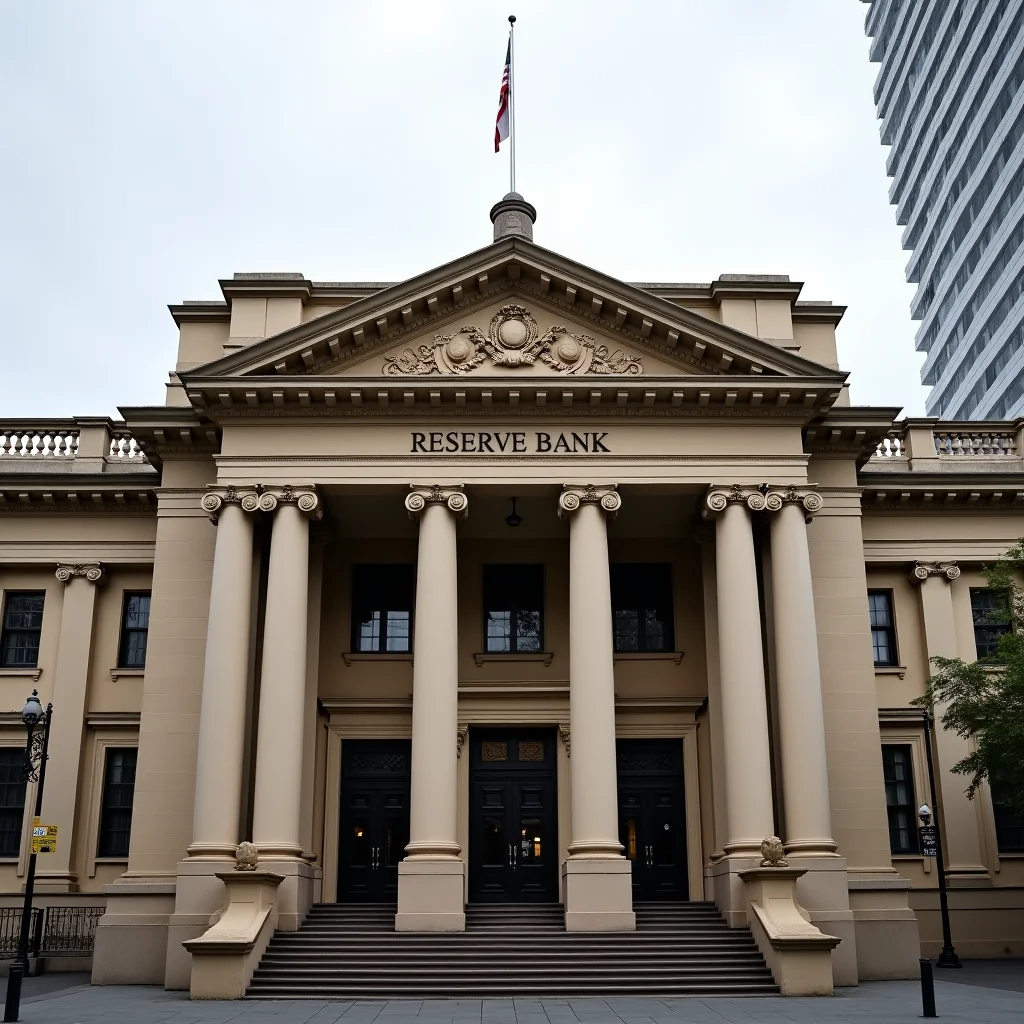
According to SMH Property, the federal budget's investor tax overhaul has caused some investors to pull back from the market, tilting conditions toward first home buyers — but the capital that has exited eastern seaboard auctions is not simply sitting idle. Suburb-level data for June 2026 shows it is being redeployed into regional and fringe markets where growth rates at the RBA's 4.35% cash rate remain materially above capital city averages: Mandurah at 10.5% annual growth, Maroochydore at 8.5%, and West End at 8.8%.
The Tax Overhaul Effect: Where Capital City Investors Are Going
The SMH report frames the investor retreat as a first home buyer opportunity — and in some capital city markets that framing holds. Dandenong in Victoria, with a $680,000 median and 2.3% annual growth, and Reservoir at $880,000 with 2.8% growth, represent precisely the type of lower-quartile capital city stock that was previously contested by both first home buyers and yield-focused investors. With the tax overhaul reducing investor appetite in those segments, first home buyer competition has eased modestly.
For investors who remain active but are recalibrating their strategy, the data signals a clear geographic pivot. Port Macquarie in NSW carries a $850,000 median, 3.5% annual growth, and 48 days on market — the longest campaign duration in the current dataset. Compare that to Mandurah in WA, which sits at a $550,000 entry point, 10.5% annual growth, and 24 days on market. The holding cost differential at 4.35% on a $300,000 lower purchase price is approximately $13,000 per annum in debt service — a meaningful advantage before any growth differential is applied.
Meanwhile, Property Update's June 28 analysis of common investor mistakes highlights the cost of emotionally driven location choices over data-driven ones — a pattern that directly applies when capital city brand recognition outweighs the underlying return arithmetic in a tightened rate environment.
Queensland's Regional Case: Maroochydore and West End by the Numbers
Maroochydore on the Sunshine Coast carries a $1,050,000 median price with 8.5% annual growth and 28 days on market — roughly equivalent campaign velocity to inner-city Queensland suburbs, but at a lower absolute price point than Brisbane's established inner ring. Its auction clearance rate of 54% reflects genuine buyer activity rather than the vendor-driven withdrawal patterns that have suppressed clearance figures in Melbourne, where REA Group reported on June 27 that another brutal weekend of results has prompted speculation about a political circuit-breaker for the frozen market.
West End in Queensland records an $1,350,000 median with 8.8% annual growth and just 22 days on market — the tightest campaign duration among the Queensland markets in this dataset. An auction clearance rate of 62% positions it above the Sunshine Coast figure and signals that the inner-Brisbane fringe continues to draw buyers who have priced out of comparable Sydney precincts. Indooroopilly at $1,380,000 with 8.5% growth and 23 days on market reinforces the pattern: inner-ring Brisbane alternatives are recording growth rates that outpace comparable Sydney and Melbourne suburbs by a factor of roughly two.
Mandurah at $550,000 with 10.5% annual growth and 24 days on market delivers a growth-to-entry-price ratio that no comparable eastern seaboard regional market can currently match. Port Macquarie's 3.5% growth at $850,000 over 48 days on market sits at the opposite end of the regional investment spectrum.
Western Australia's Regional Spread: From Nedlands to Mandurah
WA's growth story in June 2026 is well-documented at the premium end — Nedlands at $2,200,000 with 15% annual growth and 15 days on market represents the fastest-clearing prestige market in the national dataset. But the more instructive regional investment signal comes from the spread between Nedlands and Mandurah. The $1,650,000 price gap between these two WA markets, combined with Mandurah's 10.5% growth rate, illustrates how capital is filtering through the WA market from premium precincts toward affordable fringe locations.
South Perth at $1,450,000 with 13.8% annual growth and 17 days on market sits between these two extremes and confirms that WA's growth is not confined to a single price tier. Fremantle at $950,000 with 5.8% growth and 25 days on market offers a mid-market entry into the Perth metropolitan fringe. For investors managing borrowing costs at 4.35%, the Mandurah entry point generates a lower absolute debt service burden while still accessing double-digit percentage growth — a combination that is rare in any Australian market at this point in the rate cycle.
For deeper context on reading leading indicators like days on market and clearance rates as early signals of where regional markets are in their cycle, the REAStats guide to Property Cycle Timing — Using Data to Make Better Decisions provides the analytical framework that separates short-term noise from structural momentum shifts.
The Melbourne Contrast and Why It Matters for Regional Investors
The Melbourne auction market provides the sharpest counterpoint to the regional growth story. Toorak at $2,800,000 records 4.5% annual growth and 72% clearance — a solid result by Melbourne standards in winter 2026, but materially below WA and Queensland equivalents on a growth basis. Prahran at $1,550,000 with 3.9% growth and 25 days on market, and Kew at $2,100,000 with 4.4% growth, sit in similar territory: established, liquid markets with moderate campaign times but growth rates that are roughly half of what Mandurah and Maroochydore are generating.
REA Group's June 27 report on Melbourne's auction conditions noted the expectation among property observers that a Liberal election victory under Jess Wilson could provide a confidence boost — but even under an optimistic political scenario, structural supply dynamics and investor tax changes make a rapid reversal of Melbourne's relative underperformance unlikely in the short term. Dandenong's 2.3% growth at 40 days on market captures the lower end of the Melbourne market's current state: affordable by capital city standards but generating minimal real returns at current borrowing costs.
For investors conducting cross-state comparisons, the historical Australian property bubble analysis at Bubblepedia provides useful context on how previous interstate growth divergences resolved — including whether leading markets like WA in the current cycle have historically sustained outperformance or reverted toward national averages.
Structuring a Regional Investment Decision at 4.35%
The practical investment question at 4.35% is whether regional growth rates compensate for the liquidity discount that regional and fringe markets carry relative to capital city equivalents. The days-on-market data offers a partial answer. Maroochydore at 28 days and West End at 22 days are not meaningfully less liquid than Sydney's Surry Hills at 23 days or Randwick at 23 days — both of which carry medians of $1,920,000 and $2,400,000 respectively, with annual growth of 5.5% and 5.6%. The liquidity premium priced into those Sydney addresses is not generating a proportional growth premium over the Queensland alternatives in the current cycle.
Ballina in NSW at $1,350,000 with 4.0% growth and 45 days on market represents the cautionary counterpoint: a coastal regional market that has failed to generate Queensland-equivalent momentum despite a comparable median price to West End. The 45-day campaign time and 47% clearance rate signal that buyer depth in that market is thin — a structural risk for investors who may need to exit within a five-year horizon.
The investor tax overhaul documented by SMH has compressed activity at the capital city end of the market while demand fundamentals in WA and Queensland regional markets remain intact. For investors building a FY27 acquisition strategy, the data across Mandurah, Maroochydore, and West End collectively signals that the regional premium — lower entry cost, higher growth rate, comparable liquidity — is currently widest against Sydney and Melbourne alternatives at the sub-$1.5 million price point. Vendors in those WA and Queensland markets should expect sustained campaign interest through the second half of 2026, while buyers who delay to wait for rate relief may find that the entry-price advantage has partially closed before the RBA moves.

