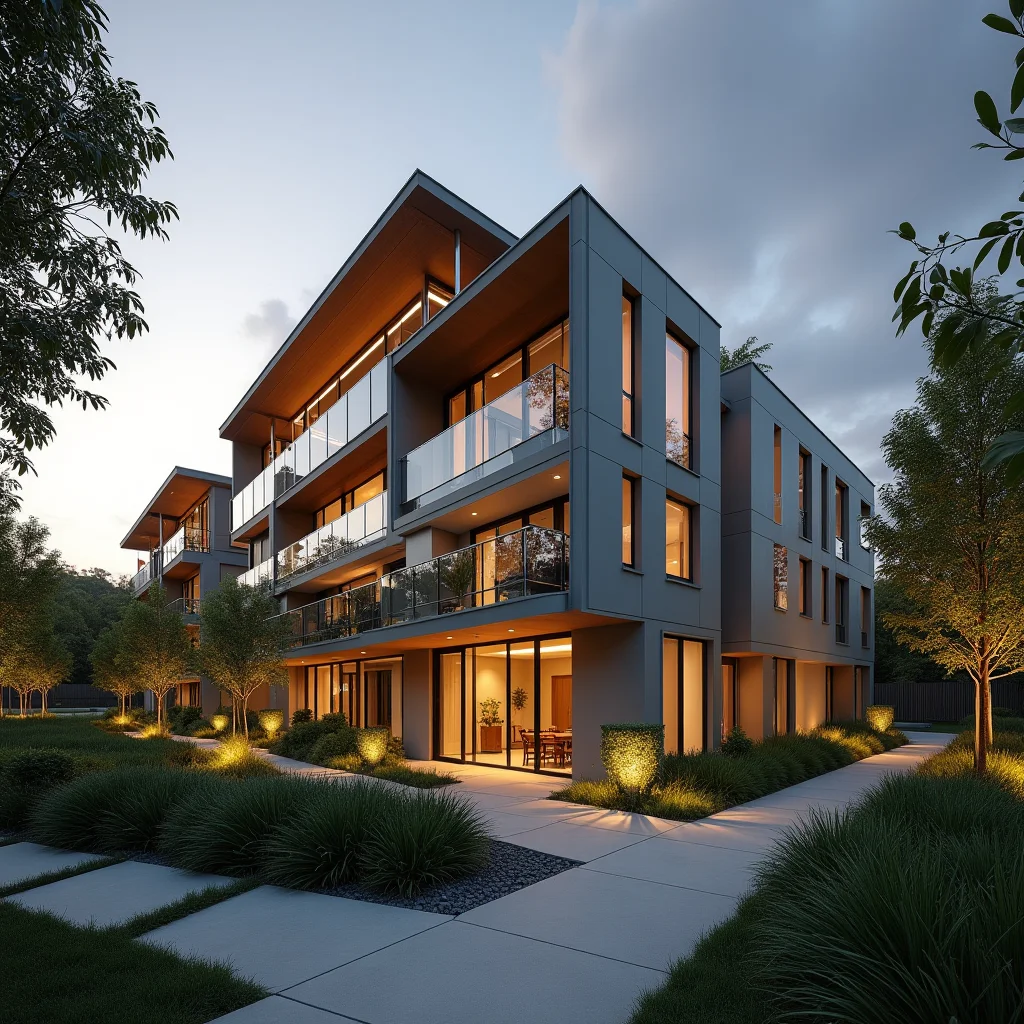
Karrinyup recorded 13.5% annual growth at a $1,250,000 median in July 2026, with properties clearing in just 19 days and an auction clearance rate of 61.5% — figures that place the northern Perth prestige suburb firmly among Western Australia's strongest-performing coastal markets at a time when the RBA's 4.35% cash rate is visibly suppressing activity across Victoria and New South Wales. According to REA Group, the Reserve Bank has acknowledged that the housing market has been weaker than anticipated following geopolitical disruption, yet Karrinyup's data tells a materially different story for WA's premium coastal belt.
Karrinyup's Prestige Metrics Outperform Eastern State Benchmarks
At $1,250,000 and 13.5% annual growth, Karrinyup is outpacing virtually every comparable prestige suburb in Melbourne and Sydney on a capital growth basis. Toorak — Victoria's most recognised prestige postcode — recorded just 4.5% annual growth at a $2,800,000 median, with properties sitting on market for 23 days. Kew, another inner-Melbourne premium address, posted 4.4% growth at $2,100,000. Karrinyup's growth rate is more than three times Toorak's, despite carrying a median price less than half that of Melbourne's flagship suburb.
For broader market context, see Australian Property Forum property market data.
Sydney's prestige market shows a similar divergence. Kirribilli recorded 4.8% growth at a $2,650,000 median with a 24-day sales cycle, while Randwick — a high-performing eastern suburbs market — achieved 5.6% growth at $2,400,000. Neither eastern market comes close to Karrinyup's 13.5% growth rate. For buyers and investors focused on capital return rather than absolute price point, the data makes a compelling case for WA's prestige coastal tier as the country's most productive growth segment in the current rate environment.
Karrinyup's 19-day average days on market and 13.5% annual growth at a $1,250,000 median places it in a tier of its own among Australian prestige suburbs — outpacing Toorak's 4.5% and Kirribilli's 4.8% by margins that reflect sustained, structurally-driven demand rather than short-term market noise.
WA's Coastal Prestige Belt: Karrinyup in Context
Karrinyup does not sit in isolation within WA's prestige geography. Nedlands recorded 15% annual growth at a $2,200,000 median with the state's fastest sales cycle at 15 days, while South Perth posted 13.8% growth at $1,450,000 with properties clearing in 17 days. Karrinyup's 13.5% growth, 19-day sales cycle, and $1,250,000 entry point position it as a logical progression suburb for buyers priced out of Nedlands or seeking coastal proximity with comparable momentum.
This cluster of high-performing WA suburbs — Nedlands, South Perth, and Karrinyup — collectively demonstrates that western Australia's premium market is running on fundamentally different supply-demand dynamics than eastern capitals. Where Melbourne's prestige suburbs are absorbing the rate environment through slower price growth and extended campaigns, WA's coastal belt is clearing stock quickly with double-digit appreciation intact. The 2.8% rental yield in Karrinyup is modest relative to the growth rate, which is a characteristic signature of a market where capital appreciation is the primary driver of buyer behaviour rather than yield optimisation.
RBA Headwinds and the WA Prestige Immunity Argument
The RBA's acknowledgment — reported by REA Group on 28 July 2026 — that geopolitical disruption from the Iran conflict has hit the housing market harder than expected adds a layer of complexity to interpreting WA's outperformance. At the national level, the 4.35% cash rate is exerting clear downward pressure on sentiment and transaction volumes. Melbourne's prestige market, where Toorak's clearance rate sits at 72% but growth has collapsed to 4.5%, reflects a market where liquidity is maintained but price momentum has stalled.
Karrinyup's 61.5% clearance rate is lower than Toorak's 72% or Randwick's 73.5%, which at first glance might appear counterintuitive given its stronger growth metrics. The distinction matters: in high-growth WA markets, vendors frequently command strong prices through private treaty rather than auction, meaning the clearance rate alone understates true market depth. The 19-day sales cycle is a more reliable signal of buyer urgency — and at 19 days, Karrinyup sits well inside the national prestige average, indicating that unconditional demand remains structurally intact regardless of rate conditions. For broader context on how macroeconomic settings are influencing prestige property behaviour nationally, macro and interest rate market analysis provides useful framing on rate transmission across asset classes.
Prestige Buyer Behaviour and the Karrinyup Value Proposition
Karrinyup's $1,250,000 median occupies a distinctive position in the prestige tier — above the threshold where first-home buyer schemes apply, yet substantially below the $2,000,000-plus price points of Nedlands and the Sydney eastern suburbs. This pricing band attracts a specific buyer profile: typically owner-occupiers upgrading from adjacent northern Perth suburbs, or interstate investors seeking WA coastal exposure with meaningful capital growth credentials. At 13.5% annual growth, a buyer who transacted twelve months ago has seen approximately $168,750 added to their asset value — a figure that compares favourably with any alternative prestige market nationally at the current cash rate.
The 2.8% rental yield signals that the suburb functions primarily as an owner-occupier market. Investors considering Karrinyup purely on yield metrics will find stronger returns elsewhere in the WA geography — Mandurah at $550,000 and Fremantle at $950,000 offer higher yield profiles — but Karrinyup's value proposition is unambiguously capital growth. Buyers entering at the $1,250,000 median with a 13.5% growth trajectory are making a different calculation: that the coastal prestige premium will sustain appreciation even as the broader national market absorbs ongoing rate pressure.
Understanding the contractual obligations that govern transactions at this price point is equally important for buyers and vendors operating in the prestige segment. The Understanding the Contract of Sale guide covers the binding terms and conditions that apply to residential transactions at any price tier. Additionally, buyers operating in competitive prestige markets with compressed days-on-market should review cooling-off periods in Australia before committing to an offer — particularly where auction conditions may waive standard cooling-off rights.
What the Data Signals for Agents, Buyers, and Vendors
For agents operating in Karrinyup, the 19-day sales cycle represents a genuine competitive advantage in vendor conversations. When a vendor in Karrinyup can reasonably expect to transact in under three weeks at 13.5% above the prior year's price level, the case for listing without delay is data-supported and defensible. Agents capable of demonstrating suburb-specific clearance data alongside comparable WA prestige benchmarks — Nedlands at 15 days, South Perth at 17 days — will find vendor confidence relatively easy to secure compared to eastern state colleagues operating in 30-to-48-day markets.
For buyers, the 19-day cycle compresses due diligence timelines and rewards preparation. Those considering engaging a buyer's agent should factor in that pre-approved finance, building inspections, and contract review need to be substantially complete before inspection rather than after — the window between first inspection and vendor acceptance of an offer in a 19-day market leaves little room for sequential decision-making. Vendors, meanwhile, are holding a position of considerable strength: a $1,250,000 median growing at 13.5% annually in a market where Melbourne's comparable prestige tier is growing at less than 5% means the relative outperformance argument is available, quantifiable, and persuasive to the interstate buyer audience that is actively considering WA coastal exposure in FY27.