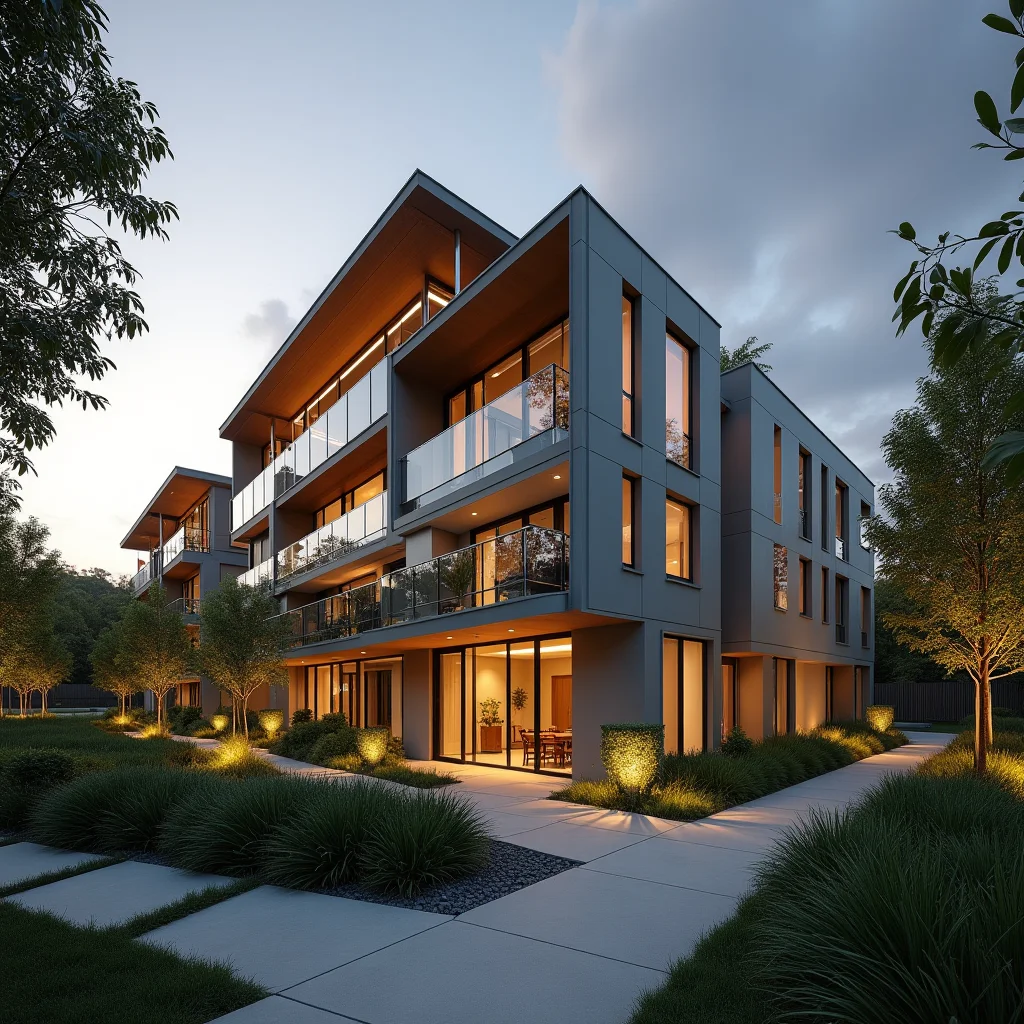
Kenmore recorded 8.8% annual growth at a $1,250,000 median price, with properties selling in an average of 25 days and a 61% auction clearance rate — performance figures that place this western Brisbane suburb firmly in the conversation as the city's Tier 3 affordability ceiling tightens. According to REA Group, 151 suburbs joined Australia's million-dollar property club in 2026, with buyers seeking freestanding homes on large blocks being pushed well beyond established premium zones. Kenmore's current median puts it squarely at that threshold — making the suburb's continued growth trajectory a critical signal for buyers and investors assessing accessible Brisbane entry points before further price compression occurs.
Kenmore's $1,250,000 Median in the Context of Brisbane's Expanding Million-Dollar Map
The REA Group data published on 30 July 2026 confirms that Australia's million-dollar suburb count is growing rapidly, with 151 new entrants crossing the threshold this year alone. For Kenmore, a suburb that already sits at the $1,250,000 median, this national shift matters because it reframes buyer expectations: what once represented premium pricing is now the new baseline for established, large-block family housing within commutable distance of a capital CBD.
For broader market context, see Australian Property Forum property market data.
Kenmore sits approximately 12 kilometres west of Brisbane's CBD, offering the kind of freestanding housing stock — typically on 600–800 sqm lots — that REA Group's data identifies as the primary driver of million-dollar suburb expansion. As inner-ring Brisbane suburbs push toward $1,500,000 and beyond, Kenmore absorbs demand spillover from buyers priced out of Indooroopilly ($1,380,000 median, 8.5% growth) and West End ($1,350,000 median, 8.8% growth). The suburb's 8.8% annual growth rate matches West End's precisely, suggesting that demand pressures in Brisbane's western corridor are broadly consistent rather than isolated to any single pocket.
At the RBA's current cash rate of 4.35%, a $1,250,000 purchase with a 20% deposit ($250,000) requires servicing a $1,000,000 loan — representing monthly repayments of approximately $5,500–$5,800 on a principal-and-interest basis at prevailing variable rates. That is a meaningful affordability constraint, but Kenmore's 25-day average days on market — faster than Maroochydore (28 days) and significantly faster than Port Macquarie (48 days) — confirms that qualified buyers are still transacting at pace, not sitting on the sidelines.
The Tier 3 Accessibility Argument: Where Kenmore Sits Relative to Brisbane's Price Spectrum
Tier 3 accessibility in Australian property analysis refers to suburbs that offer established infrastructure, strong school catchments, and CBD connectivity at price points meaningfully below the top tier — but not so low as to carry the risk profile of outer-ring or speculative growth markets. Kenmore fits this profile precisely. Its $1,250,000 median is 9.4% below Indooroopilly's $1,380,000 and 26.5% below the inner-city West End benchmark at a comparable growth rate.
That price differential matters because it preserves genuine entry opportunity for buyers who have been compressed out of the $1,400,000–$1,600,000 bracket that now characterises much of Brisbane's inner-west. Kenmore's 61% auction clearance rate — above the 54% recorded in Maroochydore and the 46% in Port Macquarie — indicates that when properties do reach auction, more than three in five are clearing under the hammer. That is a credible market depth signal, not a frothy outlier reading.
The 3.2% rental yield recorded in Kenmore is consistent with what investors should expect from an established, owner-occupier-dominated suburb at this price point. It is not a high-yield play; rather, Kenmore's investment case rests on capital growth continuity — the 8.8% annual figure sustained through the RBA's current tightening cycle is evidence that underlying demand fundamentals remain sound. For comparison, Victoria's Prahran posted just 3.9% annual growth at a $1,550,000 median with a 25-day days-on-market figure identical to Kenmore's — meaning buyers in Prahran are paying a 24% price premium for equivalent selling velocity and roughly half the capital growth.
Kenmore's 8.8% annual growth at $1,250,000 matches West End's growth rate at a $100,000 price discount — a spread that signals active buyer arbitrage across Brisbane's western corridor rather than a suburb-specific anomaly.
How Moreton Bay's Growth Pipeline Affects Kenmore's Demand Dynamics
The broader south-east Queensland growth story provides critical context for Kenmore's sustained buyer demand. According to REA Group, Avid Property Group unveiled display homes at the Élan masterplanned community in Moreton Bay on 30 July 2026, with the development set to deliver 387 homes to a region expecting 210,000 new residents by 2041. That population growth projection — concentrated in Brisbane's northern and western corridors — directly pressures established suburb medians like Kenmore's.
New masterplanned communities absorb some demand at the entry-price end of the market, but they do not replicate the established school catchments, mature tree canopy, and block sizes that define Kenmore's appeal to the family-formation buyer cohort. As Moreton Bay's population grows, the relative scarcity of established large-block stock in Kenmore and its immediate neighbours becomes a structural support for pricing. Buyers who want new-build accessibility may head north; buyers who prioritise school zones, established streetscapes, and proximity to Indooroopilly Shopping Centre will continue to absorb Kenmore stock.
This dynamic also informs vendor strategy. With 25 days on market, Kenmore sellers are operating in a market where correctly priced stock moves in under four weeks — leaving limited room for overpricing experiments. The 61% clearance rate suggests a modest but real proportion of auction campaigns are passing in and converting to post-auction negotiations, which means price guidance accuracy at the listing stage has a direct impact on campaign outcomes.
The Million-Dollar Club Expansion and What It Signals for Kenmore Buyers Acting in 2026
REA Group's data on 151 suburbs joining the million-dollar club in 2026 reframes the decision calculus for buyers currently assessing Kenmore. The expansion of the million-dollar club is not a Sydney or Melbourne-specific phenomenon — it is accelerating in Queensland and Western Australia, driven by interstate migration and the repricing of established family-home stock. Kenmore has been in the million-dollar bracket for some time, meaning its current $1,250,000 median represents a post-entry price — not a threshold crossing. That distinction matters: buyers entering now are not betting on a suburb crossing a psychological barrier; they are buying into established million-dollar market dynamics with 8.8% annual growth momentum already embedded.
Against this backdrop, Property Update published a timely analysis on 30 July 2026 cautioning investors against low-quality advice — including the impulse to buy close to home for convenience rather than on market fundamentals. Kenmore's data profile is the kind of evidence-based case that withstands that scrutiny: 8.8% growth, 25-day sales cycle, 61% clearance rate, and a price point below comparable-growth neighbours are all observable, verifiable signals rather than speculative narratives.
For buyers considering the legal and settlement process, understanding the full cost of acquisition at this price point is critical. The Conveyancing in Australia — What It Is, What It Costs, and How to Choose guide covers state-by-state conveyancing costs, the step-by-step process, and what to verify before settlement — all directly relevant for buyers transacting in Queensland's property system. Separately, the contract of sale framework in Queensland carries specific disclosure obligations that buyers should review before auction day. For broader macro and interest rate context shaping Kenmore's borrowing environment, macro and interest rate market analysis provides current RBA policy context that directly affects serviceability calculations at the $1,250,000 price point.
Agent and Vendor Strategy in a 25-Day Market
A 25-day average days on market is a tight selling environment by any national benchmark. For context, South Perth's 17-day cycle at $1,450,000 and Nedlands' 15-day cycle at $2,200,000 represent the sharpest end of the Australian market — driven by WA's exceptional growth conditions. Kenmore's 25-day figure sits at the same level as Prahran in Victoria and Randwick in New South Wales ($2,400,000 median, 73.5% clearance rate), meaning it is operating with Sydney and Melbourne prestige suburb efficiency at a significantly lower price point.
For agents operating in Kenmore, this velocity demands a campaign structure built around a three-to-four-week auction timeline with well-prepared vendor documentation from day one. Cooling-off period rules and pre-auction offer management in Queensland differ from southern states — the state-by-state cooling-off period rules are a practical reference for both buyers and agents managing conditional offers in this environment. Vendors who delay listing preparation, underinvest in property presentation, or set price guides inconsistent with comparable sales risk absorbing a second or third week of market exposure that the underlying data suggests is unnecessary in a well-run campaign.
The 61% clearance rate also signals that roughly 39% of auctions are not clearing on the day — a proportion that likely reflects a mix of vendor price expectations running slightly ahead of buyer capacity at the 4.35% cash rate, and some mismatch in campaign timing. Agents who can convert that 39% in the days immediately post-auction — before the property re-lists and accumulates days on market — will protect both their vendor's sale price and their own campaign statistics in a suburb where data scrutiny from serious buyers is high.
For buyers, vendors, and agents operating in Kenmore, the data as of July 2026 points to a market in active equilibrium: growing at 8.8%, selling in 25 days, clearing at 61%, and positioned at $1,250,000 — a price point that the national million-dollar club expansion confirms is neither exceptional nor fleeting, but increasingly the new normal for established western Brisbane family housing.