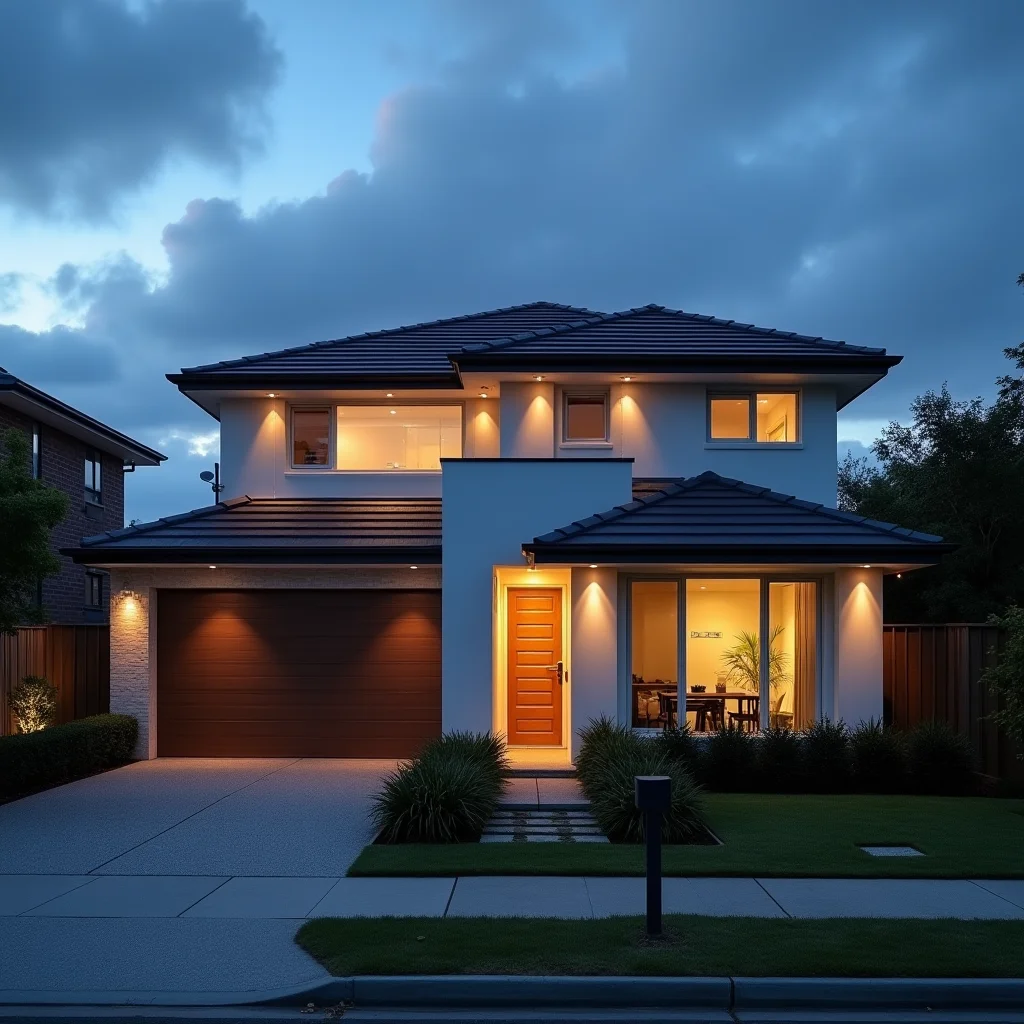
According to REA Group, the typical Melbourne auction in September 2026 is drawing just two competing bidders — a figure that crystallises why Victorian clearance rates are lagging well behind Sydney and Western Australia as the spring selling season accelerates. That same weekend, SMH Property reported that a $4m architecturally renovated Rosebery home attracted three registered bidders but received not a single opening bid at auction — a result that captures the psychological standoff now defining the top end of the market.
Melbourne's Two-Bidder Problem and What It Means for Spring Clearance Rates
The REA Group data point — two bidders at a typical Melbourne auction — is not simply a curiosity. Auction theory and decades of Australian clearance data consistently show that competitive bidding requires a minimum of three active participants to generate meaningful price tension above reserve. With just two bidders, a vendor is effectively relying on one buyer deciding to proceed rather than walk away. If either registered bidder fails to open, the property passes in.
REA Group's reporting links this thin bidder depth directly to the Albanese government's policy settings, though the precise mechanism compounds several pressures: the RBA's 4.35% cash rate, which has now held at that level through multiple review cycles, continues to constrain borrowing capacity and buyer confidence. Toorak, Melbourne's most prestige suburb, currently records a 72% auction clearance rate with a $2,800,000 median — the highest clearance in the Victorian data set. Yet even Toorak's result sits well below Randwick's 73.5% clearance in Sydney, and Kirribilli's 72.5%. At the affordable end of Melbourne's market, Dandenong records a 56% clearance rate with a $680,000 median and 40 days on market — double the 20-day range seen in leading Western Australian suburbs.
The REA Group data implies a structural spring problem for Melbourne agents: thin bidder registers mean that the traditional spring volume surge — more listings, more competition, faster clearance — is not materialising as it did in pre-rate-cycle years. Vendors who priced for 2024 conditions are finding 2026 buyers unwilling to validate those expectations under auction conditions.
Rosebery's $4m Pass-In: When Registered Bidders Don't Bid
The Rosebery result reported by SMH Property on September 13 represents a distinct but related market signal. Three bidders had registered — above the Melbourne median of two — yet the auctioneer's call produced no opening bid. The property is an architecturally renovated home in Rosebery, a Sydney inner-south suburb that sits within the broader eastern Sydney corridor where clearance rates remain comparatively firm.
The pass-in with zero bids, despite three registrations, points to a buyer psychology dynamic that goes beyond simple borrowing capacity. Registered bidders at the $4m price point are not constrained by lending in the same way as entry-level buyers. Rather, the reluctance to open bidding reflects a deliberate market read: buyers believe the reserve is above where they are prepared to go in the current cycle, and none wants to be the first to signal their ceiling. This is a direct consequence of spring 2026's pricing environment, where vendors are entering the market with expectations formed during the 2024–2025 growth phase, while buyers are pricing in PropTrack's reported five consecutive months of national price declines from the March 2026 peak.
The contrast with the same weekend's successful Sydney auction — a 1880s inner-north terrace sold for $1,819,000 — illustrates the price-band selectivity now defining Sydney's spring market. The terrace, despite a dated 1980s kitchen and bathroom, attracted competitive bidding between a family and a couple. Below $2m, motivated buyers with clear emotional purchase drivers are still transacting. Above $3m, the calculus shifts sharply toward wait-and-see positioning.
Melbourne's typical spring auction now draws just two competing bidders — below the threshold required for meaningful price tension above reserve — while Toorak records a 72% clearance rate at a $2,800,000 median, and Dandenong sits at 56% clearance with 40 days on market at $680,000. The bidder depth gap between Melbourne and Sydney's eastern suburbs is widening as the season progresses.
Seasonal Patterns Distorted: Spring 2026 vs Historical Norms
Spring traditionally delivers Australia's highest listing volumes and, in strong cycles, its strongest clearance rates. The logic is straightforward: warmer weather, school-year timing, and vendor confidence combine to bring properties to market, while buyer urgency builds ahead of the Christmas pause. In prior cycles — 2021 and 2023 in particular — spring clearance rates in Sydney and Melbourne regularly exceeded 75% in the opening weeks of September.
Spring 2026 is tracking a different pattern. The RBA's 4.35% cash rate, held across multiple board meetings, has compressed the pre-spring buyer activation that typically drives early-season clearance momentum. Listing volumes are rising — spring supply always does — but the buyer pool is not expanding at the same rate. The result is more properties competing for a relatively static number of qualified, willing purchasers. This supply-demand asymmetry is most visible in days-on-market data: Port Macquarie sits at 48 days on market with a 46% clearance rate, Ballina at 45 days with 47% clearance, and Liverpool at 38 days with 60.5% clearance. These regional NSW figures represent seasonal lengthening well beyond metropolitan norms.
Western Australia is the clear counter-seasonal outlier. Nedlands records 15 days on market with a 65.5% clearance rate and 15% annual growth from a $2,200,000 median. South Perth sits at 17 days on market with 63.5% clearance and 13.8% annual growth. Mandurah — at the affordable end of the WA market — shows 24 days on market and 10.5% annual growth from a $550,000 median. WA's outperformance is not seasonal in the traditional sense; it reflects structural undersupply and interstate migration flows that are operating independently of the spring calendar. For a broader perspective on how Australian market conditions compare globally, macro and interest rate market analysis provides useful context on how the RBA's current stance compares with international central bank positioning.
The Victoria Affordability Paradox: Interstate Interest vs Thin Local Bidding
According to Australian Property Forum, Victoria has been identified as Australia's most affordable state in 2026, attracting a surge of interstate first-home buyer interest toward Melbourne. This creates an apparent paradox: if Melbourne is drawing fresh buyer interest on affordability grounds, why is bidder depth so thin at auction?
The answer lies in the distinction between interest and transaction-readiness. Interstate buyers researching Melbourne affordability are often at early stages of a relocation decision — pre-approval, suburb selection, or simply comparative analysis. They are not yet the registered bidder showing up on auction day. Meanwhile, local Melbourne buyers — the ones who would ordinarily form the bulk of a competitive bidder register — are sitting on their hands due to rate uncertainty, the upcoming October 1 reserve price disclosure law, and the expectation that spring supply increases will provide more choice without requiring immediate commitment. Prahran's 69% clearance rate from a $1,550,000 median and Kew's 71% clearance from a $2,100,000 median show that high-amenity, well-located Melbourne suburbs can still attract reasonable bidder depth. The problem is concentrated in the broader suburban and affordable segments.
The broader question of whether Melbourne's relative affordability represents genuine value or simply reflects a market that is underperforming for structural reasons is directly addressed in the Is Australian Property Overvalued? analysis, which notes Sydney's price-to-income ratio at 13 times annual household income. Melbourne's relative discount to Sydney does not automatically constitute undervaluation — it may reflect the city's weaker employment growth, higher land tax burden, and now, demonstrably thinner auction bidder depth.
Queensland's Spring Position: Faster Clearance, Fewer Distortions
Queensland enters spring 2026 with market dynamics that sit between WA's runaway growth and Victoria's bidder-depth problem. West End records a 62% clearance rate with 22 days on market and 8.8% annual growth from a $1,350,000 median. Indooroopilly matches that 62.5% clearance rate with 23 days on market and 8.5% annual growth. Maroochydore on the Sunshine Coast shows 54% clearance with 28 days on market — slightly softer, consistent with a coastal lifestyle market that attracts more discretionary buyers with longer decision cycles.
Queensland's spring pattern is more conventionally seasonal than Victoria's. Clearance rates and days-on-market figures suggest a market where motivated buyers are still transacting within reasonable campaign timeframes, without the bidder-depth collapse visible at Melbourne's typical auction. The key differentiator is Queensland's ongoing net interstate migration inflow, which has maintained consistent demand for inner-Brisbane and Sunshine Coast stock through the rate cycle. Buyers arriving from Sydney and Melbourne with equity-funded purchasing power are less sensitive to the RBA's 4.35% rate than locally-sourced, heavily-leveraged first or second home buyers. Understanding how rental vacancy rates interact with Queensland's migration-driven demand is essential for interpreting whether clearance rate improvements are likely to hold through October and November.
What Spring 2026's Bidder Data Signals for Vendors and Agents
The REA Group two-bidder statistic, the Rosebery $4m pass-in, and the cross-suburb days-on-market data collectively signal a spring season where campaign strategy matters more than seasonal timing alone. Vendors who enter the market assuming that spring foot traffic will generate competitive bidding are likely to be disappointed, particularly in Melbourne's outer and middle-ring suburbs, and in regional NSW markets like Port Macquarie and Ballina where clearance rates are running below 47%.
Agents managing campaign expectations will need to communicate clearly on reserve pricing. The Rosebery result — three registered bidders, zero opening bids — is a warning that registration numbers are no longer a reliable proxy for vendor outcomes. A bidder who registers at $4m and refuses to open is providing no price discovery at all. Agents in markets where clearance rates sit below 60% face a data-driven case for recommending price guides that reflect current buyer appetite rather than vendor aspiration. In markets where clearance rates remain above 70% — Randwick at 73.5%, Surry Hills at 73%, Kirribilli at 72.5% — the spring season retains genuine competitive momentum, and vendors in those corridors hold legitimate pricing power heading into October.
For buyers, the thin-bidder environment in Melbourne and regional NSW creates negotiating opportunity that has not been available since 2019. Properties passing in under vendor bid, or failing to attract opening bids despite registered interest, frequently transact in the days following auction at post-auction private treaty — often at a meaningful discount to the original price guide. The auction underquoting dynamic cuts both ways in this environment: guides set too high to attract bidders are now being exposed at the auction call itself, providing buyers with real-time market intelligence that structured negotiation can convert into purchase outcomes.