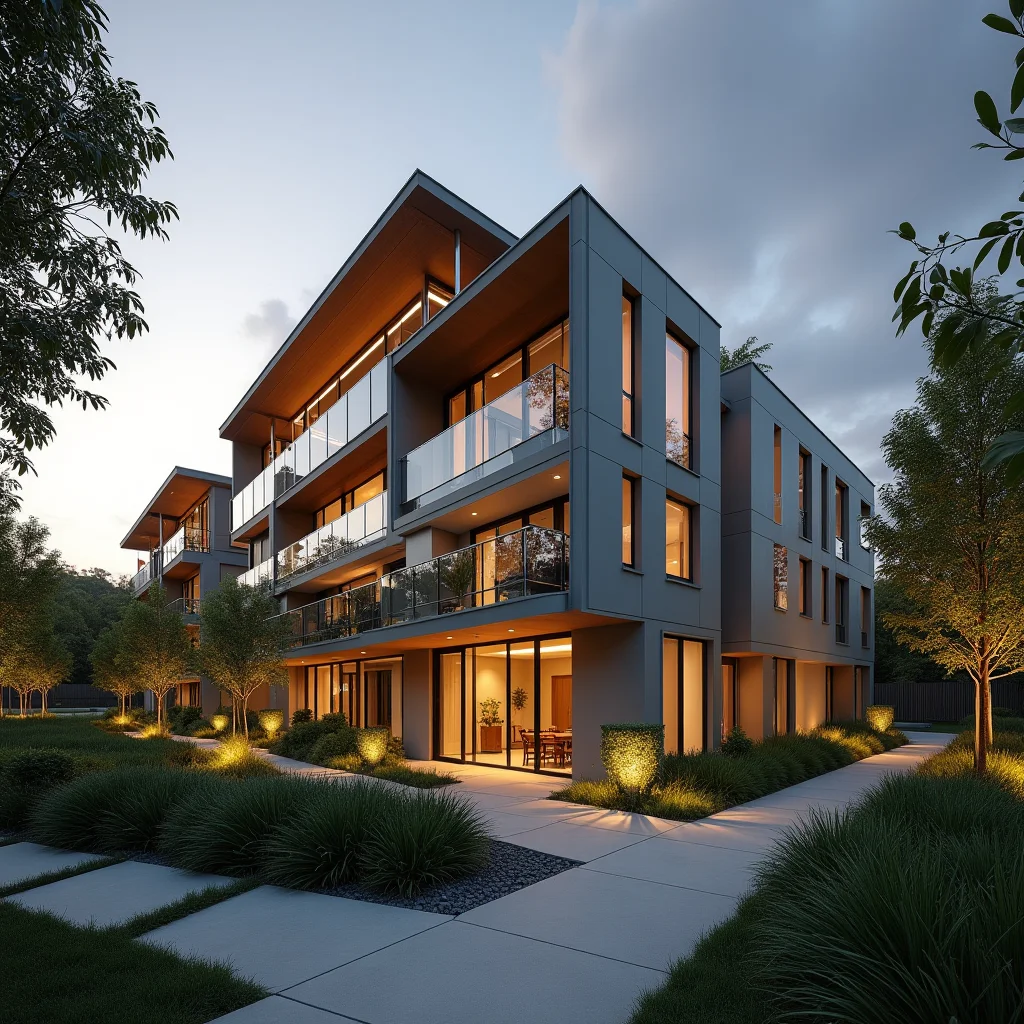
A fast-tracked 53-unit apartment tower proposed for Mona Vale and a six-way auction battle that drove a dated two-bedroom Bayside townhouse past its reserve have placed the new-versus-established property investment debate front and centre in July 2026. According to REA Group, the Mona Vale development is set to transform one of Sydney's low-rise coastal suburbs with new apartment supply entering a market where buyers are simultaneously competing fiercely for established stock — a tension that carries direct implications for investors weighing entry points, capital growth prospects, and yield arithmetic at the RBA's current 4.35% cash rate.
Sydney's Coastal New Supply Pipeline Meets Established Demand Pressure
The Mona Vale tower proposal, reported by REA Group on 21 July 2026, represents a pattern playing out across Sydney's coastal fringe: government fast-tracking of medium and high-density approvals in suburbs that have historically resisted density. For investors, this creates a bifurcated opportunity set. New apartments in these precincts carry developer incentives — including, in some cases, cash contribution schemes for first-home buyers as flagged in REA Group's reporting on Sydney's new first-home buyer pathway — but they also carry the risk of valuation compression as supply increases within a defined geographic catchment.
Randwick, as a comparison point within the Sydney market, currently sits at a $2,400,000 median with 5.6% annual growth and a 73.5% auction clearance rate — metrics that reflect the depth of demand for established homes in well-serviced inner and middle-ring suburbs. A 73.5% clearance rate is a strong seller's market signal. New apartment stock entering lower-density coastal suburbs like Mona Vale at volume will not replicate those clearance dynamics at scale, at least not in the short term. Investors purchasing off-the-plan in these fast-tracked projects must factor in the supply overhang risk that established property buyers in Randwick simply do not face.
Surry Hills, another established Sydney market, records a $1,920,000 median with 5.5% annual growth and a 73% clearance rate — reinforcing that Sydney's established inner stock is holding pricing power despite the broader softening in the city's auction market this winter.
Melbourne's Bayside Auction Battle: What Established Stock Competition Signals
The most direct evidence of established property's competitive advantage in a soft market came from Melbourne's Bayside precinct this week. According to REA Group, a dated two-bedroom townhouse attracted a six-way auction battle and sold past its reserve — a result that defied Melbourne's broader market softness. This outcome is not a market-wide signal; Melbourne's auction clearance rates have been running sub-50% across multiple weeks. Rather, it is a suburb-specific signal about scarcity of established stock in desirable, well-located precincts.
The contrast with new supply dynamics is instructive. A dated two-bedroom townhouse — one requiring renovation capital — attracted six bidders and a reserve-clearing result. That outcome speaks to land component value, location scarcity, and the absence of comparable established alternatives at similar price points. New apartment towers entering the same broader coastal or bayside geography do not carry equivalent land scarcity premiums. They are priced on construction cost plus margin, and in a market where Melbourne's auction rates are under sustained pressure, off-the-plan absorption timelines can extend materially.
South Perth recorded 13.8% annual growth with a median of $1,450,000 and sold in a median 17 days — while Dandenong, also in greater Melbourne's orbit, recorded 2.3% annual growth at $680,000 with properties sitting 40 days on market. The 11.5-percentage-point growth gap and 23-day sales cycle difference between these two markets illustrate how state-level conditions, not property type alone, determine investor outcomes in July 2026.
WA's Established Market Outperforms New Supply States on Capital Growth Metrics
Western Australia's established property market is delivering the strongest capital growth figures in the current dataset by a significant margin. Nedlands sits at 15% annual growth with a $2,200,000 median and a 15-day median days on market — the fastest sales cycle in the dataset. South Perth follows at 13.8% annual growth and a 17-day median. Mandurah, at $550,000, is recording 10.5% annual growth with properties clearing in 24 days. These are established suburban markets, not new development precincts, and their performance reflects underlying demand outstripping available stock rather than developer-driven supply cycles.
According to REA Group's reporting on 21 July 2026, conditions in what was Australia's hottest capital city are showing signs of cooling — a development that carries a catch for investors who entered late in the cycle. For WA specifically, the cooling described is relative: a market that ran at extraordinary pace is moderating, but Nedlands at 15% and South Perth at 13.8% remain the strongest performing established suburbs in this dataset. Investors who purchased established WA homes 12 to 24 months ago are sitting on material gains; those considering new apartment product in the same market face a different calculus, with construction cost inflation and longer settlement timelines compressing net returns.
The Australian Property Forum's analysis of Australia's hottest property market further reinforces that capital growth in 2026 is concentrated in markets where existing supply is constrained — not where new supply pipelines are active. The farming region dynamics described in that analysis mirror the established property thesis: scarcity of comparable stock drives price, irrespective of the broader rate environment.
New Apartments: The Yield Case and Its Limitations at 4.35%
The argument for new apartment investment typically rests on yield — lower entry prices in some cases, depreciation benefits under Australian tax law, and the ability to attract tenants seeking modern amenities. At the RBA's 4.35% cash rate, however, the yield arithmetic has tightened considerably. A new apartment in a fast-tracked development like Mona Vale carries a price point determined by land cost plus construction margin, and in Sydney's current environment, that pricing often compresses gross yields to levels that make neutral or positive gearing difficult without a substantial deposit.
Investors should also account for the CGT implications of each strategy. For a detailed breakdown of how the 50% CGT discount applies to established versus new property held for more than 12 months, and how cost base inclusions affect net capital gains on sale, refer to the Capital Gains Tax on Australian Property — What Every Investor Must Know guide. The depreciation benefits available on new property can reduce taxable income in the short term, but they also reduce the cost base over time, increasing the CGT liability on eventual sale — a trade-off that requires modelling specific to each investor's holding period and marginal tax rate.
For investors weighing these decisions across state lines, historical Australian property bubble analysis provides context on how new supply cycles have interacted with price corrections in previous downturns — a pattern that is directly relevant when evaluating off-the-plan commitments in markets where clearance rates are already under pressure. Queensland's West End records 8.8% annual growth at a $1,350,000 median with a 22-day sales cycle — a strong established market result that comfortably outperforms Victoria's equivalent tier, where Prahran at $1,550,000 records only 3.9% growth and sits on the market for 25 days.
Regional Farming Markets and the Established Property Thesis
REA Group's analysis of Australia's hottest property market — a farming region — published 21 July 2026, adds a further dimension to the new-versus-established debate. Inland regions with strong agricultural economies and constrained housing stock are generating price growth that rivals, and in some cases exceeds, metropolitan established markets. These are not markets with active new apartment pipelines; they are markets where total dwelling supply is limited, local economic drivers are strong, and buyer competition is concentrated on a thin stock base.
Port Macquarie, as a comparison regional market, records a $850,000 median with 3.5% annual growth and 48 days on market — a 46% auction clearance rate that signals buyer hesitation. The contrast between a thriving agricultural region and a coastal regional market like Port Macquarie reinforces that regional property investment is not a monolithic category. Local economic fundamentals — not proximity to a coast or a lifestyle narrative — drive sustainable price growth in established regional stock. Maroochydore on Queensland's Sunshine Coast records 8.5% annual growth at a $1,050,000 median with a 54% clearance rate, sitting between the high-conviction WA markets and the softer NSW regional results.
For investors assessing established versus new property across both metropolitan and regional markets, the July 2026 data consistently points in one direction: established stock in supply-constrained markets with strong local economic drivers is outperforming new supply precincts on capital growth metrics. Agents advising investor clients should frame the new apartment case specifically around tax strategy and yield needs rather than capital growth expectations — a distinction that the current market data makes difficult to argue away.
The near-term signal for investors is clear: where established stock is scarce and auction competition is active — Sydney's inner suburbs, Perth's premium tier, Queensland's inner-city precincts — price support remains firm despite the 4.35% rate environment. New supply entering markets with softer clearance rates and longer days-on-market carries meaningful valuation risk at the point of first resale. Vendors of established property in Nedlands, West End, and Randwick hold structural pricing power that new apartment developers in fast-tracked coastal precincts cannot match in the current cycle.