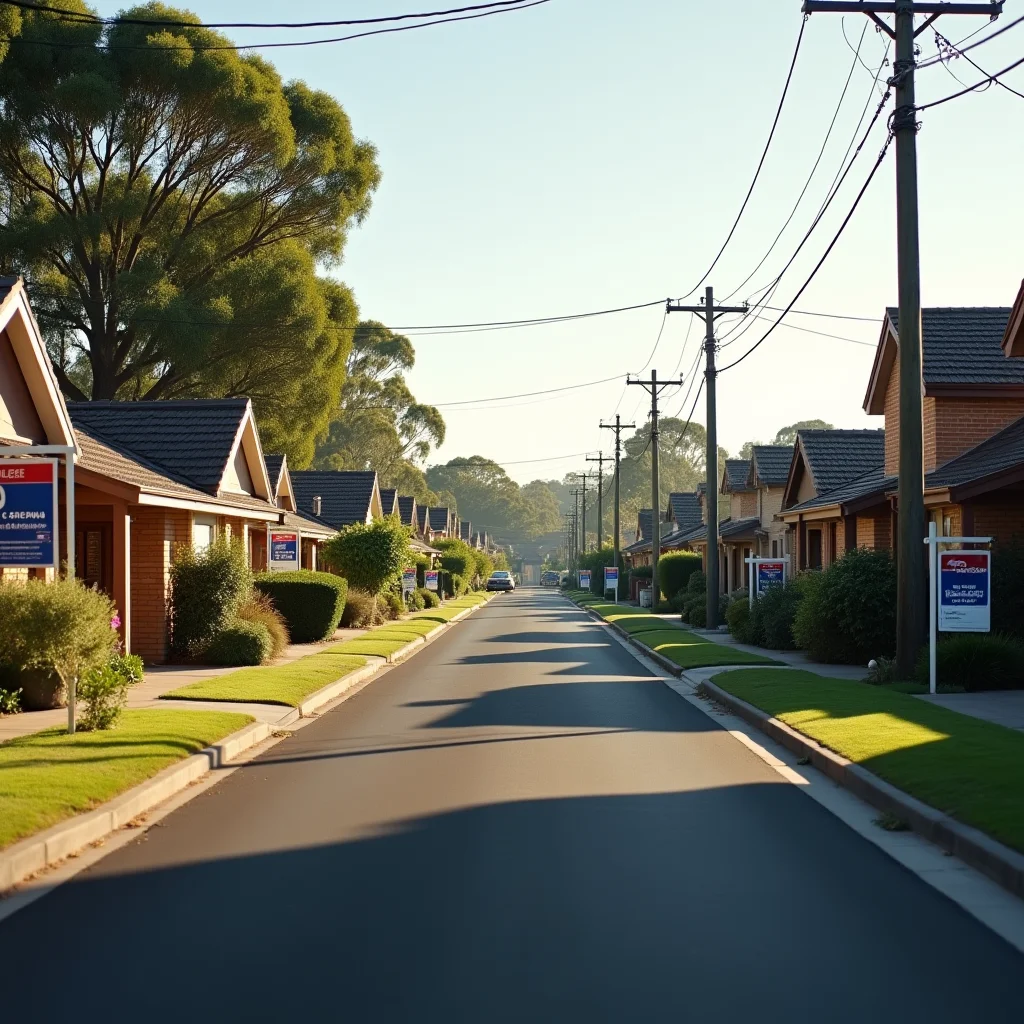
A Moonee Ponds vendor accepted $2,817,500 for a recently renovated period home after reducing price expectations to secure a sale, according to SMH Property on 12 October 2026. The sellers were moving interstate and chose to meet the market rather than hold out through a longer campaign — a decision that is becoming the defining feature of this spring's mid-to-premium Melbourne listings amid rising interest rates and buyer caution.
The Moonee Ponds Repricing Playbook
The Moonee Ponds result is instructive for agents running spring campaigns in Melbourne's established middle-ring suburbs. Rather than extending a campaign through multiple price reductions and public days-on-market blowouts, the vendor and agent appear to have recalibrated expectations early, converting a stalled listing into a settled sale. This matters for campaign sequencing: a quick, decisive reprice preserves negotiating leverage with genuine buyers, whereas a drawn-out series of small cuts signals desperation and invites lowball offers.
Context from the broader Victorian market supports this read. Domain recorded a preliminary Melbourne auction clearance rate of 58% last week, a figure AMP chief economist Shane Oliver described as "still soft" and likely to be revised lower. Separately, REIV data shows the median house price across Melbourne's affluent inner suburbs fell from $1.612 million to $1.545 million over the September quarter — the broader price band Moonee Ponds sits within. The Moonee Ponds sale price sits well above that inner-suburb median, reinforcing that realistic spring pricing in this bracket is still clearing, provided vendors adjust before — not after — the campaign stalls.
Entry-Level Squeeze Changes the Campaign Calculus
At the opposite end of the market, REA Group reported on 11 October 2026 that Melbourne's entry-level home prices have jumped as much as 12% even as broader price falls continue elsewhere in the city. This is the inverse campaign problem to Moonee Ponds: where premium vendors are cutting expectations to attract thinner buyer pools, entry-level vendors are facing compressed stock and intensified competition, pushing prices up rather than down.
The REIV's own data illustrates the pressure points within that entry-level tier. Mornington's bottom-quartile price rose 12.1% over the past year to $920,000, Caroline Springs rose 11.4% to $735,000, and Glenroy rose 10.2% to $796,000. Loan Market mortgage broker Jacob Decru noted that "buyers are compressed into that market" below the $950,000 threshold that aligns with the federal first-home buyer deposit scheme. Agents campaigning entry-level Melbourne stock this spring are working with rising buyer demand concentrated in that sub-$950,000 band, which has direct implications for how auction reserves and marketing timelines are set.
Separately, Australian Property Forum reported a portfolio investor outbidding a first-home buyer for a $666,000 Sydney unit, underlining that cashed-up buyers are still active and willing to compete hard for correctly priced entry-level stock even as the broader investor cohort pulls back.
Victoria's Price-Tier Divide, Suburb by Suburb
Viewed across the REIV's September quarter data, a clear tier structure emerges. Melbourne's affluent inner suburbs saw their typical house value fall from $1.612 million to $1.545 million over the quarter, even as the city-wide median slipped only 0.7%. Suburbs such as Mornington, Caroline Springs and Glenroy, all in the sub-$950,000 bracket, moved in the opposite direction, with lower-quartile prices rising between roughly 10% and 12% over the year. This spread shows that campaign strategy cannot be uniform across Melbourne; a reserve-cutting approach that works for a $2.8 million Moonee Ponds listing will not translate directly to a sub-$950,000 campaign, where buyer finance constraints bite harder relative to household income.
Melbourne's entry-level suburbs are recording double-digit annual price growth even as the city's affluent inner suburbs fall — a divide that shows spring campaign outcomes now depend more on price-tier positioning than on suburb prestige alone.
Separately, Australian Property Forum noted ex-rental properties now make up 40% of Melbourne listings as investors exit with median profits near $270,000 — adding further stock to a market where agents are already managing uneven buyer demand across price bands.
Background: Fees and Commission Structures Behind the Campaign
Vendors weighing a mid-campaign reprice, as in Moonee Ponds, are also effectively renegotiating the economics of their listing agreement in real time — a lower sale price changes the agent's commission outcome even where the percentage rate is fixed. Full detail on how these structures work state by state, including what marketing costs are and are not bundled into quoted fees, is covered in Real Estate Agent Fees in Australia — Complete State by State Guide. For vendors assessing whether their agent's reserve recommendation reflects genuine market feedback or campaign fatigue, How Real Estate Agent Commissions Work is a useful companion reference, particularly where sole agency terms limit a vendor's ability to pivot strategy mid-campaign.
Agents benchmarking their own campaign performance against the kind of clearance-rate and price-tier spread seen across Melbourne's inner and entry-level suburbs should also consider broader comparative frameworks; international property market comparison data offers additional context on how campaign-length and reserve-disclosure practices differ across comparable English-speaking markets.
What This Means for Agents and Vendors This Spring
The Moonee Ponds result and the entry-level price jump reported by REA Group point to a bifurcated spring selling season in Melbourne. In the $1.5 million-plus tier, exemplified by Moonee Ponds, campaigns that reprice early and decisively still appear to be converting, even as Melbourne's broader auction clearance rate sits at a soft 58%. In the sub-$950,000 tier, exemplified by Mornington, Caroline Springs and Glenroy, rising entry-level prices reflect compressed buyer competition rather than fast, easy sales, meaning agents cannot assume strong headline growth translates into fast campaign turnaround. Vendors preparing to list this spring should set reserve expectations against their specific price tier's data rather than suburb reputation alone, and agents should be prepared to recommend a Moonee Ponds-style reset before a campaign stalls rather than after.