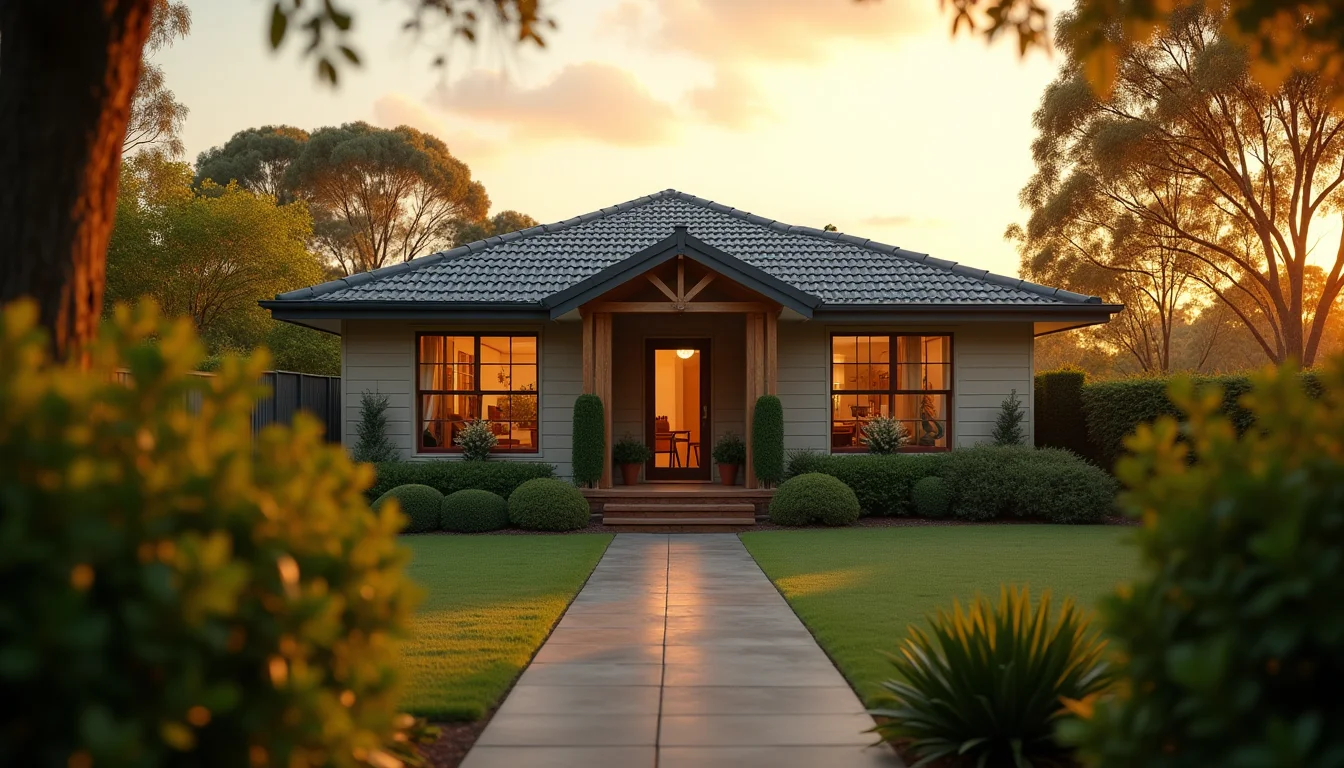
Real Estate Agent Fees in Australia — Complete State by State Guide
Comprehensive guide covering real estate agent commission structures across all Australian states, what is and isn't included in fees, how to negotiate effectively, and the difference between sole agency and open listings.
This guide was produced with AI assistance and reviewed for accuracy. Content is for informational purposes only — not financial or legal advice.
Key Takeaways
- •Australian real estate agent fees are fully negotiable, varying significantly by state and agent.
- •Commission is typically 1.8% to 3.5% of the sale price, payable only upon successful settlement.
- •NSW and Victorian commissions range from 1.6% to 2.5%, while Queensland rates are higher at 2.5% to 3.5%.
- •Many agents use tiered commission structures, offering different percentages above certain price thresholds.
- •Understanding state-specific fee ranges helps sellers negotiate effectively and save thousands.
- •Look for fixed-fee agents in Victoria, particularly in regional areas where they are more common.
NSW Commission Rate
1.8-2.5% typical
VIC Commission Rate
1.6-2.5% typical
QLD Commission Rate
2.5-3.5% typical
When Fees Are Paid
On settlement not on exchange
Negotiability
Always negotiable especially in slower markets
Marketing Costs
Separate from commission — typically $2,000-$8,000
How Real Estate Agent Fees Work in Australia
Real estate agent fees in Australia are one of the most significant transaction costs when selling property. Unlike many countries where commission rates are standardised, Australian agent fees are fully negotiable and vary dramatically between states, cities, and individual agents. Understanding the fee structure — and knowing how to negotiate — can save sellers thousands of dollars on their property sale.
Commission is the primary fee charged by real estate agents. It is calculated as a percentage of the final sale price and is only payable upon successful settlement — not when contracts are exchanged. This means if your property fails to sell, you typically owe no commission (though you may still owe marketing costs depending on your agreement).
Commission Rates by State
New South Wales
NSW commission rates typically range from 1.8% to 2.5% of the sale price. In Sydney's competitive inner-city market, rates tend to sit at the lower end as higher property values mean agents earn substantial commissions even at lower percentages. On an $800,000 property in NSW, expect to pay between $14,400 and $20,000 in commission. Many Sydney agents operate on a tiered structure — for example, 2.0% on the first $800,000 and 5% on any amount above that threshold.
Victoria
Victorian agents typically charge between 1.6% and 2.5%. Melbourne's auction-heavy market means agents often justify fees through their auction management expertise. On an $800,000 Melbourne property, commission would range from $12,800 to $20,000. Victoria also has a strong tradition of fixed-fee agents in certain areas, particularly in regional towns where property values are lower and percentage-based fees would be unsustainably small.
Queensland
Queensland commission rates are notably higher than southern states, typically ranging from 2.5% to 3.5%. This reflects generally lower property values in many Queensland markets and the broader geographic spread agents must cover. On an $800,000 Queensland property, expect commission of $20,000 to $28,000. In Brisbane's inner suburbs, rates tend to cluster around 2.5%, while regional Queensland agents may charge up to 3.5% or even higher.
South Australia
South Australian agents typically charge between 2.0% and 2.5%. Adelaide's more moderate property values mean agents need higher percentage rates to generate viable income. On an $800,000 property, commission would range from $16,000 to $20,000. South Australia is one of the few states where agents may still quote using the older "2% plus GST" structure.
Western Australia
WA commission rates generally fall between 2.0% and 2.5%, though Perth agents in premium suburbs may charge lower percentages. On an $800,000 Perth property, expect to pay $16,000 to $20,000. Western Australia experienced significant market volatility following the mining boom, which has affected agent fee negotiations in some areas.
Tasmania
Tasmanian agents charge some of the highest rates in the country, typically between 2.5% and 3.5%. This reflects the smaller market size and lower overall property values. On an $800,000 Hobart property, commission would range from $20,000 to $28,000, though properties at this price point are less common in the Tasmanian market.
ACT and Northern Territory
Canberra agents typically charge 2.0% to 2.5%, while Northern Territory rates can reach 2.5% to 3.5% due to the small market size. On an $800,000 Canberra property, expect $16,000 to $20,000 in commission.
What's Included (and What's Not)
Agent commission typically covers the agent's time, expertise, buyer database access, property appraisal, negotiation services, and administration of the sale through to settlement. However, marketing costs are almost always separate from commission and represent an additional expense for sellers.
Marketing costs typically range from $2,000 to $8,000 or more depending on the campaign. This can include professional photography ($300-$800), floor plans ($200-$400), copywriting, online portal listings (realestate.com.au premium listings can cost $1,500-$5,000+), print advertising, signboards, and brochures. Some agents offer inclusive packages, while others itemise each marketing component.
A common point of confusion is whether auctioneer fees are included. In most cases, the auctioneer is a separate cost of $400-$1,000 per auction, though some agencies include this in their commission structure. Always clarify this upfront.
How to Negotiate Agent Fees
Every agent fee in Australia is negotiable — this is not just a suggestion, it's a fundamental market reality. The Real Estate Institute in each state sets no minimum or maximum commission rates. Here are proven negotiation strategies:
Get multiple quotes. Interview at least three agents and compare their proposed commission rates, marketing packages, and estimated sale prices. Use competing quotes as leverage — agents know you're comparing and will often match or beat competitors.
Consider the total cost, not just the percentage. A 2.5% agent who achieves a sale price $50,000 higher than a 2.0% agent actually saves you money. Focus on the agent's track record, median days on market, and sale-to-list price ratio rather than commission alone.
Negotiate in slower markets. When market conditions favour buyers and properties take longer to sell, agents are more willing to negotiate on fees. Conversely, in hot markets with rapid sales, agents have less incentive to discount.
Offer performance bonuses. Instead of negotiating the base rate down, consider a tiered structure: a lower base commission (say 1.8%) with a performance bonus if the sale exceeds a certain threshold. For example, 1.8% on the first $800,000 and 10% of any amount above $850,000. This aligns the agent's incentive with yours.
Discuss marketing cost sharing. Some agents will contribute to or fully cover marketing costs in exchange for a slightly higher commission rate. This can work well if you're cash-flow constrained before the sale.
Sole Agency vs Open Listing
The type of agency agreement significantly affects fees. A sole agency agreement gives one agent exclusive rights to sell your property for a specified period (typically 60-120 days). This is the most common arrangement and usually secures a lower commission rate because the agent has certainty of earning their fee if the property sells.
An open listing allows multiple agents to market the property simultaneously, with only the selling agent earning commission. While this might seem like it creates more competition, open listings often result in less marketing investment from each agent (since they have no guaranteed return) and can actually harm the sale process. Commission rates on open listings are typically 0.5-1% higher than sole agency agreements.
A multi-list or conjunctional sale involves agents sharing the commission. The listing agent typically receives 40-60% of the total commission, with the selling agent receiving the remainder. This can be effective for unique or difficult properties but adds complexity to the fee structure.
GST on Agent Fees
All agent commission and marketing fees are subject to 10% GST in Australia. When an agent quotes 2%, the actual cost including GST is 2.2%. Always confirm whether quoted rates are GST-inclusive or exclusive. Most agents quote exclusive of GST, which can create an unpleasant surprise for unprepared sellers. On an $800,000 property at 2% commission, the GST component adds $1,600 to the total fee.
When Are Fees Paid?
Agent commission is payable on settlement — the day when ownership officially transfers to the buyer and the sale proceeds are distributed. The commission is typically deducted from the sale proceeds by the conveyancer or solicitor before the balance is paid to the seller. This means you never need to pay commission out of pocket.
Marketing costs, however, are often payable upfront or during the campaign. Some agents require payment before listing, while others will defer marketing costs until settlement. If you're concerned about upfront costs, negotiate a settlement-deduction arrangement for marketing as well.
Fixed-Fee and Discount Agents
The rise of fixed-fee and discount agents has disrupted the traditional commission model. Companies offering flat fees of $5,000-$10,000 regardless of sale price can represent significant savings on higher-value properties. However, these models often come with trade-offs: less personalised service, limited or no auction management, and fewer open homes.
When evaluating fixed-fee options, consider the total service package rather than the fee alone. A traditional agent charging 2% may deliver a higher sale price through better marketing, stronger negotiation, and deeper buyer networks — more than offsetting the commission difference.
For live agent performance data across Australian suburbs, see REAStats agent rankings →
Frequently Asked Questions
What is the typical real estate agent commission rate in Australia?+
Real estate agent commission rates in Australia vary significantly by state and are fully negotiable. Generally, you can expect rates between 1.6% and 3.5% of the final sale price. States like NSW and Victoria typically see rates from 1.6%-2.5%, while Queensland can be higher, ranging from 2.5%-3.5%. These differences often reflect local market conditions and average property values.
Are real estate agent fees negotiable in Australia?+
Yes, real estate agent fees in Australia are entirely negotiable. Unlike some countries with standardised rates, Australian agents set their own commission structures. Sellers are strongly encouraged to compare various agents, understand their fee breakdowns, and negotiate for a rate that provides good value while also reflecting the agent's expertise and the service level provided.
When do I pay the real estate agent commission?+
Real estate agent commission is typically only payable upon the successful settlement of your property sale. This means that if your property does not sell, you generally won't owe the agent any commission fees. However, be aware that marketing costs might still be payable, depending on the specific terms agreed upon in your agency agreement.
What is usually included in real estate agent fees, and what might be extra?+
Real estate agent fees primarily cover the agent's commission for facilitating the sale. This usually includes their time for inspections, negotiations, and administrative work. However, marketing costs (such as photography, online listings, signboards, and advertising campaigns) are often an additional expense. Some agents may offer packages that include certain marketing, so always clarify what's included versus what's an extra cost.
How do commission rates differ between New South Wales and Queensland?+
Commission rates show a noticeable difference between New South Wales and Queensland. NSW rates typically range from 1.8% to 2.5%, often lower in competitive Sydney markets due to higher property values. Queensland, by contrast, usually has higher rates, often between 2.5% and 3.5%, which can be attributed to generally lower median property values across many parts of the state.
Recommended Reading

As an Amazon Associate REAStats earns from qualifying purchases.
Recommended Reading
As an Amazon Associate REAStats earns from qualifying purchases.