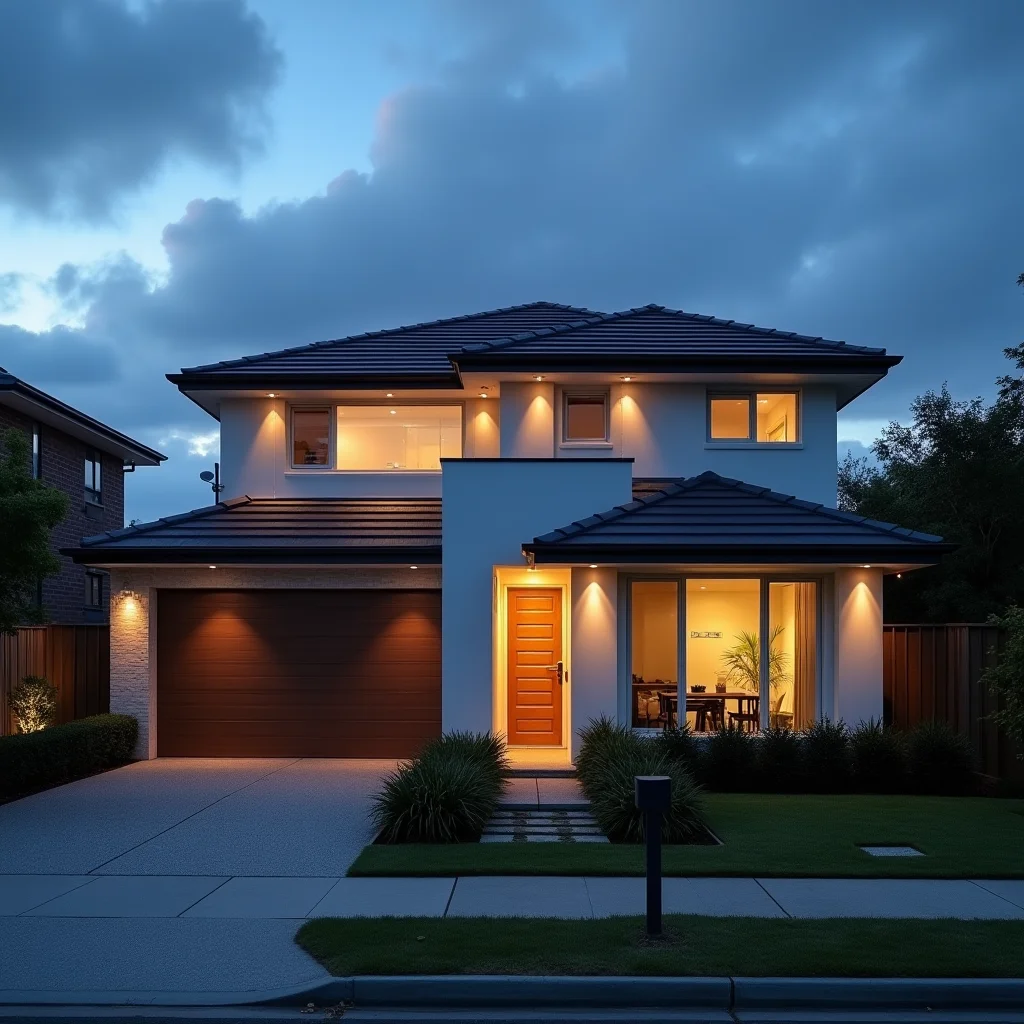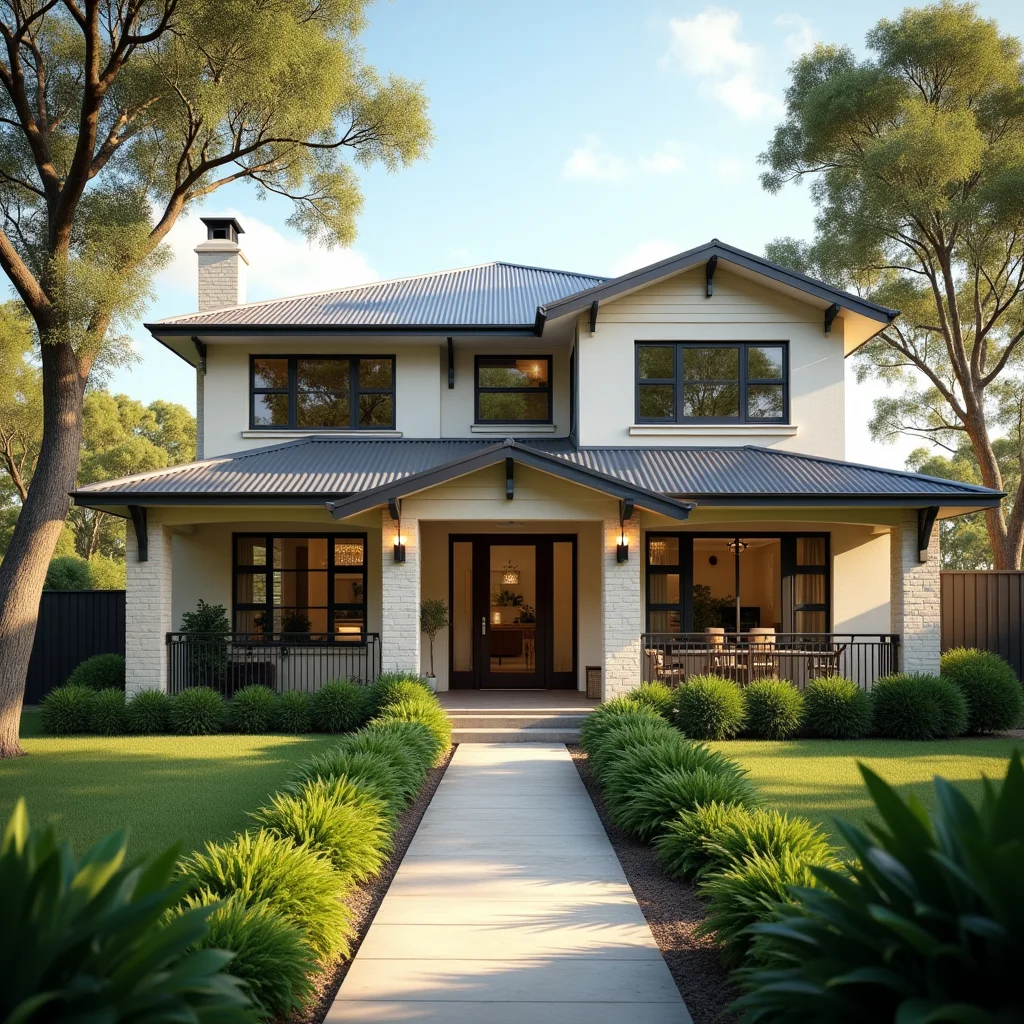
Australia's property affordability crisis reaches extreme proportions with current market data revealing a $2.92 million price gap between the nation's most expensive and affordable markets. Perth's Peppermint Grove commands a $3.5 million median price while Victoria's Strathdale offers entry at $580,000, creating a 6-to-1 ratio that exposes the dramatic wealth divide across Australian property markets.
Premium Market Concentration Drives Affordability Barriers
The ultra-premium segment demonstrates remarkable performance metrics across Australia's capital cities. Peppermint Grove's 17.5% annual growth rate accompanies just 18 days on market and a 62% auction clearance rate, indicating strong buyer competition at the top tier. Similarly, Dalkeith records 16.5% growth at a $2.8 million median with only 14 days on market, while Nedlands achieves 15% growth at $2.2 million.
NSW's premium markets show more moderate but sustained performance. Drummoyne's $2.35 million median delivers 5.7% growth with a commanding 74.5% auction clearance rate, while Kirribilli's $2.65 million properties achieve 4.8% growth and 72.5% clearance rates. These metrics reveal how premium suburbs maintain market velocity despite elevated price points. Victoria's premium tier demonstrates similar resilience, with Toorak recording a 72% clearance rate and 23 days on market at a $2.80 million median, while Camberwell achieves 71.5% clearance rates at $2.25 million with equally swift 23-day settlement cycles.
Affordable Entry Points Struggle with Extended Sales Cycles
Victoria's affordable markets face contrasting performance challenges. Strathdale's $580,000 median price point represents the lowest entry barrier in the current dataset, yet delivers only 49% auction clearance rates and 40 days on market. Dandenong's $680,000 median achieves marginally better metrics with 56% clearance rates but still requires 40 days for settlement, demonstrating how even modest price increases fail to significantly improve market velocity in the affordable segment.
Frankston bridges the affordable-to-mid market gap at $750,000, recording 58% clearance rates and 38 days on market. These extended sales cycles in affordable markets suggest buyer hesitation and limited competition, contrasting sharply with premium market dynamics where properties sell within 14-25 days. The data reveals a clear inverse relationship between price and time on market, with Dandenong's 40-day average representing nearly double the settlement timeframe of Toorak's 23-day cycle despite the $2.12 million median price difference.
State-by-State Performance Reveals Regional Disparities
Western Australia demonstrates the strongest growth momentum across all price tiers. Premium suburbs like Peppermint Grove (17.5%), Dalkeith (16.5%), and Nedlands (15%) significantly outperform eastern state markets. Even WA's mid-tier suburbs show strength, with South Perth recording 13.8% growth at $1.45 million median and just 17 days on market, representing the fastest settlement cycle among mid-tier markets analysed.
Western Australia's premium property markets achieve double-digit growth rates between 13.8% and 17.5%, outperforming Victoria's moderate 2.3% to 4.6% range by significant margins despite elevated interest rates.
Queensland's markets present mixed signals across price segments. Indooroopilly commands $1.38 million with robust 8.5% growth and 62.5% clearance rates, demonstrating premium market resilience, while Maroochydore achieves similar growth at $1.05 million but extends to 28 days on market with lower 54% clearance rates. This suggests QLD's premium tier maintains momentum while mid-tier markets face buyer resistance. The 8.5-day difference between Indooroopilly's 23-day cycle and Maroochydore's 28-day average highlights how even within Queensland, higher-priced properties command stronger buyer urgency.
Interest Rate Impact Varies by Market Tier
The RBA's 4.35% cash rate creates divergent effects across price segments. Premium markets demonstrate relative insulation from rate pressures, with high-value properties maintaining strong clearance rates and quick settlement cycles. Toorak's 72% clearance rate and 23-day sales cycle at $2.8 million median exemplify this trend, while Camberwell achieves 71.5% clearance at $2.25 million with identical 23-day settlement timeframes, suggesting premium buyers remain largely unaffected by borrowing cost increases.
Mid-tier markets show more pronounced rate sensitivity across multiple states. Prahran's $1.55 million median achieves reasonable 69% clearance rates but requires 25 days for settlement, while South Perth's comparable $1.45 million median demonstrates superior performance with 63.5% clearance rates achieved in just 17 days. South Yarra's $1.8 million properties face extended 27-day cycles despite the prestigious location, suggesting buyer caution in the $1.5-2 million segment where mortgage stress becomes more pronounced. The comparison between South Perth's 17-day cycle and Prahran's 25-day average reveals how market sentiment varies significantly between states even within similar price brackets.
First Home Buyer Market Conditions
The affordability analysis reveals limited options for first home buyers across Australia's major markets. Entry-level properties now require minimum $580,000 in regional Victoria, with metropolitan alternatives starting around $750,000 in Frankston or $850,000 in Liverpool, NSW. These price points demand substantial deposit requirements and borrowing capacity at current interest rates. Frankston's 38-day settlement cycle and 58% clearance rate indicate that even at the $750,000 price point, buyers face extended decision-making periods and moderate competition levels.
Queensland presents marginally better entry conditions with Maroochydore's $1.05 million median, though this exceeds traditional first home buyer capacity. The suburb's 54% clearance rate and 28-day settlement cycle suggest buyer hesitation at this price level, despite representing one of Queensland's more accessible coastal markets. The data suggests affordable housing increasingly concentrates in regional markets with extended sales cycles, creating geography-based barriers for employment-dependent buyers seeking metropolitan proximity. Dandenong's 56% clearance rate at $680,000 represents a mere 2% improvement over Maroochydore's performance despite the $370,000 price difference, highlighting how affordability alone fails to generate strong buyer competition.
Current market conditions signal continued affordability pressures with premium segments maintaining momentum while entry-level markets face buyer resistance. Property professionals should expect sustained demand concentration in established premium suburbs, while affordable market segments require extended marketing campaigns and realistic pricing strategies to achieve settlement within acceptable timeframes.