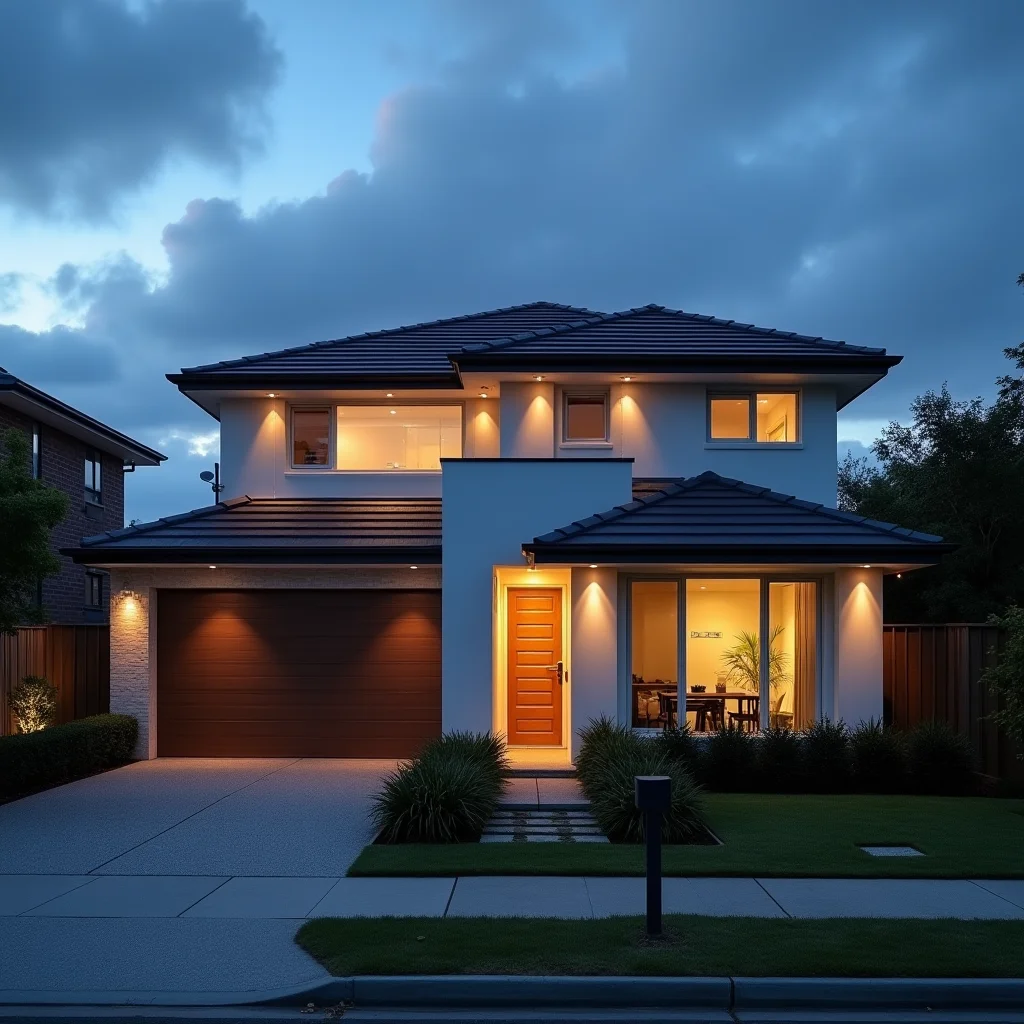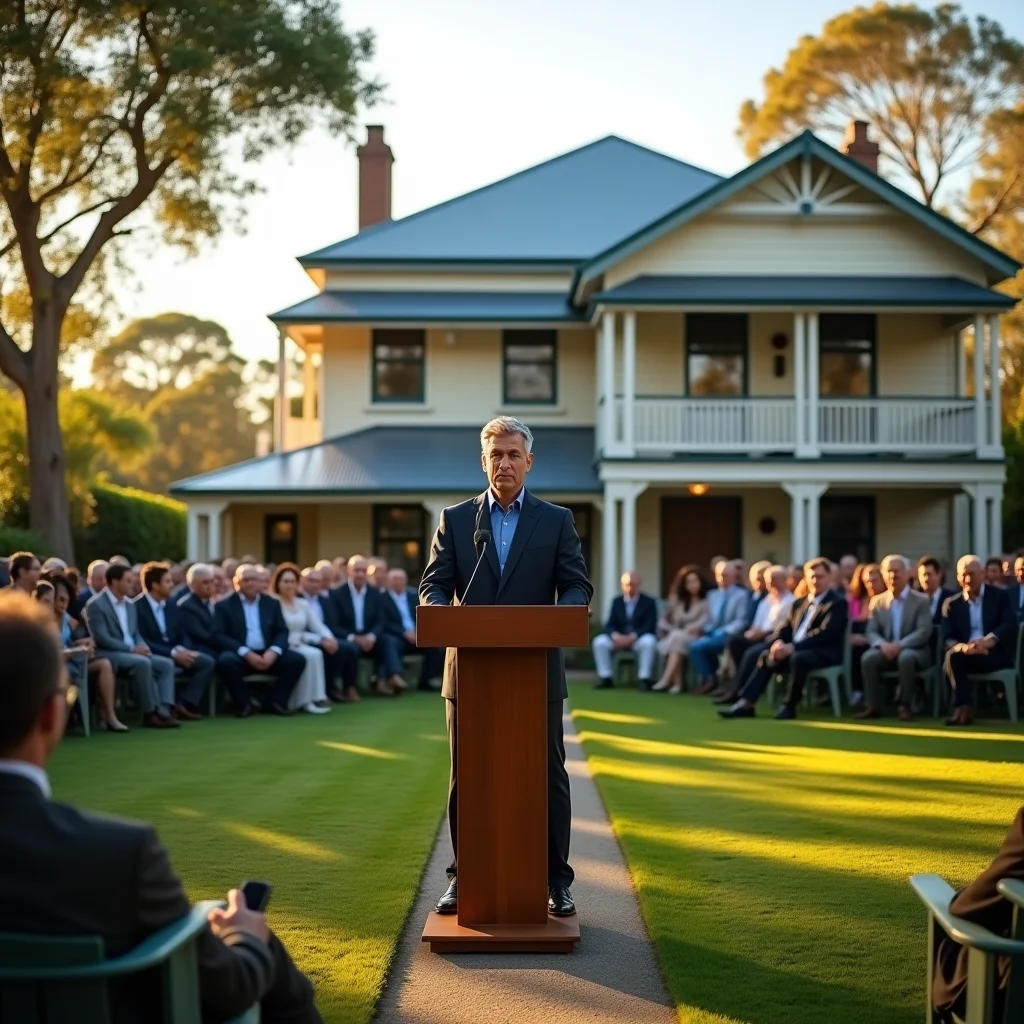
According to REA Group, a crowd of 300 attended the final day of a regionwide auction campaign on 21 September 2026 that cleared nearly $41 million worth of property across an entire region — a result that crystallises the uneven but unmistakably active character of Australia's spring selling season. Simultaneously, SMH Property reported a buyer paying $1.68 million for a boutique Art Deco unit — $80,000 above reserve — beating five first home buyers at auction on the same date. These two results, read together, expose the spring pattern in sharp relief: concentrated buyer energy at the top and middle of the market, first home buyers squeezed to the margins.
Spring Auction Volume Picks Up, But Buyer Depth Varies Sharply by Market
The $41 million regionwide auction result reported by REA Group is the kind of headline number that can obscure as much as it reveals. Aggregate volume tells you that sellers are activating — that listing campaigns are being launched and completed — but it says little about the competition beneath each hammer. The SMH-reported $1.68 million Art Deco result, where five first home buyers competed and lost to a neighbouring investor willing to pay well above reserve, illustrates the buyer composition problem that defines spring 2026: participation is present, but it is concentrated in demographics with existing capital.
Across the 20 suburbs tracked in REAStats data, the seasonal acceleration in transaction activity is evident, but clearance rates split dramatically along geographic and price-band lines. Randwick (NSW) sits at a 73.5% clearance rate with a $2.4 million median, Kirribilli (NSW) at 72.5% with a $2.65 million median, and Toorak (VIC) at 72% with a $2.8 million median. These are markets where buyer depth — the number of qualified, motivated purchasers per listing — remains sufficient to sustain competitive auctions. Below the $1 million threshold, the picture fragments considerably.
South Perth's 17-day average days on market and 63.5% auction clearance rate contrasts directly with Port Macquarie's 48-day average and 46% clearance rate — a 31-day gap and a 17.5-point clearance differential that captures how unevenly spring 2026 seasonal demand is distributing across Australian property markets.
WA Markets Lead the Spring Acceleration — Nedlands and South Perth Set the Pace
Western Australia's spring seasonal pattern is the clearest in the country by days-on-market metrics. Nedlands records an average of 15 days on market with a 65.5% auction clearance rate and a $2.2 million median price — annual growth running at 15%. South Perth sits at 17 days on market, 63.5% clearance, and a $1.45 million median with 13.8% annual growth. Mandurah, at the affordable entry point of $550,000, is clearing in 24 days with a 56% clearance rate and 10.5% annual growth. These three data points across WA's price spectrum confirm that spring demand in that state is not confined to a single tier — it runs from mid-market to premium.
The contrast with Victoria is instructive. Toorak clears at 72% but its 4.5% annual growth and 23-day selling cycle tell a different story to WA's premium suburbs. Prahran at 69% clearance and 25 days on market posts 3.9% annual growth. Dandenong, Victoria's affordable entry point at $680,000, shows a 56% clearance rate and 40-day selling cycle with just 2.3% annual growth. The spring volume pickup in Victoria is real — listings are moving — but the growth momentum and speed of sale that define a seller's market are far less pronounced than in WA or Queensland.
Queensland's Prestige Segment Joins Spring Activity as Gold Coast Trophy Stock Hits the Market
The Gold Coast beachfront trophy home on Hedges Avenue reported by REA Group on 21 September 2026 is the type of spring-season listing that anchors prestige market sentiment in Queensland. Described as located on a stretch of coastline that is home to billionaires, the campaign launch ahead of auction reflects vendor confidence that spring buyer appetite — particularly from high-net-worth purchasers — justifies public auction as the preferred sale method.
Queensland's tracked suburbs confirm this confidence has a data foundation. West End posts 8.8% annual growth, a $1.35 million median, and a 22-day selling cycle with a 62% clearance rate. Maroochydore sits at 8.5% annual growth, a $1.05 million median, and 28 days on market with a 54% clearance rate. Indooroopilly records 8.5% growth, a $1.38 million median, and a 23-day selling cycle at 62.5% clearance. Across these three Queensland suburbs, the spring pattern shows faster-than-national average clearance speeds and growth rates that are running at three to four times Victoria's comparable suburbs. For vendors timing a spring campaign, Queensland's data supports launching now. For investors assessing entry points, the macro and interest rate market analysis context — the RBA's 4.35% cash rate holding firm — remains the key risk variable.
NSW's Spring Split: Premium Sydney Clears Fast, Regional Markets Stall
New South Wales presents the most internally divided seasonal picture of any state. At the premium end, Randwick's 73.5% clearance rate and 23-day selling cycle confirm that inner-Sydney spring conditions are functioning as a genuine seller's market. Surry Hills at 73% clearance and 23 days on market with a $1.92 million median is similarly active. Kirribilli, at 72.5% and 24 days, adds to the picture of a Sydney premium tier that is absorbing spring supply without material price concession.
The regional NSW story is structurally different. Port Macquarie's 46% clearance rate and 48-day selling cycle at an $850,000 median — matching Liverpool's $850,000 median but with a vastly slower 38-day cycle at 60.5% clearance — demonstrates that the spring seasonal lift is not translating uniformly outside the capital. Ballina sits at 47% clearance and 45 days on market with a $1.35 million median and only 4% annual growth. These are markets where spring volume is arriving — vendors are listing — but buyer competition is thin enough that the season's momentum is not converting to clearance rates above 50%. For agents operating in these markets, understanding how auction underquoting affects buyer trust and clearance outcomes is directly relevant to spring campaign strategy.
Background: Seasonal Patterns and Investment Context in the 4.35% Rate Environment
Spring is historically Australia's highest-volume listing period, when vendors who have waited through winter activate campaigns before the Christmas slowdown. The pattern repeats annually, but the 2026 edition operates under the constraint of the RBA's 4.35% cash rate — a rate that has held long enough to be structural rather than transitional in buyer budget calculations. For investors considering the tax efficiency of holding through a slower growth phase, the mechanics are covered in the REAStats guide to Negative Gearing in Australia — How It Works, Who Benefits, and the Tax Implications.
The $41 million regionwide auction result and the Art Deco $1.68 million sale that beat five first home buyers both point to the same structural spring dynamic: organised, well-capitalised buyers are competing effectively, while first home buyer participation — present in volume — is not converting to purchase outcomes at the same rate. According to Australian Property Forum, Melbourne's fringe premium market is also under test this spring, with a 1.42-hectare lakeside property at Watsons Creek listed at $2.4 million against a Melbourne clearance rate sitting at 57% — a signal that even the prestige fringe is not immune to buyer hesitation when rate pressure persists.
For vendors, the data supports a clear timing preference: WA and Queensland markets are absorbing spring stock fastest, with days on market well below the national average and clearance rates consistently above 60%. For buyers, spring 2026 offers the largest listing inventory of the year, but competitive pressure in inner Sydney and WA premium suburbs means that well-priced properties are not waiting. For agents, the seasonal window is open — but the gap between markets that are firing (Nedlands, Randwick, West End) and those that are stalling (Port Macquarie, Ballina, Dandenong) is wide enough that campaign strategy and method-of-sale selection require suburb-specific calibration, not a uniform spring playbook.