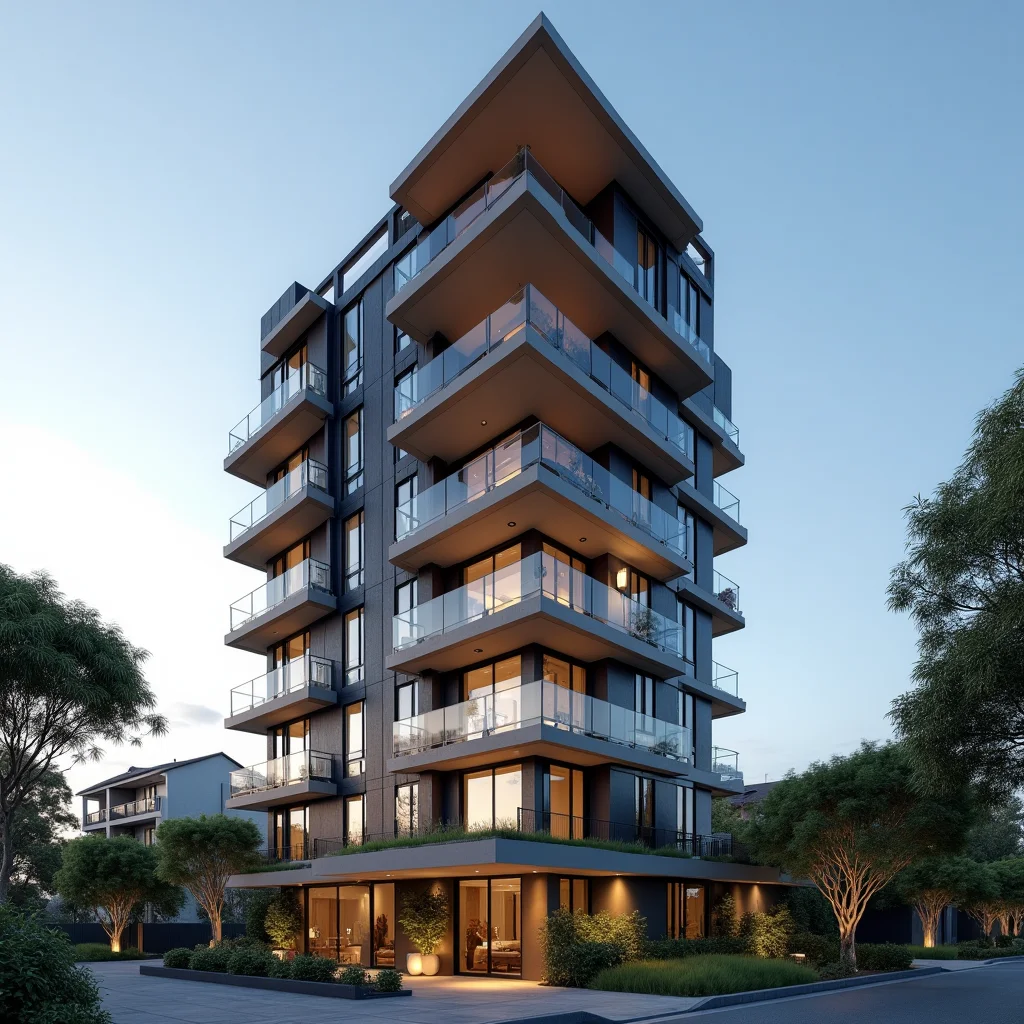
Surfers Paradise leads national property investment returns with 9.2% annual growth, outperforming traditional blue-chip suburbs as investors capitalise on regional market dynamics. This divergence occurs despite a restrictive monetary policy environment, with the Reserve Bank of Australia maintaining the cash rate at 4.1%, forcing a recalibration of investment strategies toward markets with distinct fundamental drivers.
Queensland Coastal Markets Drive Investment Returns
Queensland's coastal regions demonstrate the most potent investment performance nationally, a trend underscored by specific market metrics. Surfers Paradise has achieved a remarkable 9.2% annual growth, followed closely by the lifestyle hub of Noosa Heads at 8.1% and the inner-Brisbane precinct of New Farm at 7.3%. The core appeal lies in a compelling combination of growth potential and relative affordability. Surfers Paradise, for instance, maintains a median price of $820,000, offering a significantly lower barrier to entry compared to Sydney's premium suburbs, where medians routinely exceed $3 million. This price differential allows investors to acquire assets in high-demand locations without the same degree of capital concentration or leverage-related risk.
The data reveals Queensland's investment appeal extends beyond headline growth figures. New Farm achieving the fastest sales velocity at just 18 days on average to sell a property is a critical indicator. This rapid absorption rate signals a deep and active buyer pool, which minimises liquidity risk for investors and provides strong support for sustainable price trajectories. The performance of these markets is underpinned by sustained interstate migration, significant private and public infrastructure investment, and a fundamental shift in lifestyle preferences that continues to favour the state's coastal and near-city locations.
Premium Harbourside Markets Project Stability and Pricing Power
In contrast to Queensland's high-growth narrative, Sydney's established harbourside markets demonstrate resilience and capital preservation. Mosman recorded a steady 5.2% annual growth from a formidable $4.2 million median price point, while Bondi Beach achieved 6.1% growth alongside superior liquidity, with properties turning over in just 20 days. These established precincts are defined by their ability to maintain high auction clearance rates, a key measure of market sentiment and seller-buyer equilibrium. With Bondi Beach leading at 74.2% and Mosman exceeding 72%, these figures are exceptionally strong in a national context where clearance rates have moderated under the pressure of the 4.1% cash rate.
Despite the 4.1% cash rate environment, premium Sydney markets demonstrate pricing power through superior auction performance, with Mosman and Bondi Beach both exceeding 72% clearance rates while maintaining sub-25 day sales periods.
The harbour market dynamics reveal a distinct investor preference for established, "safe-haven" assets. The demographic in these areas often possesses significant equity and is less sensitive to interest rate fluctuations, allowing price levels to hold firm. Paddington's performance, delivering 4.8% growth on a $2.8 million median with a solid 68.3% clearance rate, further reinforces this trend. For investors, these suburbs represent a strategy focused on long-term, stable capital growth and wealth preservation rather than short-term, high-percentage returns.
Interstate Capital Cities Present a Divergent Landscape
Beyond the primary east-coast markets, other capital cities show markedly varied patterns. Adelaide's eastern suburbs have emerged as unexpected high-performers, presenting a compelling investment thesis. The suburb of Unley achieved 6.4% annual growth, and neighbouring Norwood delivered 5.9%. Critically, both markets maintain highly efficient sales cycles of 22 and 23 days, respectively. With median prices between $1.2-1.3 million, they offer an accessible entry point for investors seeking capital city exposure without the price tags of Sydney, while still delivering growth rates that rival premium postcodes. This represents a "value" play where market fundamentals are strong, but the pricing has not yet reached the levels of the larger capitals.
Conversely, Melbourne's traditionally sought-after inner suburbs are underperforming. South Yarra recorded just 2.8% annual growth, and St Kilda posted a muted 2.5%. These figures reflect broader challenges within the Victorian market, including softer economic sentiment and potential legislative headwinds impacting investor calculations. The weakness is corroborated by market activity indicators: extended sales periods averaging 27-29 days and clearance rates hovering below 64% signal a distinct softening in buyer and investor demand across these traditional investment precincts.
Geographic Selectivity Drives Returns in Credit-Constrained Environment
The national data signals a bifurcated investment environment where meticulous geographic selection now drives returns more than passive exposure to traditional premium markets. The current high-rate setting, with the official cash rate at 4.1%, has acted as a stress test, rewarding markets with strong underlying demand drivers while exposing weaknesses in others. Investors achieving superior risk-adjusted returns are actively targeting growth corridors, such as Queensland's coastal belt and Adelaide's undervalued eastern suburbs, rather than relying on historical performance in Melbourne's established postcodes.
This environment demands a more sophisticated approach. Passive capital city exposure is no longer a guaranteed strategy for growth. Instead, investors must analyse suburb-level data, including days on market, stock levels, and auction clearance rates, to identify pockets of genuine demand. The outperformance of regional Queensland highlights a confluence of affordability, lifestyle appeal, and economic momentum, delivering a potent combination of both capital growth and liquidity that is proving resilient to the broader monetary policy tightening cycle.
What to Watch
Moving forward, investors should closely monitor several key indicators that will shape market performance. The RBA's future monetary policy decisions remain the most critical variable; any change to the 4.1% cash rate will directly influence borrowing capacity and market sentiment. Secondly, interstate migration data from the Australian Bureau of Statistics will be vital to confirm whether demand flows into Queensland and Western Australia are sustaining. Thirdly, trends in new listing volumes at a city and suburb level will provide early warnings of any shifts in the supply-demand balance. Finally, rental vacancy rates are a crucial metric, as low vacancies support rental yields, which are essential for offsetting higher mortgage costs in the current rate environment and underpinning investor demand.

