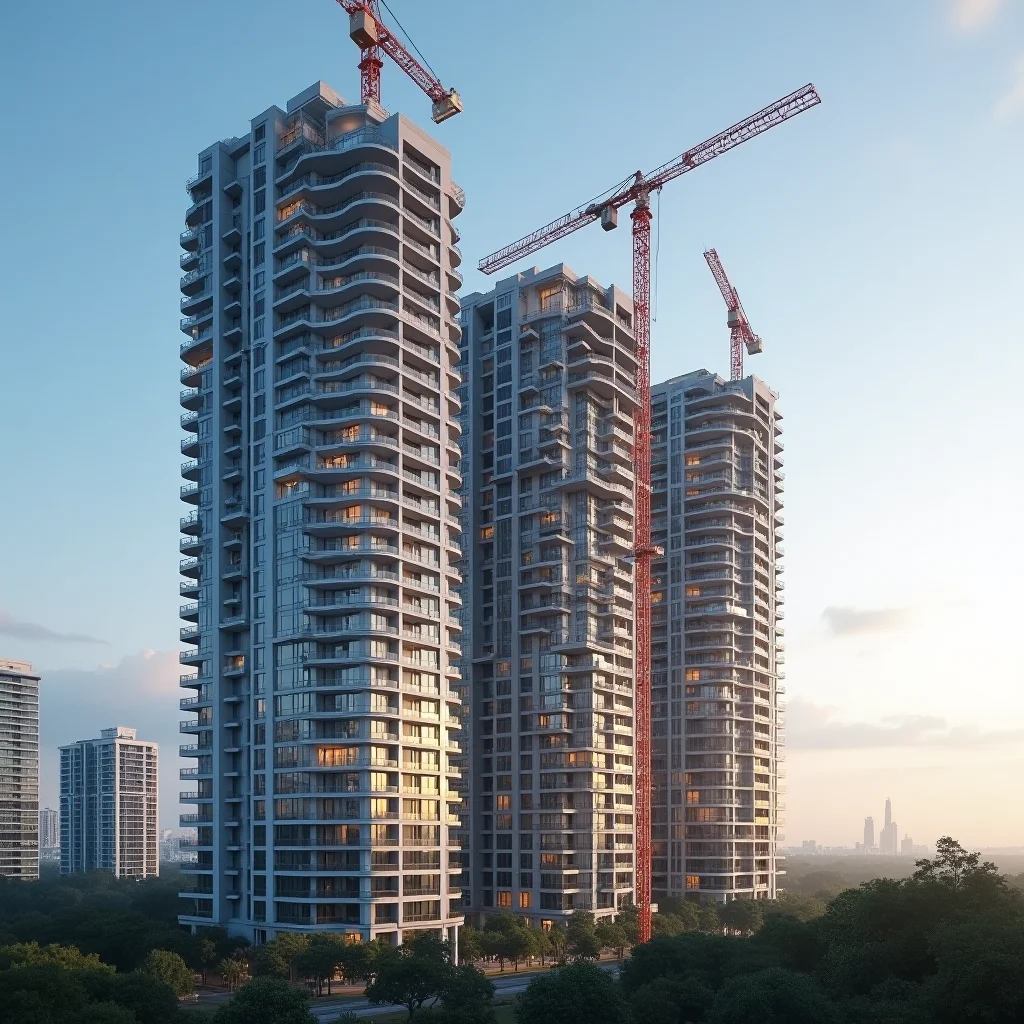
In a property market shaped by successive interest rate adjustments and shifting buyer priorities, a compelling trend is solidifying in Australia's major metropolitan peripheries. Mid-tier suburbs are demonstrating robust investment returns, with areas like Epping in North West Sydney recording 4.6% annual growth to reach a $1.58 million median house price. This performance is emblematic of a structural shift in property investment dynamics, as savvy buyers and investors look beyond ultra-premium postcodes to find value, growth, and resilience. This movement underscores a flight to quality, where 'quality' is increasingly defined by accessibility, infrastructure, and sustainable community fundamentals rather than just prestige.
Suburban Middle-Ring Outperforms Premium Tiers
A detailed analysis of property market data reveals compelling fundamentals in well-connected suburban markets, which are frequently outperforming their more expensive inner-urban counterparts. Epping, NSW, stands as a prime example, where 4.6% annual growth is underpinned by strong market metrics including a solid 68.5% auction clearance rate and an average of just 28 days on market. This performance not only exceeds that of many premium metropolitan areas but does so at a significantly more accessible entry point than blue-chip harbourside locations where median prices regularly trade above $4 million.
PropTrack and CoreLogic data consistently show that during periods of monetary policy tightening, the middle segment of the market often exhibits greater price resilience than the most expensive decile. The underlying driver is a deeper and more diverse buyer pool that is less susceptible to fluctuations in financial markets. This trend is evident even in a high interest rate environment, with the Reserve Bank of Australia's cash rate holding at 4.1% at the time of analysis. Melbourne's eastern corridor reflects this pattern, with Box Hill VIC demonstrating steady 3.5% growth at a $1.25 million median, and nearby Doncaster achieving 3.7% growth at a $1.38 million median. These markets offer returns that can rival institutional-grade assets, but without the capital intensity and volatility often associated with the ultra-premium sector.
What Drives Middle-Ring Resilience?
- Diverse Buyer Demographics: These suburbs attract a mix of upgraders, first-home buyers (at the lower end), and long-term investors, creating consistent demand.
- Established Amenities: Unlike greenfield developments, these areas possess mature infrastructure including schools, shopping centres, and public transport.
- Value Proposition: They offer a balance of lifestyle, space, and connectivity at a price point that remains achievable for a broader segment of high-income households.
Infrastructure Proximity as a Core Investment Fundamental
A non-negotiable factor for sustainable capital growth in suburban markets is connectivity. Suburbs with direct access to major infrastructure command premium performance metrics. Rhodes in Sydney’s inner-west exemplifies this principle, delivering 4.3% annual growth with a median price of $1.35 million, supported by a healthy 69% auction clearance rate. Originally a post-industrial brownfield site, Rhodes was master-planned around its train station and ferry wharf, creating a high-density hub with direct links to the CBD and the Parramatta commercial district. Its success provides a blueprint for infrastructure-led value creation.
State government investment in transport projects, such as the Sydney Metro and Melbourne’s Suburban Rail Loop, further anchors the long-term growth prospects of suburbs located along these corridors. Investors are increasingly pricing in the future benefits of reduced commute times and enhanced connectivity to employment centres.
Regional and outer-suburban investment markets are demonstrating notable resilience. Suburbs like Reservoir in Victoria maintain steady performance, with an $880,000 median price, despite wider market pressures. This creates significant opportunities for investors seeking portfolio diversification beyond premium metropolitan areas and inner-city unit markets.
Melbourne’s larger outer suburbs present particularly attractive opportunities for yield-focused investors. Glen Waverley has recorded 3.8% growth to a $1.45 million median, while Essendon delivered 3.9% growth, reaching a $1.52 million median. These areas benefit from established rail and road networks, mature rental markets servicing families and professionals, and consistently lower vacancy rates compared to the inner-city apartment sector, which faces ongoing scrutiny regarding supply pipelines.
Victoria’s Established Suburbs Show Defensive Strength
While often priced at a higher tier, select established suburbs in Victoria are displaying strong defensive characteristics that appeal to risk-averse, long-term investors. Camberwell, with its leafy streetscapes and esteemed schools, leads this cohort with 4.6% annual growth on a $2.25 million median. Its performance metrics are exceptionally strong, boasting a 71.5% auction clearance rate and rapid 23-day average sales cycles, demonstrating deep and consistent demand that can weather broader economic headwinds.
Analysis reveals a clear and stable structure in Melbourne’s prestige markets, where land value and local amenity provide a powerful floor for prices. This stability attracts capital seeking preservation and steady appreciation over speculative gains. The demand in these areas is often driven by local upgraders and generational wealth, making it less sensitive to the credit cycle impacting first-time investors or highly leveraged buyers.
| Victorian Suburb | Annual Growth | Median Price | Auction Clearance Rate | Days on Market |
|---|---|---|---|---|
| Camberwell | 4.6% | $2.25M | 71.5% | 23 |
| Kew | 4.4% | $2.10M | n/a | n/a |
| Hawthorn | 4.2% | $1.85M | n/a | n/a |
These established suburbs offer stable rental yields and strong capital growth prospects. Critically, their performance has a lower correlation with the inner-city CBD apartment markets, which, according to ABS building approvals data, continue to face potential oversupply pressures in certain precincts. For investors, this marks a strategic pivot away from high-density new builds toward the enduring value of houses on sizable allotments in prime locations.
Market Conditions Create a Strategic Opportunity
Current market conditions, defined by higher borrowing costs, present an optimal window for strategic investment in these suburban growth markets. While a premium coastal suburb like Bondi Beach may post strong 6.1% growth, its $3.1 million median entry point places it out of reach for all but a fraction of investors. In contrast, suburbs trading between $1.2 million and $1.6 million demonstrate consistent performance while falling within more realistic financing parameters.
The combination of the 4.1% cash rate and APRA's lending serviceability buffer has significantly constrained borrowing capacity across the board. This macro-prudential setting naturally funnels demand towards markets where the absolute price is lower, thereby reducing the total debt burden. The ability of mid-tier markets to deliver capital growth of 3.5% to 4.6% creates a positive total return outlook for leveraged investors, even if gross rental yields struggle to outpace mortgage rates in the short term.
For property investors, the data signals a clear and rational reallocation of capital. The search for risk-adjusted returns is leading away from the highest-priced premium markets and volatile off-the-plan sectors. Instead, focus is sharpening on suburban house markets that offer a durable combination of sustainable growth drivers, lower price volatility, and superior cash flow characteristics relative to many metropolitan alternatives.

