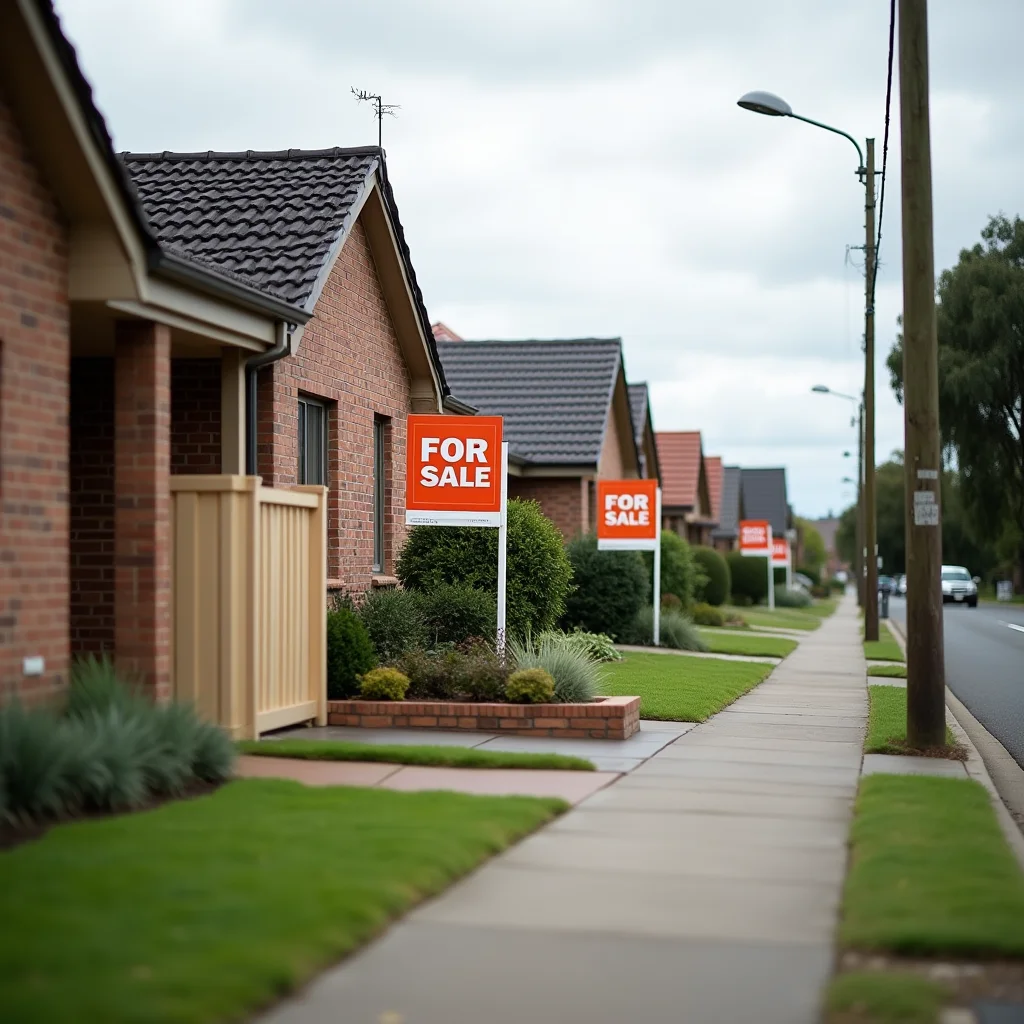
Queensland home buyers are abandoning Brisbane for regional mining and agricultural towns, with four regional hubs now ranking among the state's top 10 house sale markets, according to REA Group reporting on 14 October 2026. The shift reflects a broader rebalancing in Queensland's property market, with buyers increasingly looking past Brisbane's established suburbs toward regional hubs offering homes well under the state's median price. For investors deciding between new-build land releases and established suburb stock, the data points in different directions depending on the state.
Brisbane's Established Core Loses Ground, But Doesn't Collapse
Four regional hubs — Kirwan in Townsville, Maryborough, Gracemere and Emerald — ranked third, fifth, seventh and eighth respectively among Queensland's top house-sale markets in the third quarter, according to InfoTrack data cited by REA Group. Median house prices in these regional hotspots ranged from $565,000 in Maryborough to $720,000 in Gracemere, well below the statewide median of $890,000. Brisbane's outer growth corridors — led by Morayfield, then Redbank Plains, Caboolture and Springfield Lakes — also dominated the remainder of the top 10, underlining how far buyer demand has shifted away from the inner city toward cheaper options further out.
On the coast, Maroochydore's unit market jumped from ninth to fifth place for sales volume in a single quarter — the only Sunshine Coast suburb to crack the state's top 10 for units — driven by the 53-hectare, $2.5 billion Maroochydore City Centre development and its more than 1,800 planned high-rise apartments. That shift shows new infrastructure and employment hubs are now competing directly with Brisbane's established suburbs for buyer attention, even though the cited source does not provide comparable clearance-rate or median-price figures for Brisbane's inner suburbs to set against it.
New-Build Land Releases Add Supply to the Regional Equation
REA Group's newest land releases roundup for October 2026 lands at the same moment regional Queensland is absorbing Brisbane's fleeing buyers, adding fresh broadacre supply into markets already under demand pressure. The October roundup lists 13 projects launching new stock across NSW, Victoria, Queensland and Western Australia, including Queensland releases at Everleigh in Greenbank, Eucalee in Gleneagle, Beachside Dundowran Beach on the Fraser Coast, and North Harbour in Burpengary East — all offering buyers entry into master-planned communities rather than competing for scarce established stock.
Financing Pressure Tilts the New vs Established Calculus
According to Australian Property Forum, first home buyer loan demand has fallen for a third consecutive month as the RBA's 4.60% cash rate and rising entry-level prices squeeze borrowing capacity — even as regional markets in Queensland attract fresh investor capital. That split is significant: owner-occupiers are retreating from the market at the entry level, while investors are stepping into regional corridors with new-build stock that requires less upfront capital than established inner-suburb dwellings.
Background: Weighing Build Risk Against Established Certainty
Property Update's analysis of Australia's broader economic slowdown, published the same week, frames this new-versus-established decision inside a tighter household budget environment where mortgage repayments are absorbing a larger share of income than in previous cycles. That backdrop reinforces why due diligence matters more at this point in the cycle than in a rising market — buyers evaluating new-build contracts face different risks (construction delays, sunset clauses, off-the-plan valuation shifts) than those buying established stock, where the risks sit more in building condition and title history. Running through a Property Due Diligence Checklist before committing capital to either path remains the single most effective way to avoid the kind of fortune reversal that has defined cautionary tales throughout Australian property history, a pattern explored in detail in this historical Australian property bubble analysis.