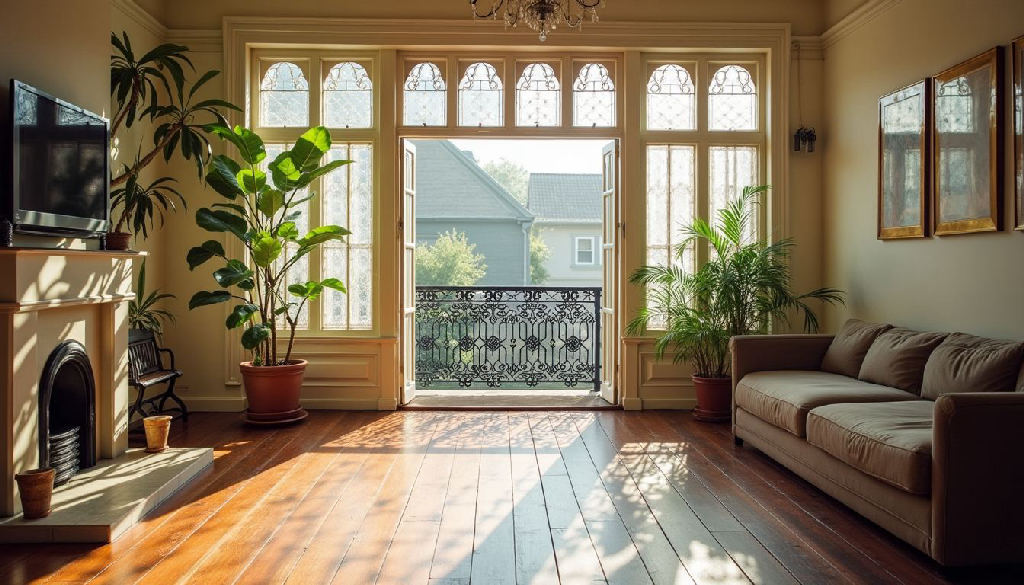
A four-bedroom Victorian terrace at 88 Boundary Street, Paddington sold under the hammer for $3.31 million — $310,000 above its $2.9 million reserve — after 11 registered bidders and eight active participants turned out on Saturday morning, according to realestate.com.au. The result landed despite Sydney's auction clearance rate sinking to just 38% last month, per the same report's October Market Snapshot, down from the mid-60% range recorded in Spring 2025. A few kilometres east, Surry Hills continues to clear 73% of auction stock against a $1.92 million median and a 23-day sales cycle, REAStats suburb data shows — a reminder that in this market, pricing strategy is doing the work sentiment used to do.
Paddington's $310,000 Lesson in Pricing Strategy
Lead agent Maclay Longhurst of Sydney Sotheby's International Realty Double Bay told realestate.com.au his firm sold two homes in Paddington and two in Surry Hills on the same Saturday, all with competitive bidding. "As long as you have the correct pricing strategy, then each property has competitive bidding, there is certainly a strong market out there," he said. Auctioneer Briannan Davis of Cooley Auctions, who called the Boundary Street sale, said quality stock is still finding buyers: "Once the marketing is right, there is competition and there's no stopping it really." She pointed to a lead-up-to-Christmas scarcity effect, noting "there's no new properties really coming onto the market."
For broader market context, see Australian Property Forum property market data.
The pattern repeated elsewhere in the city that weekend. An apartment at 1/78-82 Burwood Road smashed its $1.1 million reserve to sell for $1.781 million after a full hour of bidding with seven registered parties, while a dilapidated knock-down property at 4 Spring Street, Concord cleared $1.68 million against a $1.65 million reserve with five registered bidders. David McMahon, Head of Sales and Auctions at Bresic Whitney, said his firm ran three auctions last week with five or more registered bidders across different price points, adding that high rates "will always dampen confidence" but buyers mainly want stability in rate movements rather than outright cuts.
Double Bay's 78% vs Surry Hills' 73%: Sydney's Tier Divide
The Paddington result sits inside a broader pattern visible across Sydney's eastern and inner suburbs. Double Bay holds a $3.5 million median with a 78% clearance rate and an 18-day sales cycle, the fastest and strongest of the tracked group, alongside 7.8% annual growth. Manly follows closely at a $3.2 million median, 77% clearance and 19 days on market. Coogee clears 76% of auction stock against a $2.8 million median, while Balmain sits at 75.5% clearance and a $2.45 million median with 21 days on market.
Further down the price curve, Annandale and Surry Hills post near-identical clearance rates of 74% and 73% respectively, against medians of $2.05 million and $1.92 million, with both taking 23 days to transact. Randwick clears 73.5% at a $2.4 million median, also over 23 days. None of these suburb-level figures come close to the 38% citywide clearance rate reported for October — a gap that points to prestige and lifestyle-tier demand holding up far better than the broader market average suggests.
Double Bay's 18-day sales cycle and 78% clearance rate sit roughly 40 percentage points above Sydney's reported 38% October clearance rate, underscoring how sharply the market has split along price-tier lines this spring.
The RBA's 4.85% Cash Rate and the Confidence Gap
The backdrop to all of this is a cash rate sitting at 4.85%, its highest level since 2008. Yet realestate.com.au's latest Consumer Sentiment Update, cited in the Paddington report, found 49% of Australian buyers now feel it's a good time to buy — a figure that climbs to 55% in NSW specifically, the state where prices have fallen furthest. Report author Serge Petrichenko, realestate.com.au's head of market research and insights, said buyer sentiment was highest in the states where prices have fallen the most, including NSW.
REAStats' own national tracking shows a national clearance rate of 68.8% and a Sydney-specific reading of 70.8% as of 19 October 2026 — figures that sit well above the 38% October result reported separately by realestate.com.au's own market snapshot. This gap reflects the different reporting periods and methodologies between REAStats' suburb-level tracking and realestate.com.au's October market snapshot, and is worth noting when comparing single data points across sources. For deeper context on how these figures are compiled and why they move, see REAStats' auction clearance rates explainer.
Underquoting, Price Guides and the Pricing Lesson
McMahon's comments about buyers needing "stability in interest rate movements" rather than cuts point to a deeper issue: price guide accuracy. When a $2.9 million guide produces an 11-bidder contest that finishes $310,000 over reserve, or a $1.1 million reserve is beaten by $681,000, it raises the question of whether initial price guides reflected realistic expectations. REAStats' guide to auction underquoting in Australia breaks down the state-by-state rules governing this practice and how it can distort published clearance statistics. Vendors weighing agent selection in this environment should also consult how to choose the right real estate agent, which outlines the performance metrics worth checking before signing an agency agreement, and how real estate agent commissions work for context on fee structures tied to these campaign outcomes.
What the Data Signals Next
For vendors in Double Bay, Manly or Coogee, the current 75-78% clearance band suggests campaigns built around realistic reserves are still finding depth of competition, even with the cash rate at 4.85%. For those in Surry Hills, Randwick or Annandale, clearance rates in the 73-74% range with 23-day sales cycles indicate solid but less urgent demand. Agents advising vendors anywhere near the 38% citywide average reported for October need to treat that figure as a market-wide signal of buyer caution rather than a reason to abandon auction as a method — the Paddington, Burwood and Concord results all argue the opposite. Buyers, meanwhile, appear to be taking Petrichenko's sentiment data at face value: falling prices combined with rate stability, not rate cuts, are enough to bring bidders back to the paddle.