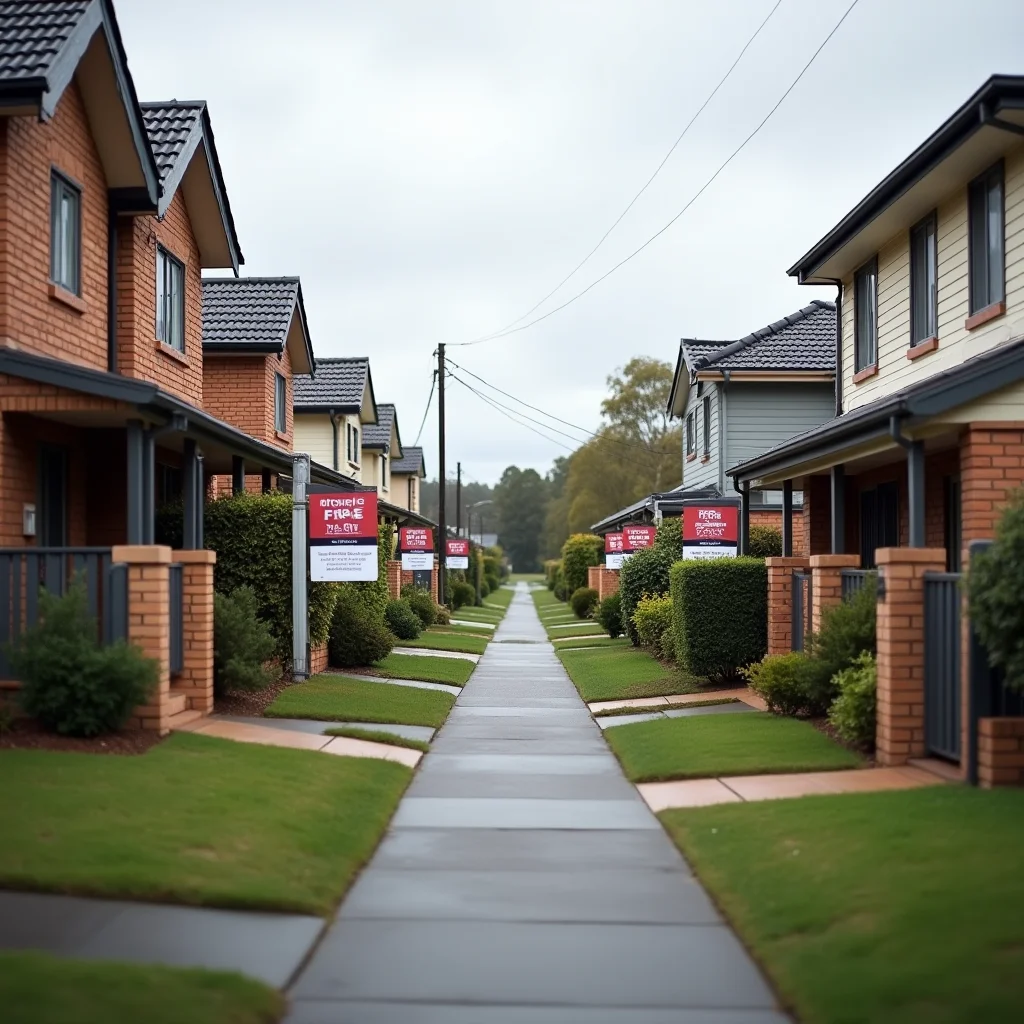
Western Australia's tracked suburbs are clearing stock in an average of 20.3 days, while New South Wales' comparable set takes 33.7 days to sell — a 13.4-day gap that separates Nedlands' 15-day median cycle from Port Macquarie's 48-day stretch. REAStats' suburb-level data across 20 markets in four states shows the selling-speed divide has become one of the sharper performance indicators agents and vendors can track amid the current interest rate environment.
The gap matters beyond bragging rights. Days-on-market figures feed directly into vendor pricing strategy, marketing spend, and agent commission negotiations, and the state-by-state split now shows a pattern distinct enough to inform how campaigns are structured in late 2026.
Western Australia's Speed Advantage
Across the four WA suburbs in this dataset, the average time to sell sits at 20.3 days. Nedlands leads at 15 days with a 65.5% auction clearance rate and 15% annual growth. South Perth follows at 17 days with 13.8% growth and a 63.5% clearance rate. Fremantle and Mandurah sit a little higher at 25 and 24 days respectively, but both remain well under the national figures recorded in the eastern states.
That consistency across both premium (Nedlands, South Perth) and more affordable coastal markets (Mandurah) suggests the speed advantage is not confined to a single price tier. For agents, a sub-20-day average compresses the window for price discovery, which typically means fewer reductions mid-campaign and less reliance on extended open-home schedules. Vendors assessing agent performance in Perth's established suburbs should weigh days-on-market alongside clearance rate — the metrics covered in How to Measure Real Estate Agent Performance — rather than price growth alone.
New South Wales' Affordability Drag
NSW tells a different story. Port Macquarie averages 48 days on market with a 46% clearance rate, and Ballina sits at 45 days with 47% clearance. Liverpool (38 days) and Penrith (35 days) trail behind inner-Sydney performers such as Randwick (23 days, 73.5% clearance), Kirribilli (24 days, 72.5%) and Surry Hills (23 days, 73%). Averaged across all seven NSW suburbs tracked here, the state sits at 33.7 days — the slowest of the four states in this dataset, dragged down heavily by regional coastal markets.
The split lines up with the affordability conversation Property Update raised in its October 2026 piece, Few Want This Conversation, drawn from comments at the Urban Land Institute's Brisbane event covering affordability, population growth and construction costs. Buyers in regional coastal markets like Port Macquarie and Ballina appear to be taking longer to commit, extending negotiation periods and stretching campaigns well past the four-week mark that tends to define inner-metro turnover.
Victoria's Two-Speed Market
Victoria sits between the two extremes at a 29.8-day average across six suburbs. Toorak (23 days, 72% clearance), Kew (24 days, 71%) and Prahran (25 days, 69%) clear close to the WA benchmark, while Dandenong (40 days, 56%), Reservoir (32 days, 62%) and Newtown (35 days, 52%) stretch the state average higher.
REA Group's October 2026 report on Australia's record crane boom masking a building crisis is relevant here — rising construction costs are stalling future apartment supply, which keeps established, land-scarce suburbs like Toorak and Kew moving quickly while growth corridors absorb more competing stock and longer sale cycles. Victoria's push toward smaller-lot development, detailed in the Australian Property Forum's coverage of the dual occupancy push toward the state's 800,000 homes goal, could eventually compress this gap by adding supply in middle-ring suburbs — but that shift has not yet shown up in the days-on-market figures tracked here.
Western Australia's four tracked suburbs cleared stock in an average of 20.3 days, more than 13 days faster than New South Wales' seven-suburb average of 33.7 days — the widest state-level selling-speed gap in the current dataset.
Background: Why Days-on-Market Shapes Vendor Strategy
For vendors listing in slower-cycle markets — NSW's regional coastal suburbs or Victoria's outer growth corridors — the case for professional representation strengthens. Vendor Advocacy — Do You Need One? covers how dedicated representation can tighten campaign timing and pricing decisions for owners without the time or local market presence to manage an extended sale process themselves, with the advocate's fee typically absorbed by the selling agent rather than charged separately.
Benchmarked against international property market comparison data, Australia's intra-country days-on-market spread is already wide enough to function as a genuine selection criterion when vendors are choosing between agents operating in the same postcode, not just between states.
What This Signals Going Forward
With interest rates steady for now, the days-on-market gap between WA's fastest suburbs and NSW's slowest is unlikely to close quickly. Agents operating in Port Macquarie, Ballina and similar regional markets face longer campaigns and should set vendor expectations around five-to-seven-week timelines rather than the three-week benchmark achievable in Nedlands or South Perth. Buyers in WA's fast-clearing suburbs should expect compressed negotiation windows and prepare finance and due diligence ahead of listing, while vendors weighing agent appointments in slower markets have a clear data case for requesting days-on-market and clearance-rate history before signing an agency agreement.