Brisbane
QLD · Population 2,680,000
Source: Domain House Price Report & Domain Rental Report · refreshed quarterly · last updated 5 Nov 2026
Median House
$850,000
+7.1% YoY
Median Unit
$500,000
QoQ Change
+1.8%
Clearance Rate
—
Days on Market
—
Yield (Houses)
5.1%
Yield (Units)
4.5%
Vacancy Rate
2.8%
Key Takeaways
- Brisbane houses median $750,000, up 6% annually, outpacing Sydney and Melbourne's flat growth.
- Vacancy rate of 3% signals a tight, landlord-favoured rental market pushing yields higher.
- Units offer better immediate value with 5.1% yield versus 4.2% on houses.
- $250,000 house-unit price gap widens entry options for first-home buyers and downsizers.
- Queensland land tax and interstate investor rules add holding costs for portfolio investors.
Brisbane Property Market Profile
Buying or Investing in Brisbane?
Get finance pre-approved before bidding or making an offer in Brisbane so you know your borrowing ceiling and can move fast on the right property.
Latest News — Brisbane
Guides for Buyers and Sellers in Brisbane
Property Due Diligence Checklist
A property due diligence checklist is a systematic examination of building conditions, legal matters, and financial obligations before finalising a purchase, protecting Australian buyers from unexpected problems and costly surprises.
Read Guide →Understanding Comparable Sales
Comparable sales analysis uses recently sold properties with similar characteristics to determine market value, helping buyers, sellers, and investors make informed pricing and negotiation decisions in Australia's diverse property market.
Read Guide →Auction vs Private Treaty — Which is Better?
Property sellers must choose between auction and private treaty methods, each offering distinct advantages. Auctions create competitive bidding with no cooling-off periods, while private treaties allow confidential negotiations.
Read Guide →How to Choose the Right Real Estate Agent
Choosing the right real estate agent is crucial for property sellers, directly impacting sale price, transaction efficiency, and satisfaction, and requires a data-driven evaluation of performance metrics, local market proficiency, and strategic approach.
Read Guide →Latest Property Intelligence
 Property Market
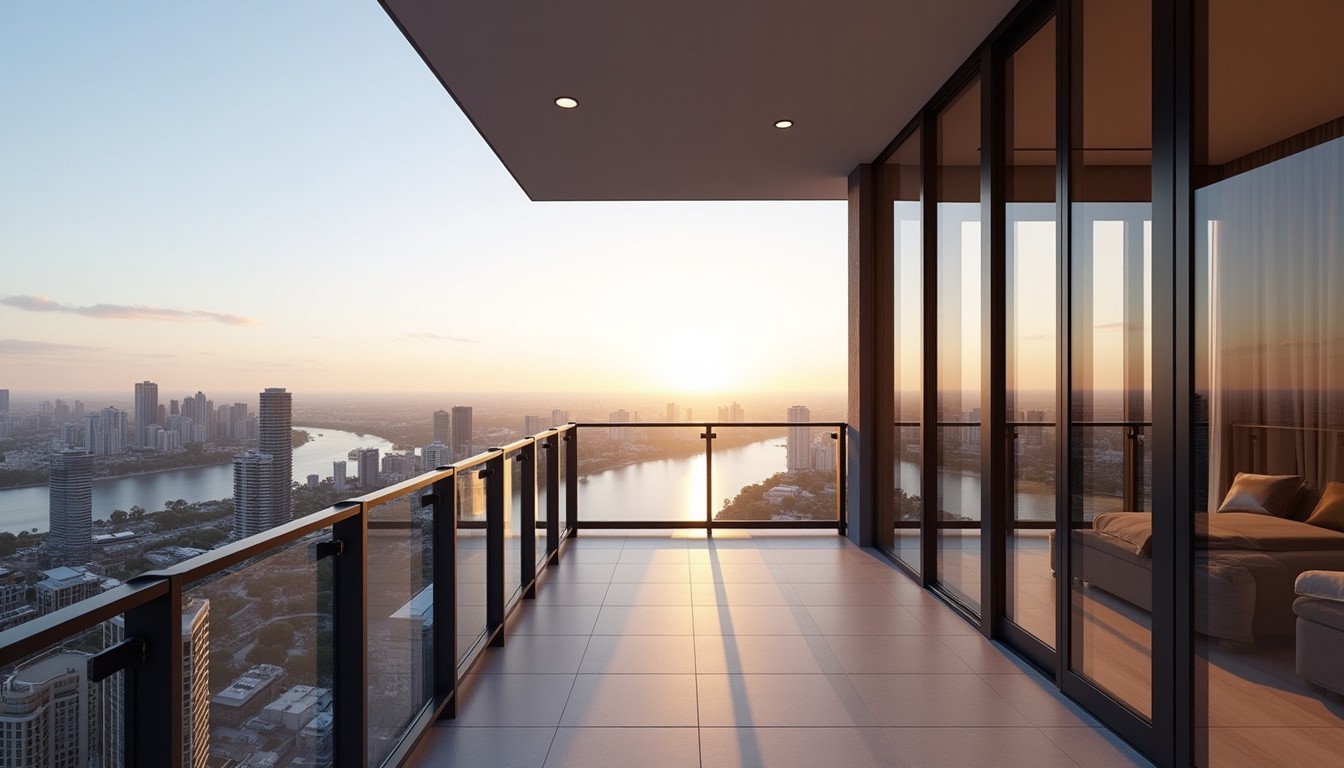
Brisbane's 20% Clearance Rate Masks $5.825 Million Penthouse Win as Queensland Suburbs Diverge
Brisbane's citywide auction clearance rate sat near one in five properties over the October 26 weekend, yet the late Betty Byrne Henderson's riverfront penthouse cleared for $5.825 million — exposing a widening gap between prestige-market strength and broader Queensland softness.
 Property Investment
John McGrath Names Sandgate Top Brisbane Growth Pick for 2027 as Queensland Suburbs Outpace Melbourne's 2.3%
REA Group reports John McGrath has tipped a Brisbane bayside suburb for 2027's strongest growth, just as REAStats data shows West End up 8.8% and Nedlands up 15% annually — against Dandenong's flat 2.3%. Here's what the spread means for capital growth versus yield investors at a 4.60% cash rate.
Frequently Asked Questions
Is Brisbane still a good market to buy in right now?
Yes, Brisbane remains in an upward growth phase with 6% annual and 2% quarterly price gains, outperforming Sydney and Melbourne. Strong population growth, limited housing supply, and tight rental vacancy support ongoing demand. While affordability has tightened compared to pre-2021 levels, fundamentals rather than speculation are driving price movement, suggesting more sustainable growth ahead for buyers and investors.},
Should I buy a house or a unit in Brisbane?
It depends on your goals. Houses offer stronger long-term capital growth due to land content and owner-occupier demand, but units provide better affordability and higher rental yields (5.1% vs 4.2%). Investors prioritising cash flow or buyers wanting inner-city proximity on a budget may find units the more practical, immediately compelling option.
Why don't auction clearance rates matter much in Brisbane?
Brisbane's market is dominated by private treaty sales rather than auctions, unlike Melbourne or Sydney. This makes clearance rates and days-on-market less meaningful indicators of market health. Instead, vacancy rates, median price growth, and yield figures offer more reliable insight into Brisbane's supply-demand balance and overall market momentum.
What yields can investors expect in Brisbane?
Investors can expect around 4.2% gross yield on houses and 5.1% on units, both higher than equivalent returns in Sydney or Melbourne. Combined with a tight 3% vacancy rate, rental demand is absorbing available stock quickly, giving investors a favourable combination of healthy income return alongside continued capital growth.
What risks should Brisbane investors be aware of?
Key risks include Queensland's land tax rules and interstate investor regulations, which have increased holding costs for multi-state portfolio owners. Additionally, outer growth corridor properties face oversupply risk if new completions outpace population absorption, unlike tightly held inner and middle-ring suburbs where supply constraints remain more favourable for investors.
Capital-city statistics are sourced from public Domain research reports and refreshed quarterly. Figures are indicative. REAStats may receive referral fees from linked services. Not financial advice.
Market Snapshot
Brisbane's median house price sits at $750,000 after a 2% quarterly gain and a 6% annual increase, confirming the city remains in an upward phase of the cycle rather than a plateau. That 6% annual growth outpaces the sluggish or flat conditions recorded in Sydney and Melbourne over the same period, and it places Brisbane among the stronger-performing capitals nationally. The pace has moderated from the double-digit surges of 2021-2022, but the consistent quarterly gain shows buyer demand has not retreated even as affordability tightens.
Private treaty sales dominate the Queensland capital far more than auction campaigns, so clearance rate and days-on-market figures carry less weight here than in Melbourne or Sydney and are not meaningfully reported in this cycle. The more telling indicator is the 3% vacancy rate, which sits below the 3.5-4% level considered balanced. That tightness signals a rental market still favouring landlords, with tenant competition keeping upward pressure on rents and, by extension, on yields.
Brisbane's combination of steady capital growth and a constrained rental pool reflects a market absorbing sustained interstate migration and population growth toward 2.68 million residents without a matching uplift in new housing supply. Buyers and investors are competing in a market where fundamentals, not speculative momentum, are driving price movement.
Houses vs Units
The $250,000 gap between the $750,000 house median and the $500,000 unit median represents a substantial affordability lever for buyers priced out of detached housing. That spread, wider than in several other capitals relative to local incomes, means first-home buyers and downsizers increasingly default to units simply to enter the market at all. For investors, the gap also widens the yield differential: unit rental yield of 5.1% comfortably outperforms the 4.2% yield on houses, a gap of nearly a full percentage point.
Better value today sits with units, particularly given Brisbane's historically low unit-to-house price ratio compared with Sydney and Melbourne. Houses still command the stronger long-term capital growth story thanks to land content and owner-occupier preference, but the yield advantage on units, combined with lower entry cost, makes them the more immediately compelling play for investors prioritising cash flow and for owner-occupiers who need to stretch a budget without sacrificing proximity to the CBD.
Investor Outlook
A 5.1% yield on units and 4.2% on houses both sit above the levels investors can secure in Sydney or Melbourne, and the 3% vacancy rate confirms that rental demand is absorbing new stock as fast as it arrives. This combination of yield and scarcity gives Brisbane investors a rare dual benefit: income return that services a mortgage more comfortably, alongside capital growth running at 6% annually without any sign of cooling in the latest quarterly read.
Capital growth prospects remain favourable given the current 2% quarterly pace holds Brisbane on track to extend its annual gain if sustained. Population growth, an undersupplied rental market, and continued infrastructure investment ahead of the 2032 Olympics all support demand fundamentals that extend beyond short-term sentiment.
The key regulatory and supply-side risk is Queensland's land tax and interstate investor rules, which have tightened in recent years and added holding costs for portfolio investors with properties across multiple states. Supply constraints in established inner and middle-ring suburbs also mean investors chasing yield in outer growth corridors take on greater exposure to new-estate oversupply risk, where completions can outpace population absorption in any single release area.
Owner-Occupier Outlook
Affordability has become the central challenge for Brisbane owner-occupiers. A $750,000 house median now sits well above what a median local income comfortably services, pushing many buyers toward the $500,000 unit segment or further out into the suburban fringe. Without published clearance rate or days-on-market figures this quarter, the clearest signal of competitive conditions remains the steady 2% quarterly price growth, which indicates listings are being absorbed at a pace that keeps upward pressure on prices rather than allowing stock to accumulate.
Inner-city buyers should expect to pay well above the city median for established houses in suburbs close to the CBD, while middle-ring suburbs offer a more realistic path to a house near or at the $750,000 median. Owner-occupiers wanting to stay under that figure while still securing a house, rather than a unit, need to look to outer growth corridors, where land supply keeps prices more accessible but trades off commute time and established infrastructure.
Key Submarkets
New Farm and Teneriffe anchor Brisbane's blue-chip riverside precinct, where character homes and premium apartments command the city's highest prices on the back of lifestyle appeal and inner-city position. Paddington and Ashgrove represent the gentrifying inner-west, where renovated Queenslanders attract young families and professionals willing to pay a premium for heritage character close to the CBD. West End continues its transition from industrial fringe to high-density lifestyle precinct, drawing unit buyers and investors chasing the yield advantage that comes with apartment living near the river and cultural precincts.
Carindale and Chermside typify the family-oriented middle ring, offering larger house lots, established schools, and major retail infrastructure at prices more attainable than the inner city. Ripley and Yarrabah-adjacent corridors in the outer south-west and north represent Brisbane's primary growth frontiers, where new house-and-land packages keep entry prices well below the city median but require buyers to accept longer commutes and developing community infrastructure.
Outlook for the Next 12 Months
Brisbane enters the next twelve months with momentum intact. The Reserve Bank's rate trajectory toward further easing, if it materialises, will add borrowing capacity to a market already absorbing strong interstate migration, and that combination points to continued price growth rather than a correction. The 3% vacancy rate is unlikely to loosen quickly given the gap between population growth and new dwelling completions, which keeps rental yields attractive and sustains investor demand alongside owner-occupier competition.
Expect the annual growth rate to track at or above the current 6%, with units potentially outperforming houses on a percentage basis as affordability constraints push more buyers into that segment. Supply pipeline delays tied to construction costs and labour shortages remain the chief risk to this outlook, as any acceleration in new housing delivery would ease the current imbalance and take some heat out of both price growth and rental competition.