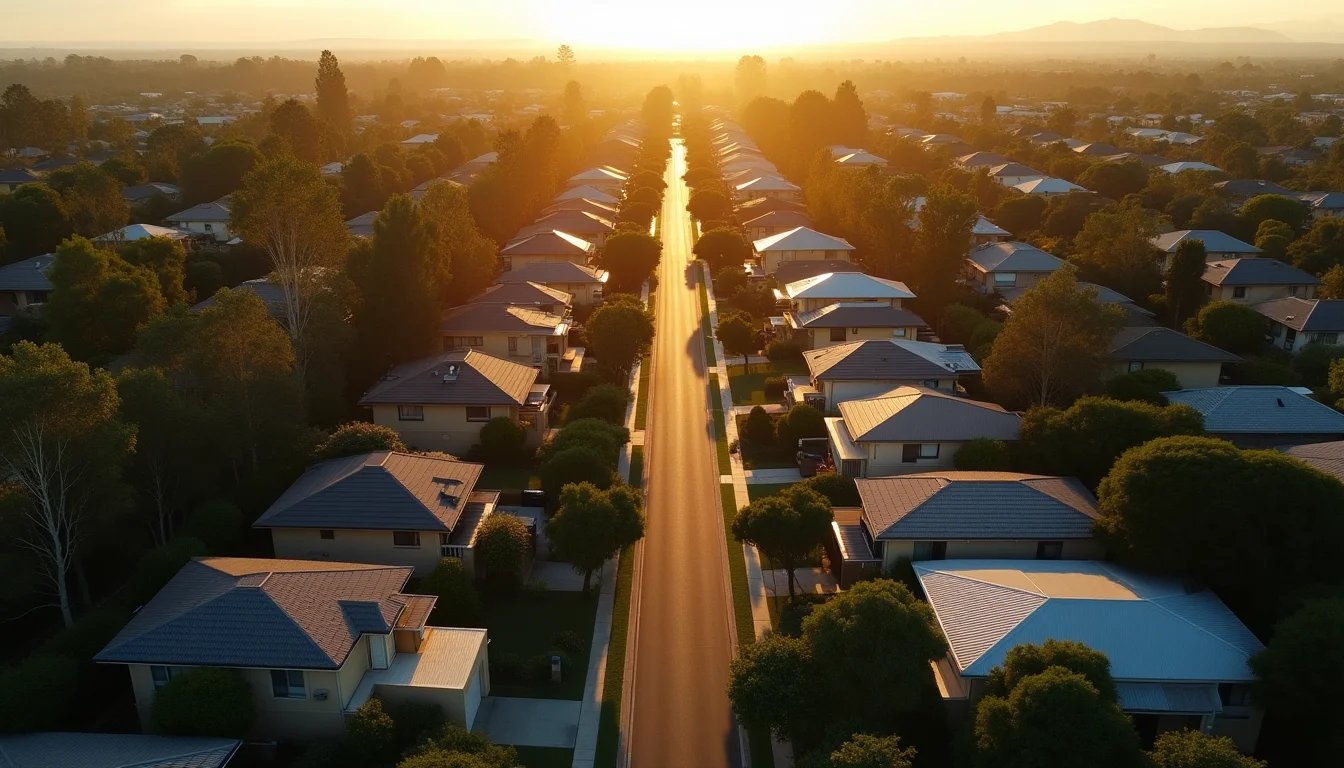
According to REA Group, 151 suburbs joined Australia's million-dollar property club in 2026 as buyers seeking freestanding homes on large blocks were pushed well beyond traditional price boundaries — and the agent sales volume data from those same suburbs reveals a sharply uneven performance picture across WA, Queensland, and NSW. Nedlands in WA is clearing stock in 15 days at a $2,200,000 median with 15% annual growth, South Perth is recording a 17-day sales cycle at $1,450,000 with 13.8% growth, while Port Macquarie agents are managing a 48-day days-on-market figure at $850,000 with growth of just 3.5%. The divergence is not incidental — it reflects a structural concentration of buyer demand that is reshaping where agents can generate consistent sales throughput under the RBA's current 4.35% cash rate.
WA's Million-Dollar Suburbs Are Generating the Fastest Agent Throughput in the Country
Western Australia's premium suburbs are delivering agent sales volumes that no other state can match in the current rate environment. Nedlands sits at a $2,200,000 median price with 15% annual growth and a 15-day days-on-market figure — the fastest clearance cycle in the dataset by a significant margin. South Perth reinforces the picture: a $1,450,000 median, 13.8% annual growth, and a 17-day sales cycle that places it among the top-performing suburbs nationally for agent throughput. Mandurah at the more accessible $550,000 price point is also recording strong agent activity, with 10.5% annual growth and a 24-day days-on-market figure that reflects genuine buyer competition at the affordable end of the WA market.
For agents operating in these suburbs, the combination of rapid stock clearance and double-digit price growth means commission revenue is compounding on both volume and value simultaneously. A 15-day sales cycle in Nedlands means an active agent can theoretically complete two full campaign cycles per month, compared to an agent in Port Macquarie managing one campaign over 48 days. That 33-day gap in sales cycles translates directly into listing throughput and, over a full financial year, represents a material difference in gross commission income. Agents positioning themselves in WA metro markets — particularly in the Nedlands-to-South Perth corridor — are capturing conditions that are unlikely to persist indefinitely as affordability constraints eventually price out marginal buyers.
WA's top-performing suburbs recorded days-on-market figures of 15 to 17 days alongside annual growth of 13.8% to 15%, compared to Victorian equivalents at 23 to 25 days and growth of 3.9% to 4.5% — a performance gap that defines where agent sales volume is concentrating in July 2026.
Queensland's Growth Suburbs Are Building a New Layer of Million-Dollar Agent Markets
Queensland's entry into the million-dollar club has been substantial, and the agent volume data from key Brisbane and Sunshine Coast suburbs confirms that buyer demand is translating into real sales activity rather than just aspirational pricing. West End in Brisbane is recording 8.8% annual growth at a $1,350,000 median with a 22-day days-on-market figure and a 62% auction clearance rate. Indooroopilly sits at $1,380,000 with 8.5% annual growth, a 23-day days-on-market figure, and a 62.5% clearance rate. Both suburbs are generating agent throughput at a pace that is significantly ahead of their Victorian equivalents at comparable price points.
Maroochydore on the Sunshine Coast adds a regional dimension, recording 8.5% annual growth at a $1,050,000 median with a 28-day days-on-market figure and a 54% clearance rate. The 28-day clearance cycle positions Maroochydore as a solid mid-tier performer for agents — slower than Brisbane's inner suburbs but substantially faster than NSW regional markets. For agents choosing between metropolitan and coastal Queensland campaigns, the data suggests inner Brisbane suburbs are currently delivering better volume throughput, while coastal markets offer growing median values that are beginning to justify higher vendor price expectations. The 151-suburb million-dollar expansion reported by REA Group is adding new price floors across these Queensland markets, which directly affects the commission scale agents can access on standard residential listings.
Sydney's Premium Suburbs Deliver Volume on Clearance Rate, Not Speed
Sydney's top agent volume suburbs are operating on a different model to WA — clearance rates rather than days-on-market speed are driving their performance profile. Randwick is recording a 73.5% auction clearance rate at a $2,400,000 median with a 23-day days-on-market figure. Surry Hills posts a 73% clearance rate at $1,920,000 with a 23-day cycle. Kirribilli sits at $2,650,000 with a 72.5% clearance rate and 24 days on market. These three suburbs are generating agent sales volume through strong buyer competition at auction rather than through the rapid private treaty turnover seen in WA.
The distinction matters for agent strategy. A 73.5% clearance rate in Randwick means roughly three in four properties listed for auction are selling under the hammer or prior — a high conversion rate that generates predictable income for agents running auction campaigns. By contrast, Port Macquarie's 46% clearance rate and 48-day days-on-market figure means agents are managing extended campaigns with a lower probability of auction success, pushing more stock toward private treaty and extending the time between listing and commission receipt. For agents evaluating where to concentrate their geographic specialisation, Sydney's eastern suburbs and inner west are delivering reliable auction volume despite the broader city-wide clearance rate softness that has characterised the winter 2026 market. Penrith at $880,000 with a 35-day cycle and Liverpool at $850,000 with a 38-day cycle show that Western Sydney's agent conditions remain notably softer than the premium eastern suburbs.
Victoria's Agent Volume Is Holding in Premium Pockets as Broader Market Softens
Victoria's million-dollar club additions are concentrated in Melbourne's inner and prestige suburbs, and the agent volume data from Toorak and Kew illustrates how a two-speed market is operating within a single city. Toorak is recording a 72% auction clearance rate at a $2,800,000 median with a 23-day days-on-market figure and 4.5% annual growth. Kew sits at $2,100,000 with a 71% clearance rate, 24 days on market, and 4.4% annual growth. These clearance rates are strong in the context of Melbourne's broader winter conditions, where the city-wide rate has been running below 50% for an extended period.
Prahran at $1,550,000 records 3.9% annual growth, a 69% clearance rate, and a 25-day days-on-market figure — performing above the city average but below the premium pockets. The contrast with Melbourne's outer suburbs is sharp: Dandenong at $680,000 records 2.3% annual growth, a 40-day days-on-market figure, and a 56% clearance rate. Reservoir at $880,000 posts 2.8% annual growth, 32 days on market, and a 62% clearance rate. For agents operating across Melbourne's diverse markets, the data signals that premium inner-suburb specialisation is generating meaningfully better throughput metrics than outer suburban campaigns. Vendors in Dandenong and similar markets are waiting nearly twice as long for a sale as vendors in Toorak, which carries direct implications for agent workload and listing-to-settlement timelines.
The Million-Dollar Club Expansion and What It Means for Agent Positioning
The REA Group report confirming 151 suburbs joining the million-dollar club in 2026 has a direct operational consequence for agents: commission structures are being recalibrated upward in markets that were previously considered mid-tier. When a suburb crosses the million-dollar median threshold, the typical commission on a standard residential sale increases in absolute dollar terms even if the percentage rate stays flat. Agents already established in those suburbs — with existing vendor relationships, comparable sales data, and local marketing infrastructure — are best positioned to capture that uplift. Agents entering these markets after the price shift face a competitive environment where incumbents hold a database and credibility advantage.
Understanding how to measure real estate agent performance across these markets requires looking at clearance rates, days on market, and vendor discount rates together rather than in isolation. An agent posting 20 sales per quarter in Reservoir at $880,000 medians is generating less gross commission than an agent posting 14 sales per quarter in Randwick at $2,400,000 medians — volume alone does not determine income or performance quality. For vendors assessing whether to use a vendor advocate in a newly minted million-dollar suburb, the agent's demonstrable track record in that specific price band matters more than raw listing counts. For broader context on how international property markets compare to Australia's premium suburb concentration patterns, international property market analysis shows Australia's per-suburb price concentration is unusually high by global standards.
The supply-side pressure identified in the REA Group report on the Albanese government's housing shortfall — with the 1.2 million home target running 100,000 dwellings behind schedule as of July 30, 2026 — is sustaining price floors in precisely the suburbs where agent sales volume is currently strongest. A structural undersupply environment rewards agents operating in constrained-stock markets where buyer competition remains elevated. WA's 15-to-17-day clearance cycles, Sydney's 73% clearance rates in the eastern suburbs, and Queensland's 8%+ annual growth corridors in Brisbane's inner west are all products of the same supply-demand imbalance. Agents in these markets should expect the current volume concentration to persist as long as new dwelling delivery remains below population-driven demand — a condition the current data suggests will extend well into 2027.