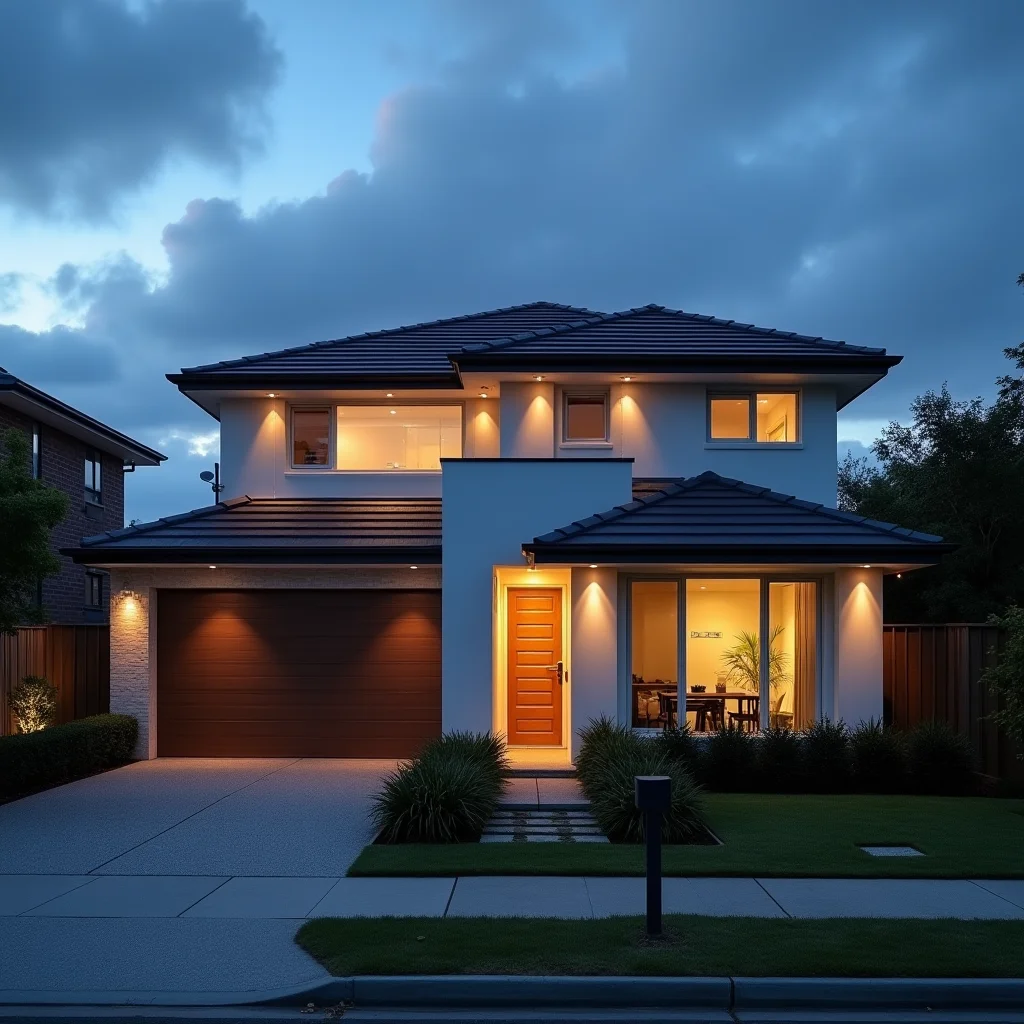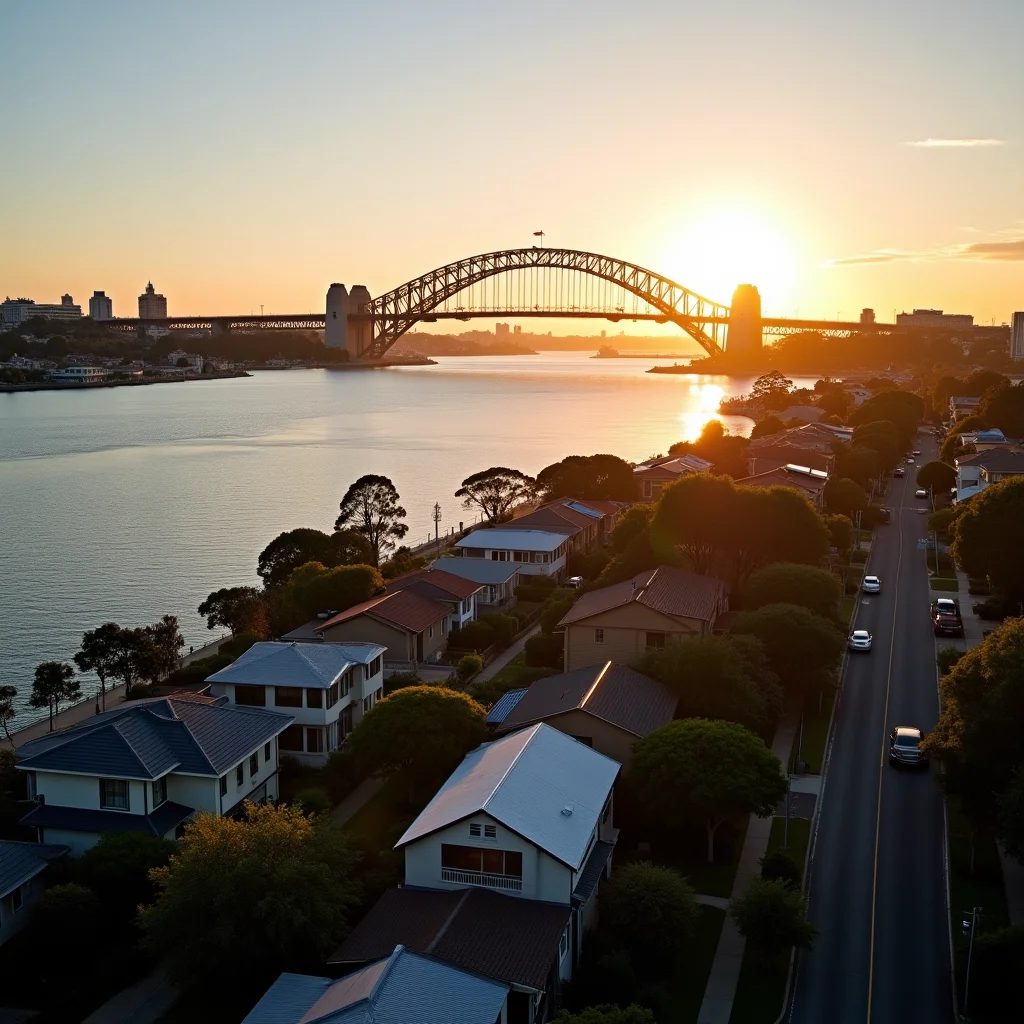
A granular analysis of Australia's major property markets reveals a profound and widening affordability gap, not only between capital cities but within their suburban boundaries. Melbourne's Reservoir, a northern suburb approximately 12 kilometres from the CBD, presents one of the most accessible entry points for a detached house in a major urban centre, with a median price of $880,000. In stark contrast, Sydney's blue-ribbon harbourside suburb of Mosman commands a median of $4.2 million. This price differential of 377% encapsulates the deepening affordability crisis and the divergent realities facing buyers across the property spectrum.
Interstate Price Disparities Driving Market Dynamics
The data clearly illustrates that Melbourne maintains a significant affordability advantage over Sydney across all comparable market segments. This long-standing price gap, confirmed by property data providers like CoreLogic and PropTrack, continues to influence household decisions and interstate migration patterns. While Melbourne's premium suburbs are expensive by any national measure, they remain substantially below Sydney's top tier. For instance, the median house price in Toorak stands at $2.8 million, a figure considerably lower than the values seen in Sydney's prime Eastern Suburbs or Lower North Shore.
Even in the established middle-ring suburbs, the contrast is stark. Melbourne's inner-north hubs like Brunswick ($1.18 million) and the gentrifying inner-city locale of Collingwood ($1.25 million) offer relative accessibility. These prices sit well below comparable suburbs in Sydney, allowing for a different calibre of lifestyle and property for a similar capital outlay.
The Brisbane Convergence
Historically, Brisbane has served as a critical release valve for residents priced out of Sydney and, to a lesser extent, Melbourne. However, recent market performance has significantly challenged this narrative. PropTrack data indicates that Brisbane's median house price experienced an approximate $200,000 surge in annual growth through late 2023 and early 2024. This rapid price acceleration, fuelled by strong post-pandemic interstate migration documented by the Australian Bureau of Statistics (ABS), is narrowing the cost advantage that once made the Queensland capital a clear-cut alternative. As the median house price in Brisbane approaches the $1 million mark, the financial incentive for relocating diminishes, potentially redirecting demand back towards more affordable segments of the Melbourne market.
Within-City Affordability Stratification
The internal price structure of Sydney demonstrates an extreme level of stratification that presents formidable barriers to entry and upward mobility. Entry-level suburbs for detached housing, particularly those with reasonable transport links, command prices that would be considered upper-mid-tier in Melbourne. High-density Rhodes, with its train station and waterside location, has a median of $1.35 million, while the well-connected suburban hub of Epping in the city's north-west sits at $1.58 million. These figures mean that Sydney's most accessible options for family homes exceed the median prices of highly desirable, established Melbourne suburbs by substantial margins.
"An examination of median price data shows Sydney's affordability floor for detached housing now sits at levels that represent Melbourne's mid-to-premium market segments. This creates a structural barrier for buyers seeking metropolitan proximity without exposure to premium price points, effectively locking many households out of the housing market or forcing them into significant compromises on location or property type."
Melbourne's price distribution, while still challenging for first-time buyers, shows more graduated and logical affordability tiers. The market offers a clearer pathway for buyers to move through different price segments. Suburbs like Box Hill ($1.25 million) and Glen Waverley ($1.45 million) in the eastern corridor provide well-regarded middle-market options, often driven by demand for specific school catchments. Further up the price scale, premium locations such as Kew ($2.1 million) and Hawthorn ($1.85 million) offer prestigious living but remain well below the benchmarks set by their Sydney counterparts.
Comparative Market Tiers (Median House Prices)
| Market Tier | Sydney Example | Melbourne Example | Brisbane Example |
|---|---|---|---|
| Entry-Metropolitan | Rhodes ($1.35M) | Reservoir ($880k) | Inala ($650k) |
| Mid-Ring / Established | Epping ($1.58M) | Brunswick ($1.18M) | Holland Park West ($1.15M) |
| Premium | Mosman ($4.2M) | Toorak ($2.8M) | New Farm ($2.5M) |
Note: Prices are indicative medians for analysis and are subject to market fluctuations.
Market Indicators Reflect Buyer Capacity
Auction clearance rates and days on market (DOM) figures correlate directly with price accessibility and buyer borrowing capacity. In Melbourne's Reservoir, the 62% clearance rate reflects a degree of buyer resistance and financing challenges at the $880,000 price point. At this level, purchasers are highly sensitive to interest rate changes and mortgage serviceability hurdles. In contrast, premium Sydney suburbs like Bondi Beach (74.2% clearance) and Mosman consistently maintain clearance rates above 70%, even at multi-million-dollar price points.
This pattern is further supported by DOM data. Properties in more affordable segments, such as those in Melbourne's outer north, average 30-32 days on market. This extended period reflects a smaller pool of qualified buyers and more cautious decision-making. Conversely, premium locations in Sydney, buoyed by less-leveraged buyers and constrained supply, see properties transact much faster, typically within 20-25 days. The performance differential suggests that while buyers are active in accessible price segments, the premium market operates on a different set of fundamentals driven by wealth preservation and scarcity rather than affordability.
Policy Headwinds and Market Implications
Government policy is slowly responding to these affordability constraints. Initiatives aimed at increasing housing density through streamlined development approvals, even in protected suburbs like Mosman, signal official recognition of the supply-side issue. However, the immediate impact of such policies on affordability is likely to be minimal, as new developments in premium locations are invariably priced at the top end of the market.
The macroeconomic environment, dictated by the Reserve Bank of Australia (RBA) and the Australian Prudential Regulation Authority (APRA), presents the most significant headwind. With the official cash rate at 4.35%, mortgage serviceability calculations, which require banks to apply APRA's 3-percentage-point buffer, severely curtail borrowing capacity. A household that could borrow $1 million when rates were at their nadir may now only qualify for $700,000 or less. This reality pushes entry-level buyers towards the urban fringe, smaller attached dwellings, or interstate options. In this context, Melbourne's sub-$1 million stock in suburbs like Reservoir becomes a critical segment for enabling any form of market participation for first home buyers in a major capital.
For property professionals, the data signals a bifurcation of market activity. In Sydney, agents face a polarised market where premium performance remains robust, but the middle-market may experience thinning activity and price sensitivity. In Melbourne, the greatest concentration of transactions is likely to be found in the middle-market segments, where a deeper pool of buyers retains sufficient purchasing capacity. Vendors in Melbourne's most affordable suburbs should be prepared for longer marketing campaigns but can expect sustained interest, whereas vendors in Sydney's premium tier can continue to benefit from strong buyer competition and compressed sales timelines.