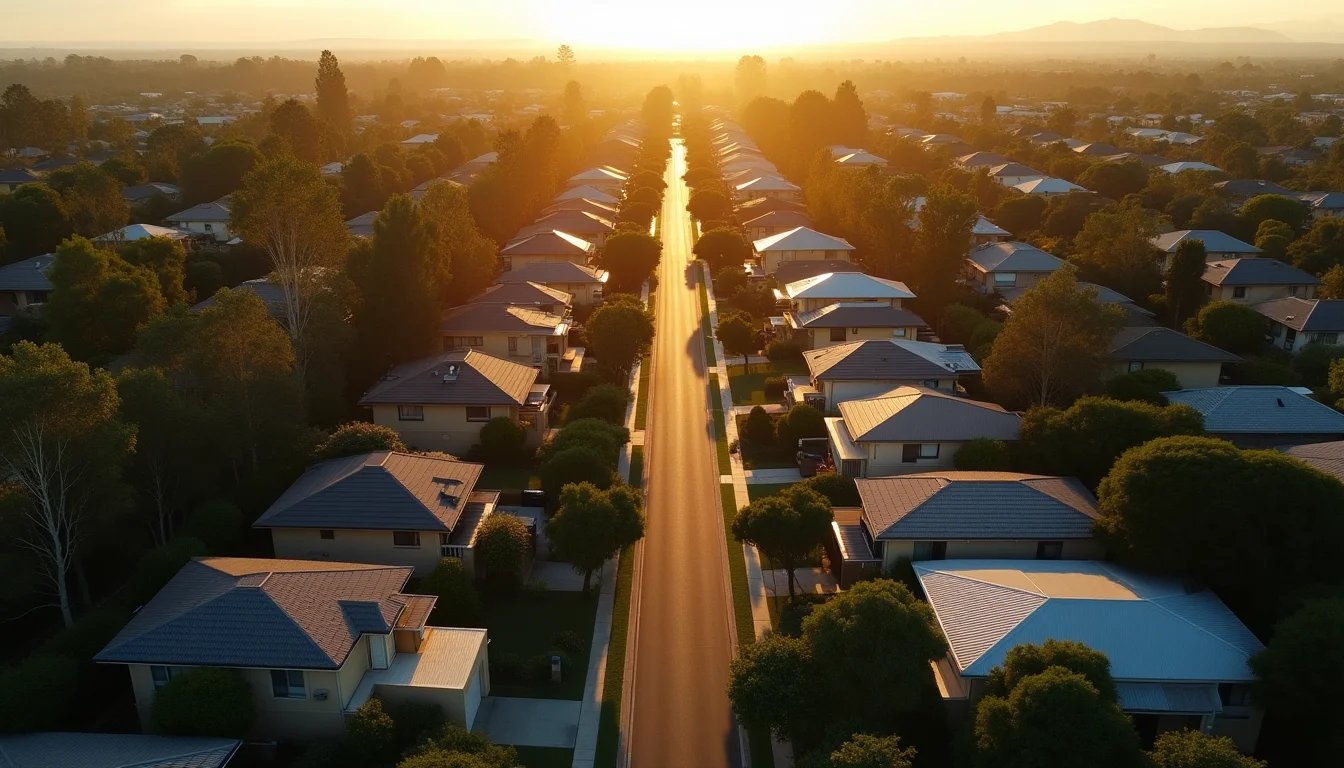
Brisbane homeowners flooded the property market in an unusual winter surge, with listings jumping 18 per cent in July as fears grow the downturn has further to run, according to REA Group reporting published 4 August 2026. That supply spike — arriving in a season when conventional agency wisdom predicts thin stock and lower buyer competition — has created a direct conflict between vendor urgency and the campaign structures most agents have built their winter calendars around. With West End sitting at a 62% auction clearance rate and 22 days on market at a $1,350,000 median, Brisbane agents now face a market where the old seasonal playbook no longer applies.
Why Brisbane's Winter Surge Breaks the Seasonal Campaign Model
Standard seasonal campaign strategy in Queensland has long treated winter as a holding period — a time to list conservatively, avoid saturating the market, and preserve pricing power for spring. The 18% July listing jump reported by REA Group dismantles that framework. When supply rises sharply while buyer confidence is already fragile, the competitive pressure on individual listings intensifies regardless of the season. Agents who designed four-week auction campaigns expecting thin competition are now launching into an environment where comparable stock is accumulating week over week.
The implications for campaign structure are immediate. In a compressed market like West End — where 22 days on market reflects genuine buyer urgency at the $1,350,000 median — a standard 28-day auction campaign still functions. But in Maroochydore, where days on market sits at 28 and the clearance rate is only 54%, the winter supply surge creates a more acute problem: buyers have optionality, and vendors who priced for a spring-scarcity premium are now competing against a wider field. Agents in coastal Queensland markets need to reassess whether a four-week auction campaign generates enough registered bidder depth when competing listings are rising.
Indooroopilly, recording 8.5% annual growth at a $1,380,000 median and 23 days on market with a 62.5% clearance rate, represents the strongest case for maintaining an auction-led campaign even through the winter surge. Suburbs with sub-25-day clearance cycles have sufficient buyer depth to absorb increased supply. The problem compounds in middle-ring and outer Brisbane markets where days on market and clearance rates are softer.
WA Agents Operate in a Different Seasonal Reality — and the Data Proves It
While Brisbane agents contend with an oversupplied winter market, agents in Western Australia are executing seasonal campaigns under conditions that more closely resemble a spring market in any other state. Nedlands is clearing stock in 15 days at a $2,200,000 median with 15% annual growth and a 65.5% auction clearance rate. South Perth is running a 17-day sales cycle at a $1,450,000 median with 13.8% annual growth. Mandurah is moving at 24 days on market with 10.5% annual growth at a $550,000 price point.
For WA agents, winter 2026 does not require a defensive campaign posture. The data supports shorter campaign windows, auction as the primary sale method, and aggressive pricing. A vendor in Nedlands or South Perth who accepts a longer campaign on the assumption that winter requires a cautious approach is leaving days on market — and potentially sale price — on the table. The contrast with Brisbane is instructive: the same calendar period produces fundamentally different market conditions depending on state, and agents who apply a national seasonal template are systematically misaligning strategy with local buyer behaviour.
South Perth's 17-day average sales cycle and 13.8% annual growth rate during the 2026 winter period stand in direct contrast to Port Macquarie's 48-day sales cycle and 46% auction clearance rate — a 31-day performance gap that reflects structural differences in buyer demand, not simply seasonal timing.
Fremantle, at 25 days on market with 5.8% annual growth and a 54.6% clearance rate, sits in a transitional band — fast enough to support auction campaigns but with clearance rates that suggest private treaty or an expressions-of-interest format may generate stronger competition in some price brackets. WA agents operating across multiple suburbs need to read clearance rates at the suburb level rather than defaulting to a state-wide campaign format.
NSW Regional Markets Demand Extended Campaign Windows — Winter or Otherwise
Meanwhile, REA Group's most-viewed listings data published 4 August 2026 highlights sustained buyer interest in non-metropolitan properties — bush blocks, budget-entry homes, and regionally priced stock — which directly affects how agents in markets like Port Macquarie and Ballina should structure seasonal campaigns. These are not sprint markets. Port Macquarie's 48-day average and 46% clearance rate, alongside Ballina's 45-day average and 47% clearance rate, confirm that NSW regional buyers require significantly longer decision cycles than metropolitan counterparts.
Agents in these markets who run standard 28-day auction campaigns are generating results that underperform private treaty or extended expressions-of-interest formats. A 46% clearance rate in Port Macquarie during winter means more than half of all properties taken to auction are passing in — creating post-auction negotiation pressure that typically extracts a lower price than a well-managed private treaty campaign would have achieved from the outset. Understanding how to measure real estate agent performance in these markets requires looking beyond clearance rates to conditional days on market and vendor-achieved versus reserve-price differentials.
In contrast, Liverpool in western Sydney runs at 38 days on market with a 60.5% clearance rate at an $850,000 median — a market that sits between the fast-moving premium suburbs and the slower regional tier. Agents here can support a 28-day auction campaign but need to be more selective about reserve pricing and marketing spend than their counterparts in Randwick, which clears at 73.5% in 23 days at a $2,400,000 median. Penrith, at 35 days and a 62% clearance rate, is also a private-treaty candidate in winter conditions.
Seasonal Campaign Timing: What the REA Group Viewership Data Signals for Agent Strategy
The REA Group most-viewed listings report from 4 August 2026 contains a direct signal for agents designing seasonal campaigns: buyer attention during winter is not concentrated on premium stock. Bush blocks, bargain-entry properties, and unusual homes — including the $539,000 James Bond-inspired dome home in Rockhampton reported by REA Group on 4 August 2026 — are generating the highest online engagement. This is an engagement pattern driven by price sensitivity under the RBA's current 4.35% cash rate, which is compressing buyer budgets across the board.
For agents managing seasonal campaigns at the sub-$1 million price point, the REA Group viewership data suggests that unconventional or value-driven marketing angles generate disproportionate platform attention during winter. A Dandenong property at a $680,000 median with 40 days on market and a 56% clearance rate sits squarely in the high-viewership, low-conversion band — buyers are looking, but the RBA rate environment is slowing commitment. Campaign design for these properties should prioritise online engagement duration over auction volume, which means extended private treaty campaigns with strong visual marketing, not four-week auction programs that expire before buyers have resolved their financing.
Agents working in the prestige tier — Toorak at a $2,800,000 median with a 72% clearance rate, Kirribilli at $2,650,000 with a 72.5% clearance rate — are insulated from the viewership-driven seasonal noise. These buyers are not browsing REA Group for entertainment. Seasonal campaign strategy in the top-5% price bracket should remain auction-led and calendar-driven by prestige-buyer availability, not by platform engagement patterns. For agents covering multiple price tiers, the seasonal approach must be segmented by price band, not applied uniformly. For background on how commission structures intersect with campaign investment decisions, see How Real Estate Agent Commissions Work.
Practical Implications: Matching Campaign Format to Market Conditions in August 2026
The data across 20 suburbs points to a clear segmentation framework for agent campaign strategy in the current period. Markets with clearance rates above 65% and days on market below 25 — Randwick (73.5%, 23 days), Toorak (72%, 23 days), Kirribilli (72.5%, 24 days), Nedlands (65.5%, 15 days) — support four-week auction campaigns with standard vendor-paid marketing budgets. These markets are producing results with current conditions, and agents should not shorten campaign windows in an attempt to create artificial urgency that already exists organically.
Markets with clearance rates between 54% and 65% and days on market between 22 and 32 — West End (62%, 22 days), Indooroopilly (62.5%, 23 days), South Perth (63.5%, 17 days), Mandurah (56%, 24 days), Fremantle (54.6%, 25 days) — require more deliberate method-of-sale analysis. Auction remains viable but agent preparation needs to account for the possibility of passing in and having a post-auction negotiation strategy ready. Vendors in this band should be counselled against setting reserves that assume spring-level buyer competition. For a deeper examination of when private treaty outperforms auction, the international property market comparison data from comparable winter-downturn periods in the UK and Canada offers a useful reference frame.
Markets below 54% clearance and above 35 days on market — Port Macquarie (46%, 48 days), Ballina (47%, 45 days), Dandenong (56%, 40 days), Liverpool (60.5%, 38 days), Penrith (62%, 35 days), Newtown VIC (52%, 35 days), Reservoir (62%, 32 days) — are private treaty markets in the current environment. Agents who continue to push auction campaigns in these conditions are generating passing-in results that damage vendor confidence, trigger price reductions, and ultimately produce lower sale prices than a well-structured private treaty campaign would have achieved. Brisbane's winter listing surge makes this calculus even more acute for Queensland agents whose suburbs fall into this performance band.
For agents advising vendors in any of these markets, the seasonal campaign question is no longer simply about when to list — it is about whether the chosen method of sale matches the structural demand profile of the suburb. Brisbane's 18% July listing surge confirms that vendor sentiment is overriding traditional seasonal caution. The agent's job is to ensure that campaign structure does not amplify the risk that the vendor's own urgency has already created. On how to frame vendor expectations within the agency agreement, see Vendor Advocacy — Do You Need One? for guidance on structuring the vendor-agent relationship in a supply-heavy market.