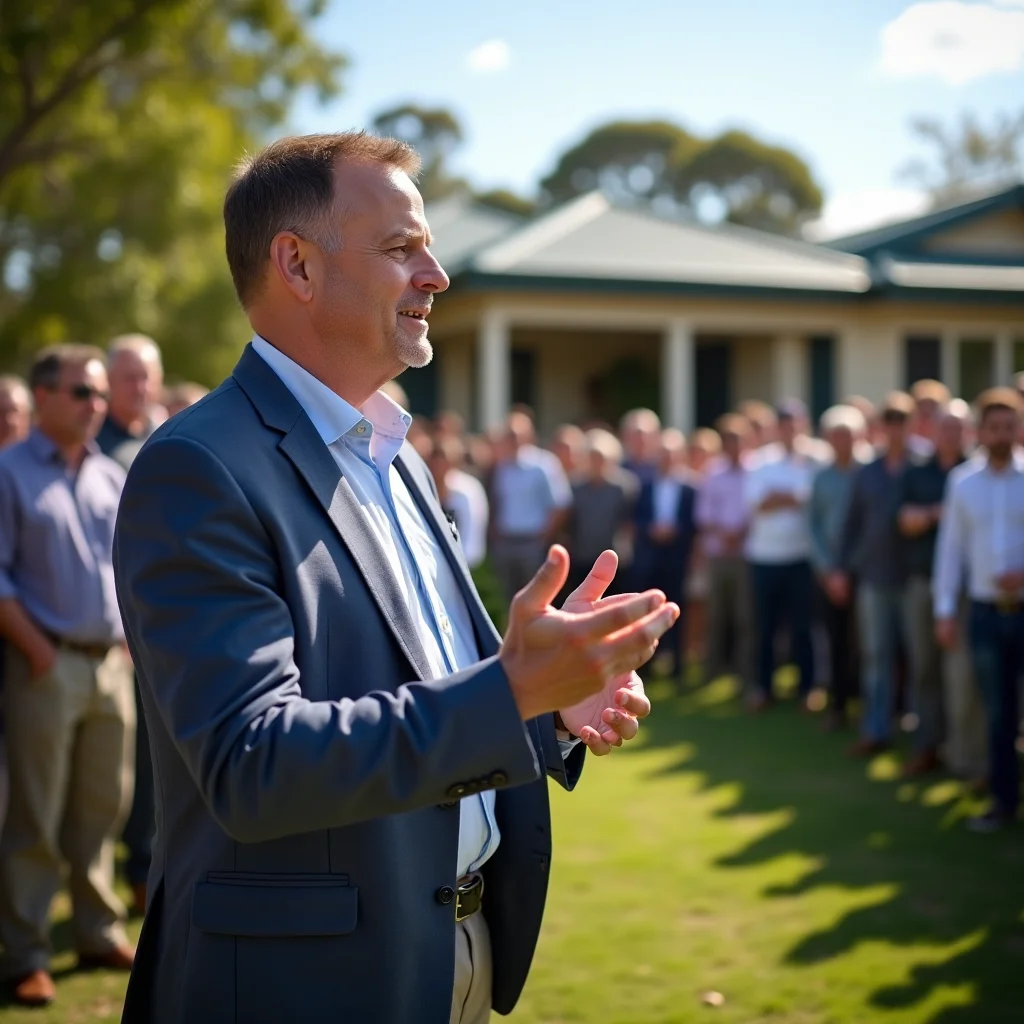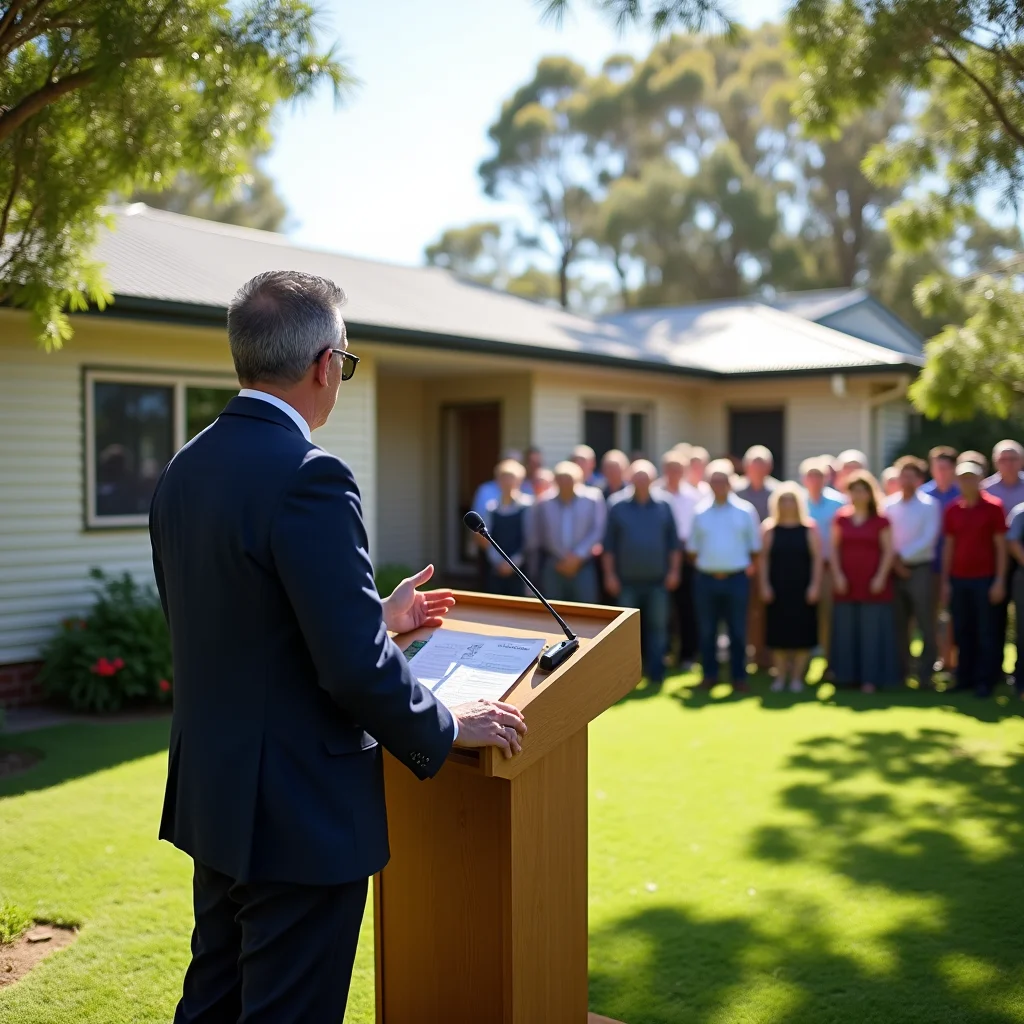
According to REA Group, a downsizing family were left stunned after their home sold $500,000 over reserve as clearance rates rebounded in mid-July 2026 — yet this standout result sits inside a national market where the affordability gap between entry-level and premium suburbs has widened to a 4:1 ratio, with Mandurah recording a $550,000 median against Randwick's $2,400,000. The RBA cash rate remains at 4.35%, and The Age Property reports this is still the weakest auction market since 2020, with roughly half of scheduled auctions clearing nationally. These two data points — a viral $500k over-reserve result and a market-wide clearance rate hovering near 50% — encapsulate precisely how bifurcated Australian property affordability has become in July 2026.
The Clearance Rate Rebound and What It Actually Measures
The $500,000 over-reserve sale reported by REA Group on 14 July 2026 generated significant attention, but it represents a micro-event within a macro-environment still constrained by the RBA's 4.35% cash rate. Randwick's clearance rate sits at 73.5% with a $2,400,000 median — one of the strongest performers in the dataset — while Port Macquarie records just 46% clearance at an $850,000 median and 48 days on market, among the longest in the country. That 27.5-percentage-point spread between those two NSW markets alone illustrates how selectively buyers are deploying capital in the current rate environment.
The viral auction result, while genuine, reflects conditions in tightly held, high-demand pockets where supply scarcity continues to override broader affordability pressures. Understanding what drives these numbers requires looking beyond individual results to the structural data — for a detailed breakdown of how clearance rates function as a market signal, see the REAStats guide to Auction Clearance Rates Explained. The broader pattern across 20 suburbs in this dataset shows clearance rates ranging from 46% (Port Macquarie) to 73.5% (Randwick), a spread that maps almost exactly onto affordability tiers and local supply constraints.
WA's Affordability Proposition Widens Against Sydney and Melbourne
The sharpest affordability story in July 2026 is not within any single city — it is between Western Australia and the eastern seaboard. Mandurah sits at $550,000 with 10.5% annual growth and a 24-day median days on market, offering buyers a sub-$600,000 entry point into a market that is outperforming most Victorian and NSW suburbs by a factor of three to four times on annual growth. South Perth records $1,450,000 at 13.8% annual growth with just 17 days on market, while Nedlands posts $2,200,000 at 15% annual growth — the highest growth figure in this dataset — with a 15-day median sale time.
By contrast, Melbourne's Dandenong records $680,000 at just 2.3% annual growth with 40 days on market — a suburb that costs $130,000 more than Mandurah yet grows at less than a quarter of the pace. Prahran at $1,550,000 posts 3.9% growth over 25 days, while Toorak's $2,800,000 median delivers 4.5% growth. Even Victoria's strongest performers are delivering less than a third of the capital growth being recorded in WA's top suburbs at equivalent or higher price points. For buyers and investors making interstate allocation decisions, the WA affordability-to-growth ratio remains the standout case in the current data.
Mandurah's $550,000 median with 10.5% annual growth delivers four times the capital appreciation of Dandenong's $680,000 median — at a lower entry price and 16 fewer days on market.
Queensland's Mid-Tier Markets Hold a Structural Affordability Advantage
Queensland is presenting a two-tier affordability picture. Maroochydore records a $1,050,000 median with 8.5% annual growth and 28 days on market — above the million-dollar threshold but growing at more than double the rate of comparable Sydney fringe suburbs like Penrith ($880,000, 3.8%, 35 days) and Liverpool ($850,000, 3.5%, 38 days). West End in inner Brisbane sits at $1,350,000 with 8.8% growth and a 22-day median, while Indooroopilly records $1,380,000 at 8.5% growth with 23 days on market — both outperforming every Victorian suburb in the dataset on annual growth.
The Queensland affordability case is strongest in its mid-tier suburbs, where buyers are accessing growth rates of 8–9% at price points that remain $1–1.4 million — well below comparable Sydney inner-ring markets. REA Group noted on 14 July 2026 that the equivalent of more than two full rate cuts are available to buyers through lender competition and product switching — a dynamic that disproportionately benefits buyers in markets like Maroochydore and Indooroopilly, where borrowing costs relative to asset values are more manageable than in Sydney's prestige tier. For broader macro and interest rate market analysis, the rate environment remains the dominant variable in affordability calculations across all capital cities.
Sydney's Prestige Tier Holds While Outer Suburbs Stall
Sydney presents the starkest internal affordability divide of any capital city in this dataset. Kirribilli records a $2,650,000 median with 4.8% annual growth and 24 days on market; Randwick sits at $2,400,000 with 5.6% growth and a 73.5% clearance rate; Surry Hills posts $1,920,000 at 5.5% growth over 23 days. These inner and eastern suburbs are holding price and velocity despite the broader market softening. Outer Sydney tells a different story: Penrith at $880,000 clears in 35 days with a 62% clearance rate; Liverpool at $850,000 takes 38 days with a 60.5% clearance rate. Port Macquarie at $850,000 with 48 days on market and 46% clearance is the slowest-moving market in the dataset.
The $500,000 over-reserve result reported by REA Group is consistent with conditions in Sydney's prestige and inner-ring markets, where qualified buyers are competing for genuinely scarce stock. As REA Group also reported on 14 July, an overgrown Chatswood property is set for a $2 million auction — a test of whether buyer demand in Sydney's upper north shore can absorb presentation-compromised stock at premium price points. The data suggests it likely will in that precinct, given inner-ring clearance rates remain above 70% in comparable suburbs like Kirribilli. What it will not do is replicate those conditions in Penrith or Liverpool, where buyers have more choice and less urgency.
The Weakest Auction Market Since 2020 — What the Data Signals for Spring
The Age Property's assessment that this is the weakest auction market since 2020 aligns with the clearance rate data across this dataset. Nationally, markets like Port Macquarie (46%), Ballina (47%), Newtown VIC (52%), and Maroochydore (54%) are all clearing at or near the 50% threshold that defines a buyer's market. Melbourne's Dandenong at 56%, Reservoir at 62%, and Prahran at 69% reflect a state-wide VIC pattern of moderate-to-weak clearance performance relative to historical norms. Even Toorak's 72% clearance rate — among the stronger results in Victoria — trails WA's Nedlands at 65.5% on growth by more than 10 percentage points annually.
The affordability data across this 20-suburb dataset signals three distinct market conditions heading into spring 2026. First, WA's premium and mid-tier suburbs are operating in a separate demand cycle, with 10–15% annual growth and sub-20-day sale times that are disconnected from the national softening trend. Second, Queensland's inner-Brisbane and Sunshine Coast markets are holding growth momentum at 8–9% annually despite clearance rates that are moderate rather than strong, suggesting private treaty is absorbing significant volume. Third, Melbourne and outer Sydney are in genuine price discovery mode — buyers have time, choice, and leverage in those markets in a way that is not reflected in the over-reserve headlines that dominate national coverage. For agents operating in the VIC and outer NSW markets, the spring season will require realistic vendor pricing and stronger pre-auction campaign management to convert stock in a market where The Age Property confirms roughly half of scheduled auctions are clearing.
For vendors in WA and inner Queensland, the current conditions favour an auction campaign — sub-25-day sale times and clearance rates above 60% support competitive bidding environments. For buyers targeting affordability with growth, Mandurah at $550,000 and Maroochydore at $1,050,000 represent the strongest value-to-growth ratios in this dataset. For Melbourne and outer Sydney buyers, the data suggests continued negotiating room through at least the first month of the spring selling season.