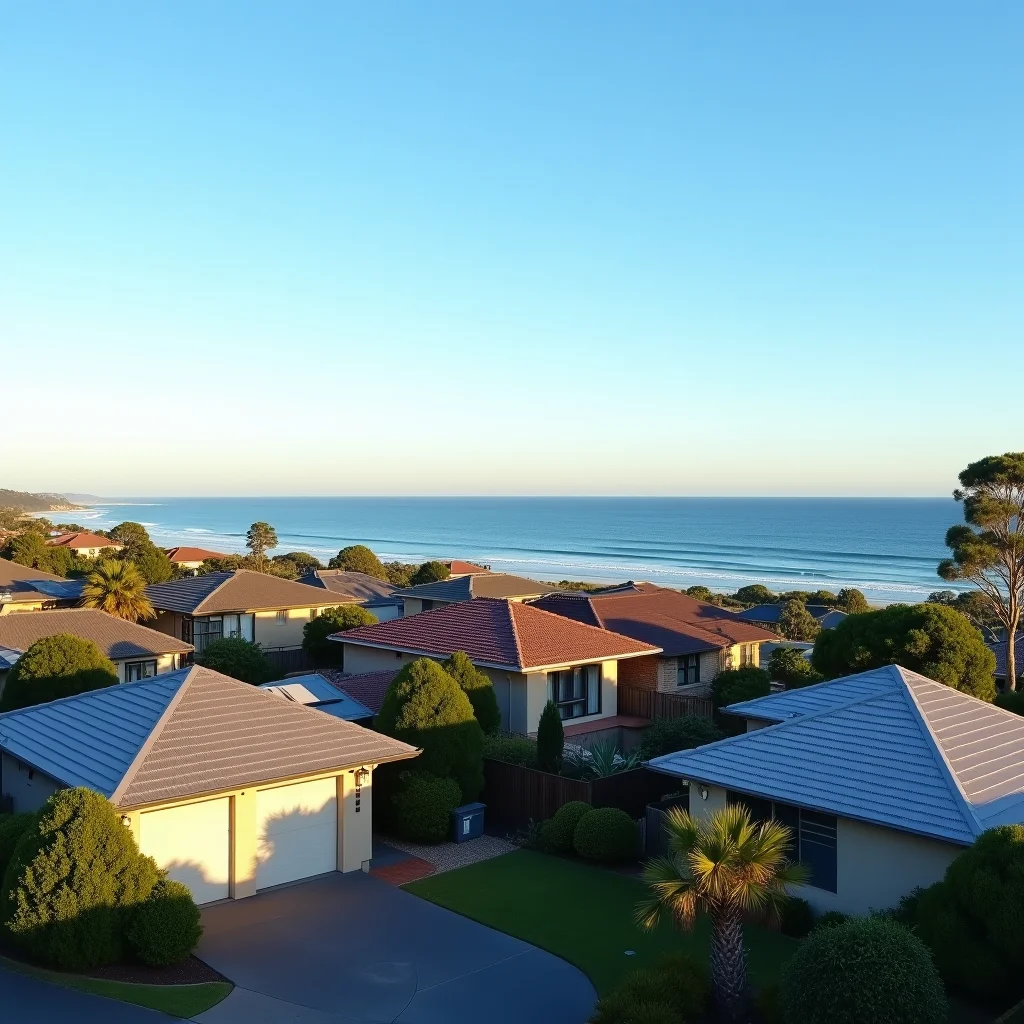
South Perth's median sale completing in 17 days and Nedlands closing at 15 days on market stand in sharp contrast to Port Macquarie's 48-day median and Ballina's 45-day figure — a 33-day performance gap that points directly to a structural divide in how well Australian agents are monetising their buyer databases through off-market and pre-market channels. According to REA Group, Sydney's first-home buyer cohort is already struggling to find stock within reach, a demand pressure that well-credentialed agents with deep buyer databases are turning into off-market pipeline — while operators with thin contact lists are resorting to extended public campaigns at the worst possible time in the rate cycle.
The 33-Day Gap: What Days on Market Actually Measures in Agent Capability Terms
Days on market is frequently misread as a measure of property desirability when it is, more precisely, a measure of agent preparation. In Nedlands, where the current median sits at $2,200,000 with 15% annual growth recorded in July 2026, a 15-day median sale time is not primarily explained by buyer demand — it is explained by agents presenting pre-qualified buyers to vendors before a listing ever hits the portals. That process requires a maintained, segmented buyer database with active follow-up cadence. The same dynamic is visible in South Perth at 17 days on market and a $1,450,000 median posting 13.8% annual growth.
By contrast, Port Macquarie's 48-day median at an $850,000 price point and a 46% auction clearance rate tells a different story. Extended days on market in a regional market with softer clearance rates suggests agents are relying heavily on portal exposure to generate buyer interest rather than presenting stock to pre-identified, finance-ready buyers. The distinction matters commercially: a property sitting on market for 48 days accrues vendor anxiety, conditions buyers to make lower offers, and compresses the final sale price relative to what a well-timed off-market or early-market approach might achieve. For a detailed breakdown of what the off-market channel involves for both agents and vendors, the Off-Market Property Sales Explained guide covers the mechanics, legal framework, and typical price outcomes.
Ballina reinforces the pattern. At a $1,350,000 median with only 4% annual growth and 45 days on market, Ballina-based agents are running near-identical extended campaign timelines to Port Macquarie despite a significantly higher median price point. This suggests the issue is not price tier — it is buyer database depth and the agent's capacity to match stock to demand before public listing.
WA's Off-Market Efficiency: Why Nedlands and Fremantle Agents Are Converting Pre-Market
Western Australia's premium suburbs are demonstrating the clearest evidence of database-driven off-market activity in the current dataset. Nedlands at 15 days on market with a 65.5% auction clearance rate and Fremantle at 25 days with a 54.6% clearance rate both point to agent pipelines that are absorbing demand well before public campaigns reach full exposure. Mandurah's 24-day median at a $550,000 entry-level price point with 10.5% annual growth adds further confirmation: WA agents across multiple price tiers are running tighter, faster campaigns than their eastern seaboard counterparts.
The conditions for off-market success in WA are partly structural. Constrained listing supply — particularly in Nedlands and South Perth — means buyers who miss one property have strong motivation to register directly with local agents rather than waiting for portal listings. That buyer registration behaviour, when captured and maintained by an agent with disciplined CRM processes, becomes the foundation of a repeatable off-market capability. When the next vendor approaches that agent, the conversation about a private sale or early-access campaign is supported by a genuine matched-buyer list rather than an aspiration.
At the state level, the contrast is stark. WA's top-performing suburbs are selling 23 to 33 days faster than their NSW regional equivalents. For context on how international markets compare on agent database standards and off-market transaction volumes, international property market comparison data shows off-market transactions representing a significantly higher share of premium sales in markets with mature agent database cultures, a trajectory Australian premium markets are beginning to mirror.
Nedlands recorded a 15-day median days on market with 15% annual growth in July 2026 — 33 days faster than Port Macquarie's 48-day median at the same RBA cash rate of 4.35%. That performance gap is directly attributable to agent database quality and pre-market buyer matching, not market conditions alone.
Queensland's Mid-Market: Where Off-Market Opportunity Is Being Left on the Table
Queensland's data presents a more complex picture. West End is posting an $1,350,000 median with 8.8% annual growth and a 22-day days-on-market figure — a strong result by national standards that suggests some agents in the inner Brisbane market are successfully running pre-market and early-access campaigns. Indooroopilly at 23 days on market with 8.5% annual growth and a $1,380,000 median tracks similarly. Maroochydore, however, slips to 28 days despite comparable 8.5% annual growth and a $1,050,000 median, suggesting that Sunshine Coast agents are not yet converting the market's underlying demand momentum into off-market transaction efficiency at the same rate as inner Brisbane operators.
The difference between 22 days in West End and 28 days in Maroochydore may appear minor, but at the portfolio level it compounds. An agent turning over 30 listings per year at 22-day cycles versus 28-day cycles is completing approximately 2.5 additional campaigns annually — a material revenue difference without any additional marketing spend. More significantly, a tighter days-on-market figure in a high-growth suburb is self-reinforcing: vendors seeking the fastest, cleanest sale outcome in a 8.8% growth market will gravitate toward the agent with the demonstrably shorter campaign history, which in turn deepens that agent's database advantage.
According to Australian Property Forum, inland farming regions are also emerging as off-market opportunity zones in 2026, with price growth outpacing capital cities in select locations — a dynamic that agents with regional buyer databases covering owner-occupier and lifestyle buyer segments are positioned to capture ahead of portal-dependent competitors.
Victoria's Clearance Rate Drag and What It Signals for Agent Strategy
Victoria's market data underscores why off-market capability matters most precisely when public campaign outcomes are deteriorating. Dandenong at a $680,000 median with only 2.3% annual growth and 40 days on market is the sharpest illustration: agents relying on auction clearance in a market where clearance rates have been under pressure are generating extended campaigns and — in the worst cases — passed-in results that damage vendor confidence and weaken the agent's negotiating position on price.
Prahran at 25 days on market and a 69% clearance rate is performing better, but its 3.9% annual growth still trails WA's top suburbs by more than 10 percentage points. Toorak at 23 days and a 72% clearance rate represents the premium end of Victoria's functioning market, but even there the 4.5% annual growth rate suggests buyers are not competing with the same urgency as in Nedlands. Reservoir at 32 days on market and a 62% clearance rate with only 2.8% annual growth illustrates the volume-end challenge: agents working Melbourne's middle suburbs need off-market and pre-market capabilities precisely because public campaigns at 32-day average cycles are generating modest price outcomes in a low-growth environment.
Understanding how real estate agent performance metrics translate into measurable vendor outcomes is critical context here. Days on market, clearance rate, and list-to-sale price ratio are the three metrics that most directly capture whether an agent's database is doing commercial work — or whether the agent is relying on portal traffic to substitute for buyer relationship depth.
Agent Database Quality: What the Data Signals for Vendors and Professionals
The practical question for vendors selecting an agent in July 2026 is not whether an off-market sale is appropriate — it is whether the agent they are interviewing has the buyer database infrastructure to make an off-market approach commercially viable. An agent citing a large database without being able to segment it by price range, property type, and pre-approval status is presenting a marketing asset, not a transaction tool. The 15-day Nedlands result and the 17-day South Perth result are only achievable when agents can name specific buyers for specific properties before the campaign launches.
For agents operating in slower markets — Port Macquarie at 48 days, Ballina at 45 days, Dandenong at 40 days — the data suggests the priority investment is not additional portal spend but buyer database development: active registration of buyers at open homes, systematic follow-up on inquiries that did not convert to purchases, and structured relationships with buyer's agents and relocation professionals who represent pre-qualified demand. Understanding how real estate agent commissions work in the context of campaign outcomes is also relevant here — vendors in slower markets are effectively paying commission on longer, more expensive campaigns, making the agent's ability to compress time on market a direct financial consideration in agent selection. Vendors who want independent guidance on agent selection and campaign strategy in either environment should also consider the merits of engaging a vendor advocate to benchmark agent database claims against actual performance data.
At 4.35% cash rate with buyer borrowing capacity under sustained pressure, the agents who will maintain transaction volume through the second half of 2026 are those who have built buyer databases capable of absorbing stock before it requires 40-plus days of public exposure. The 33-day performance gap between Nedlands and Port Macquarie is the clearest market signal available: database quality is now a primary competitive differentiator in Australian residential real estate, and the suburbs where that gap is largest are precisely the markets where agents have the most to gain — and lose — from closing it.