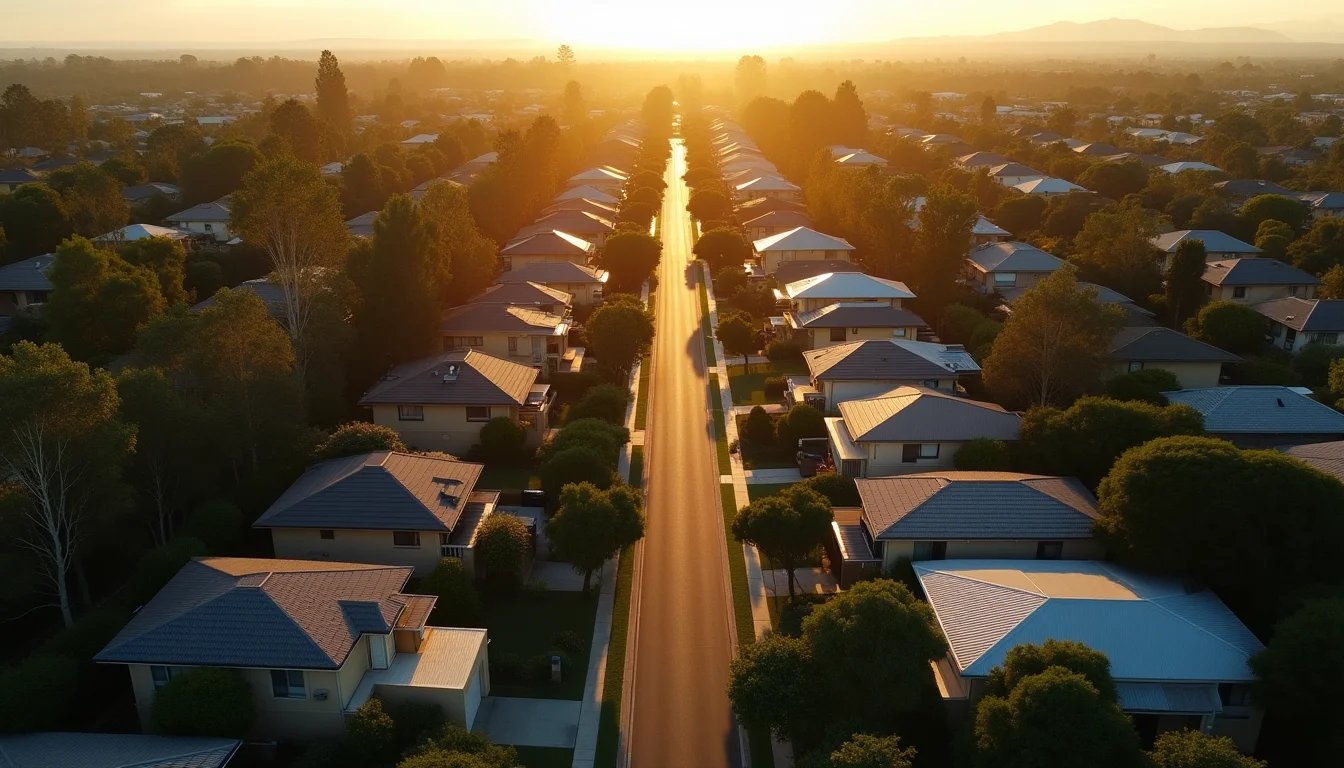
Nedlands in Western Australia is clearing premium property in just 15 days on market with a 65.5% auction clearance rate and 15% annual price growth to a $2,200,000 median — while Toorak, Melbourne's blue-chip benchmark, sits at 23 days with a 72% clearance rate but only 4.5% annual growth, exposing a structural performance divide that is reshaping how agents operate across Australia's prestige tier. According to Property Update, older households holding onto family homes longer is limiting resale supply in prime suburbs, creating a persistent squeeze that keeps prices firm even as broader market softness emerges nationally. That supply constraint is amplifying the performance gap between agents operating in high-demand WA prestige corridors and their counterparts in slower-moving Victorian and regional NSW markets.
The Days-on-Market Divide Defining Agent Performance in 2026
Days on market remains the sharpest single metric separating high-performing agents from the field in July 2026. Across the premium suburb data, the spread is significant: Nedlands records 15 days, South Perth 17 days, and West End (QLD) 22 days — while Toorak sits at 23 days, Prahran at 25 days, and Kew at 24 days in Victoria. The contrast becomes most stark at the regional end of the premium spectrum, where Ballina (NSW) sits at 45 days and Port Macquarie at 48 days despite both carrying median prices above $850,000.
For broader market context, see World Property Forum international property intelligence.
For agents and vendors, days on market is not merely an efficiency metric — it directly correlates with sale price outcomes. Properties that clear within 21 days statistically attract fewer price reductions and fewer conditional offers. Agents operating in Nedlands and South Perth are demonstrating that premium buyers remain active and decisive when inventory is scarce, while agents in Port Macquarie and Ballina face a different challenge: convincing vendors that extended campaigns require price repositioning rather than vendor patience. Understanding how to measure real estate agent performance across these dimensions is increasingly important for vendors choosing representation in a bifurcated market.
The agent performance gap is further sharpened by auction clearance rates. Randwick (NSW) leads the eastern seaboard premium tier at 73.5% with a $2,400,000 median, followed by Kirribilli at 72.5% and Toorak at 72%. However, WA's clearance rates — 65.5% in Nedlands and 63.5% in South Perth — are being achieved with far shorter campaigns and far stronger annual growth, suggesting that WA agents are converting interest to contracts faster than their eastern counterparts despite nominally lower clearance percentages.
Family Home Turnover Constraints Are Squeezing Premium Listing Volumes
The supply dynamic underpinning these agent performance metrics is structural, not cyclical. As Property Update reported on 10 July 2026, older Australian households are holding onto family homes longer — a pattern similar to the US market's so-called lock-in effect — limiting resale stock in exactly the premium family home segments where agent activity is most concentrated. School catchment demand and right-sizing buyer behaviour compound the constraint, keeping competition high among a reduced pool of listings.
This dynamic is particularly acute in inner-ring premium suburbs. In Toorak, where the median sits at $2,800,000, agents are working within a market that combines strong clearance rates (72%) with modest annual growth (4.5%) — a profile consistent with high demand meeting very limited supply rather than a market in acceleration. In Nedlands, the combination of 15% annual growth and 15 days on market suggests that supply constraint is translating directly into price pressure, with agents frequently managing competitive offer situations rather than extended vendor campaigns.
For agents operating in these markets, the implication is clear: listing acquisition — not buyer management — is the critical performance variable. In a market where family homes don't turn over freely, the agents with the deepest vendor relationships and off-market networks hold a structural advantage. For context on how these private transactions operate, Off-Market Property Sales Explained outlines why 10–15% of Australian transactions now occur outside public advertising, a proportion likely higher in premium low-turnover suburbs like Toorak and Nedlands.
WA Prestige vs Victorian Prestige: A State-Level Performance Comparison
The state-level agent performance divergence in the premium segment is the most consequential data story in the July 2026 market. Western Australia's prestige suburbs are outperforming their Victorian equivalents across every key metric agents use to benchmark campaigns.
Nedlands records 15% annual price growth and 15 days on market at a $2,200,000 median — versus Toorak's 4.5% annual growth and 23 days on market at $2,800,000 — a performance gap that reflects WA's structural supply deficit and sustained interstate buyer migration, not short-term speculation.
South Perth reinforces the WA case: 13.8% annual growth, a $1,450,000 median, and only 17 days on market. Contrast this with Kew in Victoria, where 4.4% annual growth at a $2,100,000 median takes 24 days to convert — or Prahran, where 3.9% growth at $1,550,000 requires 25 days. The Victorian premium market is not distressed, but agents operating there are managing longer campaigns, more conditional buyers, and a vendor cohort still calibrating expectations to post-2022 price realities.
Agents in premium Victorian suburbs are also contending with a macro environment shaped by the RBA's 4.35% cash rate, which disproportionately affects higher-value leveraged purchases. A buyer financing $1.8 million at current rates faces substantially higher holding costs than the same buyer would have in 2021, compressing the active buyer pool even in suburbs with genuine scarcity characteristics. In WA, where a larger proportion of prestige buyers are equity-funded or interstate cash purchasers, rate sensitivity is lower and campaign timelines reflect that reality.
Queensland's Premium Tier Offers a Middle Ground for Agents
Between WA's high-velocity prestige market and Victoria's slower premium corridor, Queensland's premium suburbs are producing a distinctive agent performance profile. West End in Brisbane records 8.8% annual growth to a $1,350,000 median in 22 days with a 62% clearance rate. Indooroopilly matches that clearance rate at 62.5%, achieving 8.5% annual growth at a $1,380,000 median in 23 days. Maroochydore on the Sunshine Coast also records 8.5% annual growth, clearing at $1,050,000 in 28 days with a 54% clearance rate.
According to REA Group, regional Queensland has emerged as one of Australia's strongest property markets, with over-50s buyers actively relocating north in search of lifestyle and value — a demand profile that is sustaining premium price growth in corridors beyond Brisbane's established suburbs. For agents in Maroochydore and surrounding areas, this demographic shift is creating a reliable buyer pool of equity-rich downsizers and sea-changers who transact with less financing complexity than younger buyers at equivalent price points.
The Queensland premium agent opportunity is also shaped by the supply dynamics Property Update identified: family homes not turning over means agents must compete hard for each listing while knowing the buyer pool is motivated. For a broader analysis of how these macro pressures interact with macro and interest rate market analysis, the current rate environment continues to separate states by buyer composition as much as by price fundamentals.
What the Data Signals for Agents, Vendors, and the Premium Campaign Strategy
For agents operating in premium suburbs nationally, July 2026 data points to three distinct operating environments requiring different campaign approaches. In WA prestige markets — Nedlands, South Perth, Fremantle — agents should prioritise speed-to-offer over extended marketing windows. With 15–17 days on market as the benchmark, campaigns running beyond 30 days risk signalling price or presentation problems to an otherwise active buyer pool. The 15% growth in Nedlands and 13.8% in South Perth are not self-sustaining without disciplined pricing discipline from the outset.
In Victorian premium markets — Toorak, Kew, Prahran — agents face the more complex task of managing vendor price expectations shaped by 2021-era comparable sales while operating in a market that has absorbed a 4.5% annual growth trajectory rather than double-digit gains. The 23–25 days on market benchmarks in these suburbs suggest auction campaigns are functioning reasonably, but private treaty follow-up capacity and strong buyer databases are increasingly the differentiating factor when clearance doesn't occur under the hammer. Vendors in these suburbs should assess agents specifically on whether vendor advocacy services are appropriate given the complexity of pricing strategy in a flat-growth environment.
In Queensland's premium tier and the softer NSW regional markets, the divergence between 22-day West End and 48-day Port Macquarie reflects buyer depth more than agent quality — but agents in slower markets must demonstrate superior negotiation outcomes and days-on-market management to justify premium commission rates. Across all markets, the agents who will outperform in the second half of 2026 are those who combine accurate pricing — calibrated to current comparables, not 2021 peaks — with deep vendor networks that generate listings before family homes enter the public market.