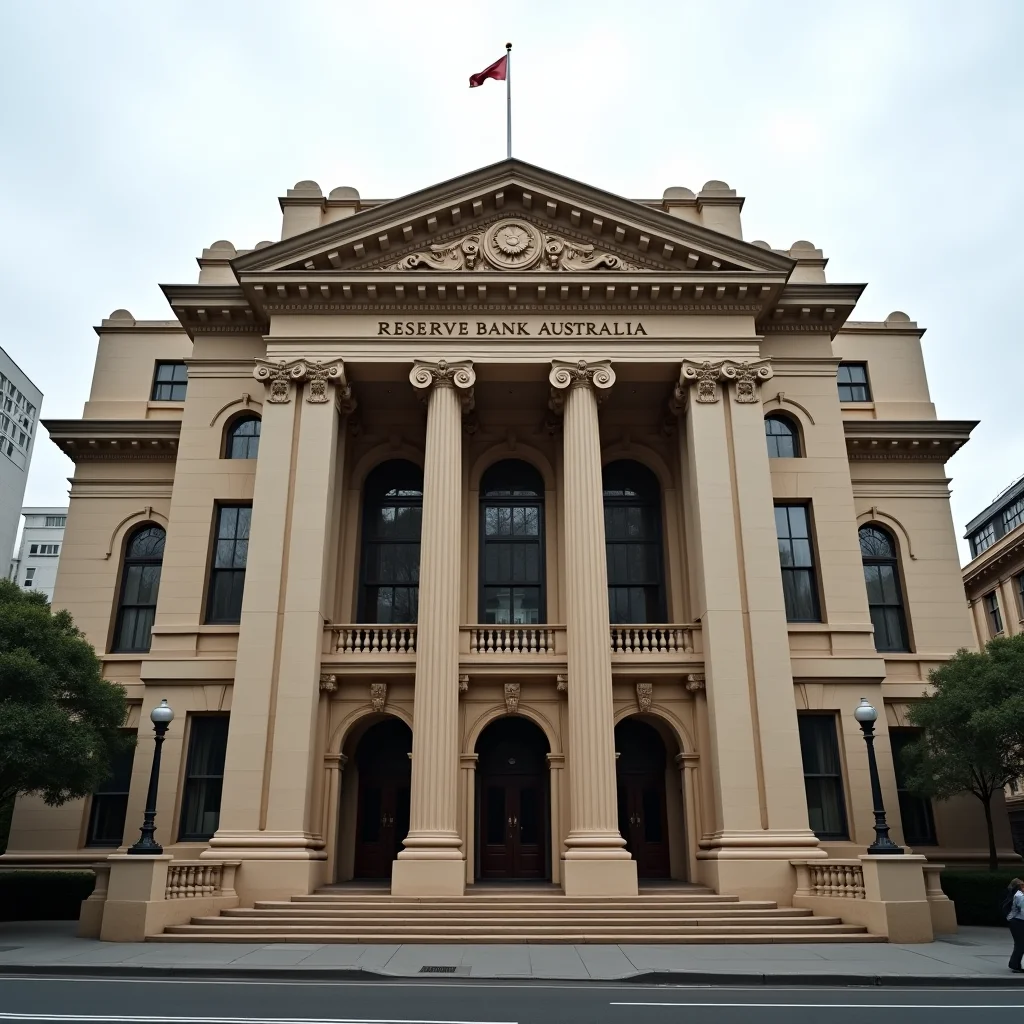
Randwick's auction clearance rate of 73.5% against Port Macquarie's 46% — a 27.5-percentage-point divide recorded in July 2026 — represents one of the sharpest sale-method performance splits in the current rate cycle. With the RBA holding the cash rate at 4.35%, the decision between auction and private treaty has shifted from a stylistic preference to a measurable determinant of agent performance, vendor outcomes, and days on market across every state. According to Property Update, successful property decisions require starting with data rather than emotion — a principle that applies equally to agents selecting campaign methods as it does to investors selecting assets.
The Clearance Rate Divide: Where Auctions Win and Where They Fail
The July 2026 data across 20 suburbs draws a clear boundary between auction-dominant markets and those where private treaty consistently outperforms. Randwick at 73.5%, Kirribilli at 72.5%, Surry Hills at 73%, Toorak at 72%, and Kew at 71% all sit in the tier where auction campaigns generate competitive bidding environments and transparent price discovery. These are high-median, low-days-on-market suburbs: Randwick carries a $2,400,000 median and 23 days on market; Kirribilli a $2,650,000 median and 24 days; Toorak $2,800,000 and 23 days. The correlation between premium price points, tight sales cycles, and strong clearance rates is not coincidental — it reflects the depth of active buyer registrations these markets attract.
At the other end of the spectrum, Port Macquarie records a 46% clearance rate with 48 days on market at an $850,000 median. Ballina sits at 47% with 45 days and a $1,350,000 median. These figures indicate that auction campaigns in lower-liquidity regional markets are failing to convert nearly every second listing — a material underperformance that carries direct cost implications for vendors paying marketing levies on campaigns that do not result in a sale on the day. In these markets, private treaty campaigns allow price negotiation over extended timeframes and reduce the public-pass-in risk that damages perceived property value.
Dandenong in Victoria presents a mid-range case: a 56% clearance rate, 40 days on market, and a $680,000 median. At this price point and liquidity level, agents face a genuine campaign design choice. The auction method still clears over half of listings, but the 40-day sales cycle suggests many properties are passing in and then converting via post-auction negotiation — a process that consumes additional vendor time and agent resource without the clean result that high-clearance suburbs achieve.
WA's Private Treaty Dominance and the Days-on-Market Signal
Western Australia's data presents a structurally different picture. Nedlands records a 65.5% clearance rate alongside 15 days on market at a $2,200,000 median — the fastest sales cycle in the dataset. South Perth clears at 63.5% with 17 days on market and a $1,450,000 median, posting 13.8% annual growth. Mandurah at $550,000 clears at 56% in 24 days with 10.5% growth. Fremantle sits at 54.6% clearance and 25 days at $950,000.
The WA clearance rates are structurally lower than Sydney's premium suburbs, yet the days-on-market figures are dramatically tighter. This reflects the WA market's reliance on private treaty as the dominant sale method — properties that do not go to auction still transact rapidly when buyer demand is strong. The 15-day sales cycle in Nedlands means agents are achieving fast unconditional sales through private treaty without requiring the competitive auction theatre that Sydney's inner suburbs depend on. For vendors and agents in WA, this data supports private treaty as the primary campaign format, with auction reserved for exceptional or unique properties where competition can be manufactured.
The contrast with Melbourne is instructive. Reservoir records a 62% clearance rate but 32 days on market at $880,000. Prahran clears at 69% but still takes 25 days at $1,550,000. Victoria's auction culture produces higher clearance rates in inner suburbs than WA, but the underlying days-on-market comparison suggests WA's private treaty pipeline is delivering comparable or faster vendor outcomes at equivalent or superior growth rates — Nedlands at 15% annual growth versus Prahran's 3.9% growth underscores the point.
Queensland's Mixed Method Results and the Maroochydore Inflection Point
Queensland's data reveals a market in method transition. West End in Brisbane posts a 62% clearance rate, 22 days on market, and $1,350,000 median with 8.8% annual growth — strong by any measure. Indooroopilly records 62.5% clearance and 23 days at $1,380,000. These inner-Brisbane suburbs are approaching Sydney's inner-ring clearance thresholds and generating sub-25-day sales cycles that justify auction campaigns. Agents in these suburbs are running auction programmes that reflect the competitive buyer depth these corridors now attract.
Maroochydore presents a more complex picture. At 54% clearance rate and 28 days on market, with a $1,050,000 median and 8.5% annual growth, the Sunshine Coast hub sits in a transitional zone. The clearance rate is insufficient to confirm auction as the optimal method, yet the growth rate and days-on-market are strong enough that private treaty campaigns risk underpricing in a rising market. Agents in Maroochydore face a campaign design dilemma: auction may expose vendor price expectations to market rejection at a 54% conversion rate, while private treaty may fail to capture competition-driven premiums in a suburb recording 8.5% annual growth.
Randwick's 73.5% auction clearance rate and 23-day sales cycle against Port Macquarie's 46% clearance rate and 48-day sales cycle represents a 27.5-percentage-point performance divide — the most instructive sale-method comparison in the July 2026 dataset for agents assessing campaign strategy under the RBA's 4.35% cash rate.
How Agent Performance Metrics Distinguish Method Execution from Market Conditions
A clearance rate or days-on-market figure reflects both the underlying market and the agent's execution quality. Understanding the difference requires examining how to measure real estate agent performance against local benchmarks rather than national averages. An agent in Port Macquarie achieving 55% clearance on auction campaigns is outperforming the 46% suburb average; an agent in Randwick achieving 68% is underperforming relative to the 73.5% benchmark. The suburb average is the relevant baseline, not the national figure.
For vendors, the practical implication is that sale method selection must be grounded in suburb-level clearance data rather than agent preference or agency brand habit. An agent recommending auction in a suburb with sub-50% clearance rates is effectively proposing a campaign with a worse-than-even chance of selling on the day — carrying all the associated marketing costs, public pass-in exposure, and campaign duration. The better-performing agents in lower-clearance markets are those who identify genuine auction candidates — properties with broad appeal, strong buyer depth, and limited comparable supply — rather than defaulting to auction as a standard campaign format. For those weighing campaign options, understanding whether vendor advocacy adds value in these decisions is worth considering, particularly in markets where method selection carries material financial consequences.
Agent commission structures also interact with sale method outcomes. In higher-clearance markets, auction campaigns create transparent competition that often justifies higher final sale prices — supporting agent performance-based fee structures. In lower-clearance markets, private treaty allows for extended negotiation that may deliver stronger outcomes than a passed-in auction, but requires agents with strong buyer database depth and negotiation skills. For a detailed breakdown of how fee structures align with campaign method, how real estate agent commissions work provides the relevant framework. International parallels in auction-heavy markets are also worth examining at WorldPropertyForum.com, where auction penetration rates vary significantly across comparable markets.
Liverpool, Penrith, and the NSW Mid-Market Method Gap
NSW's mid-market suburbs — Liverpool at $850,000 with 60.5% clearance and 38 days on market, and Penrith at $880,000 with 62% clearance and 35 days — sit in an instructive middle band. Both achieve clearance rates above 60%, which traditionally supports auction as a viable method, yet both carry days-on-market figures of 35–38 days, indicating that post-auction negotiation is extending total campaign duration beyond the theoretical efficiency of the auction format.
The 35–38-day sales cycles in these suburbs suggest that while auctions are clearing above 60% of the time, the remaining 38–40% of listings are then proceeding to private treaty negotiation — adding 10–15 days to the campaign timeline and creating a hybrid outcome that delivers neither the clean auction result nor the controlled private treaty timeline. Agents in these markets who can accurately pre-qualify buyer demand to identify true auction candidates — rather than defaulting to auction for every listing — will deliver measurably better days-on-market performance for vendors.
For buyers and vendors in the near term, the July 2026 data sends a clear directional signal: auction remains the superior method in high-clearance metro markets above 65%, with Randwick, Kirribilli, Surry Hills, Toorak, and Kew as the benchmark performers. Private treaty or expression-of-interest campaigns are the defensible choice in markets below 55% clearance — Port Macquarie, Ballina, Fremantle, and Maroochydore — where the risk of public auction failure outweighs the potential upside of competitive bidding. The 55–65% zone, covering Dandenong, Liverpool, Penrith, West End, and Nedlands, requires agent-level judgement about specific property characteristics and current buyer depth. Under the RBA's 4.35% cash rate, that judgement call is carrying more financial weight for vendors than it has at any point in the past three years.