Sydney
NSW · Population 5,450,000
Source: Domain House Price Report & Domain Rental Report · refreshed quarterly · last updated 5 Nov 2026
Median House
$1,500,000
+5.2% YoY
Median Unit
$800,000
QoQ Change
+1.5%
Clearance Rate
—
Days on Market
—
Yield (Houses)
4.5%
Yield (Units)
4%
Vacancy Rate
3.2%
Key Takeaways
- Sydney house growth is accelerating, with quarterly pace annualising near 10%, above the 5% yearly figure.
- Units offer better cash flow at 4.2% yield versus 3.5% for houses, plus lower entry cost.
- A 2.1% vacancy rate signals tight rental supply, supporting rent growth and landlord pricing power.
- The $300,000 house-unit price gap reflects structural land scarcity, not a temporary discount.
- Investors are entering an upswing phase, so delaying purchase risks higher future entry costs.
Sydney Property Market Profile
Buying or Investing in Sydney?
Get finance pre-approved before bidding or making an offer in Sydney so you know your borrowing ceiling and can move fast on the right property.
Latest News — Sydney
Domain Tips 13% House Price Falls Before 2027 Rebound
5h ago
ABC BusinessFactory-built housing could lift construction productivity, report says
5h ago
ABC Business'Double edged sword': House price rebound for Sydney after market downturn
7h ago
REA GroupState Significant build-to-rent tower announced for Sydney’s lower north shore
1d ago
Guardian HousingNSW halts new law to crack down on underquoting by real estate agents at 11th hour
2d ago
Guides for Buyers and Sellers in Sydney
Property Due Diligence Checklist
A property due diligence checklist is a systematic examination of building conditions, legal matters, and financial obligations before finalising a purchase, protecting Australian buyers from unexpected problems and costly surprises.
Read Guide →Understanding Comparable Sales
Comparable sales analysis uses recently sold properties with similar characteristics to determine market value, helping buyers, sellers, and investors make informed pricing and negotiation decisions in Australia's diverse property market.
Read Guide →Auction vs Private Treaty — Which is Better?
Property sellers must choose between auction and private treaty methods, each offering distinct advantages. Auctions create competitive bidding with no cooling-off periods, while private treaties allow confidential negotiations.
Read Guide →How to Choose the Right Real Estate Agent
Choosing the right real estate agent is crucial for property sellers, directly impacting sale price, transaction efficiency, and satisfaction, and requires a data-driven evaluation of performance metrics, local market proficiency, and strategic approach.
Read Guide →Latest Property Intelligence
 Suburb Spotlight
Surry Hills' 73% Clearance Rate and Liverpool's $850,000 Median Define Sydney's First-Home Buyer Entry Tier as National Prices Fall 4.3%
Mortgage Choice data shows 23% of first-home buyers plan to enter the market within six months as national prices sit 4.3% below their March peak. REAStats comparison data across NSW suburbs shows Liverpool ($850,000 median) and Surry Hills (73% clearance) forming Sydney's entry tier against Kirribilli's $2,650,000 harbourside benchmark.
 Property Market
Nsw Pauses 110000 Underquoting Fines Minns Sydney 10.1% Slide
Sydney home values have fallen 10.1% from their 2026 peak, according to Cotality data cited in the report, and Minns said agents in his south Sydney electorate of Kogarah flagged the laws would be unworkable in a falling market.
 Agent & Agency
Elizabeth Bay Apartment Sells for $760,000 as First-Time Bidder Beats Five Rivals at BresicWhitney East Auction
A first-time bidder paid $760,000 for a one-bedroom Elizabeth Bay apartment at auction, $25,000 above an adjusted reserve, as BresicWhitney East and Ray White Erskineville agents report a shifting buyer pool across Sydney's eastern suburbs under a 4.85% RBA cash rate.
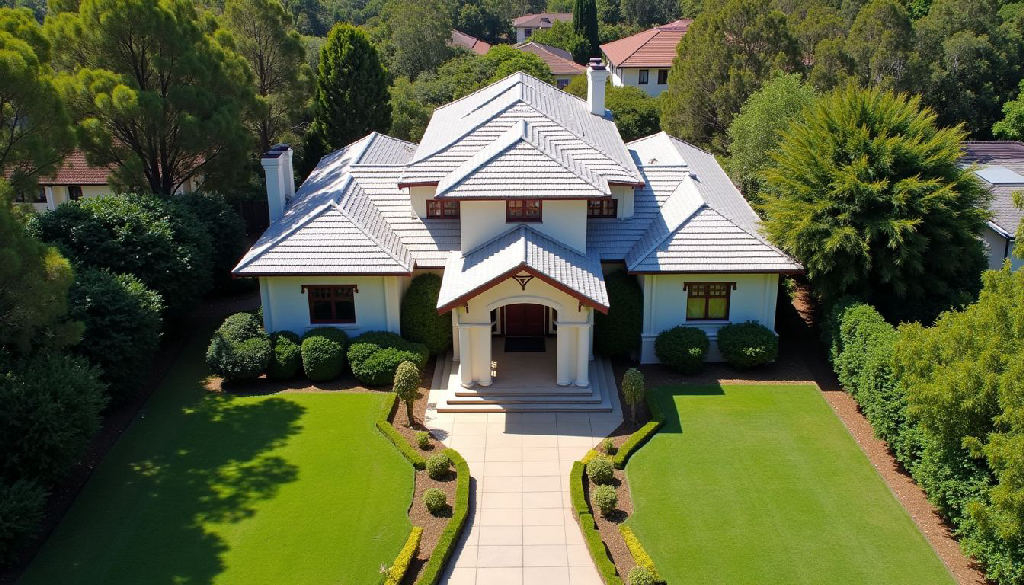 Property Market
Griffin's Juniper Green in Pymble Heads to Auction at $9.5m–$10.45m
Juniper Green, a mid-1930s Walter Burley Griffin estate at 88 Telegraph Rd, Pymble, goes to auction on November 28 with a $9.5m–$10.45m guide, after last selling for $240,000 in 1999.
Frequently Asked Questions
Why is Sydney's median house price so much higher than other capitals?
Sydney's $1,200,000 house median reflects its role as Australia's financial and corporate hub, combined with constrained geography and decades of restrictive planning settings. Strong population growth of around 5.45 million residents competes for limited detached housing stock, sustaining a persistent price premium over Melbourne, Brisbane, Adelaide and Perth across most market cycles.
Is now a good time to buy a unit instead of a house in Sydney?
Units currently offer a compelling value proposition, with a $900,000 median, 4.2% yield, and better cash flow than houses. The 25% price discount provides accessible entry into otherwise unreachable suburbs. While houses typically deliver stronger long-run capital growth, units suit buyers prioritising affordability and rental income in today's market.
What does the 2.1% vacancy rate mean for renters and investors?
A 2.1% vacancy rate is well below the 3% balanced benchmark, indicating a rental market under real pressure. This tightness typically drives further rent growth, benefiting investors through improved cash flow and pricing power, while renters face limited stock and increased competition for available properties across Sydney.
Is Sydney's current growth sustainable or a short-term spike?
The 2.5% quarterly gain annualises to roughly 10%, outpacing the 5% annual figure, suggesting momentum is building rather than fading. This acceleration pattern is typical of Sydney cycles, where early gains concentrate in premium pockets before spreading metro-wide, pointing to sustained rather than speculative short-term growth.
Should investors prioritise yield or capital growth in Sydney right now?
It depends on strategy: units deliver stronger immediate yield at 4.2% with lower holding costs, suiting cash-flow-focused investors. Houses offer lower 3.5% yields but greater long-run capital growth potential through land content in supply-constrained suburbs. Given accelerating momentum, both asset types benefit from entering before further price appreciation compounds costs.
Capital-city statistics are sourced from public Domain research reports and refreshed quarterly. Figures are indicative. REAStats may receive referral fees from linked services. Not financial advice.
Market Snapshot
Sydney's median house price sits at $1,200,000, up 2.5% over the quarter and 5% over the year, a pace that confirms the city has moved back into a sustained growth phase after the 2022-23 correction. A 2.5% quarterly gain annualises to roughly 10%, well ahead of the 5% annual figure, which signals that growth has accelerated through the back half of the measurement period rather than tapered off. This acceleration pattern is typical of Sydney cycles, where early gains concentrate in premium pockets before spreading across the metro area.
Against the other mainland capitals, Sydney remains the price leader by a wide margin, with its $1,200,000 house median sitting well above Melbourne, Brisbane, Adelaide and Perth. That premium reflects the city's status as the national financial and corporate hub, its constrained geography, and decades of planning settings that have restricted detached housing supply relative to population growth of roughly 5.45 million. The 5% annual house growth rate is solid without being frothy, suggesting buyers are absorbing higher price points methodically rather than chasing the market in a panic.
Auction clearance rate and days on market figures are not available for this period, but the vacancy rate of 2.1% tells its own story. A sub-3% vacancy rate indicates a rental market under real pressure, with insufficient stock to meet demand from both new residents and returning overseas migrants. That tightness typically precedes further rent growth and underpins investor confidence even as yields remain compressed by Sydney's high entry prices.
Houses vs Units
The $300,000 gap between the $1,200,000 house median and the $900,000 unit median represents a 25% discount for apartment buyers, a spread that has structural rather than cyclical origins in Sydney. Land scarcity across the harbour city and its inner and middle rings keeps house prices elevated, while higher-density approvals in transit-connected precincts have kept unit supply comparatively more responsive. For owner-occupiers priced out of the detached market, that $300,000 differential buys genuine entry into suburbs that would otherwise be unreachable in house form.
The yield data reinforces where current value sits: units return 4.2% compared with 3.5% for houses, a 0.7 percentage point gap that matters for investors weighing cash flow against capital growth. Houses in Sydney have historically delivered superior long-run capital growth thanks to land content, but at today's $1,200,000 median and 3.5% yield, the holding cost burden is significant without strong rental offset. Units, by contrast, offer a more balanced proposition right now — better cash flow, lower entry cost, and exposure to the same undersupplied rental market driving the 2.1% vacancy rate. On a pure value basis, well-located units in inner and middle-ring suburbs represent the more accessible opportunity in the current cycle.
Investor Outlook
Sydney's 2.1% vacancy rate sits well below the 3% level generally considered balanced, and it hands pricing power to landlords. Investors buying units today capture a 4.2% yield into a market where rents have limited reason to soften, given population growth continues to outstrip new dwelling completions across the metro area. House investors accept a lower 3.5% yield but position for the capital growth that land-rich assets in supply-constrained suburbs typically generate over a full cycle.
The growth setup looks constructive. With houses up 5% annually and accelerating to a 2.5% quarterly pace, the market is building momentum rather than losing it, and a 2.1% vacancy rate suggests rental growth will continue feeding through to yields even as prices rise. Investors entering now are buying into an upswing, not calling a bottom, which changes the risk calculus toward securing stock before further price appreciation compounds the entry cost.
The key risks are supply-side and regulatory. NSW planning reforms targeting higher-density approvals near transport hubs could eventually ease unit supply and cap rental growth in targeted precincts, while interest rate settings remain the primary lever on borrowing capacity for an already expensive market. Land tax and foreign investor surcharges in NSW also add to holding costs that investors must factor into net yield calculations, particularly relevant given Sydney's higher median price points amplify the dollar impact of any tax change.
Owner-Occupier Outlook
Affordability remains the central challenge for Sydney owner-occupiers. A $1,200,000 house median demands a substantial deposit and strong serviceability, pushing many buyers toward the $900,000 unit median or into outer-ring house markets where prices sit below the metro average. Without current clearance rate or days-on-market figures, buyers should rely on the price momentum itself as a signal: 2.5% quarterly growth indicates competition remains firm, particularly for well-presented stock in established suburbs.
For buyers structuring their search by suburb tier, inner-ring suburbs within 10km of the CBD now largely sit above the $1,200,000 house median and often well beyond it, making units the realistic entry point for most budgets in these locations. Middle-ring suburbs, roughly 10-25km out, offer houses closer to or modestly above the citywide median and suit families wanting land without inner-city pricing. Outer-ring and growth corridor suburbs beyond 25km remain the most accessible path to a detached house below the $1,200,000 median, trading commute time for land content and future upside as infrastructure catches up.
Key Submarkets
The Eastern Suburbs, including Bondi and Paddington, anchor Sydney's blue-chip tier, commanding prices well above the city median on lifestyle appeal and permanent scarcity of land. The Inner West, spanning Newtown, Marrickville and Dulwich Hill, continues its gentrification path, attracting younger buyers and investors chasing character housing stock with strong rental demand. The Lower North Shore, centred on suburbs like Lane Cove and Crows Nest, offers established family appeal with excellent schools and transport, sitting firmly in the premium middle-ring bracket.
Parramatta and the Greater West represent Sydney's second CBD, delivering unit-led growth and investor interest on the back of major infrastructure and employment decentralisation. The South West Growth Area, including Oran Park and Leppington, provides the primary greenfield corridor for first-home buyers chasing new houses below the metro median. The Northern Beaches, from Manly through to Avalon, caters to a lifestyle-driven, higher-income buyer pool willing to pay a premium for coastal access despite limited transport connectivity.
Outlook for the Next 12 Months
Expect Sydney's house market to extend its current run, with the 2.5% quarterly pace likely moderating slightly but annual growth holding in the mid-to-high single digits as rate cuts from the Reserve Bank filter through to borrowing capacity over the coming year. Strong net overseas migration into NSW will keep rental demand elevated, and with vacancy already at 2.1%, further tightening is plausible unless new unit completions in Parramatta and the Inner West ramp up meaningfully.
The unit market stands to benefit most from this setup, combining superior affordability, a 4.2% yield, and the same underlying demand pressures pushing house prices higher. Supply pipeline data suggests approvals have improved but completions remain lagged, meaning the next 12 months should favour sellers and existing owners over buyers still waiting on the sidelines for a price pullback that current fundamentals do not support.